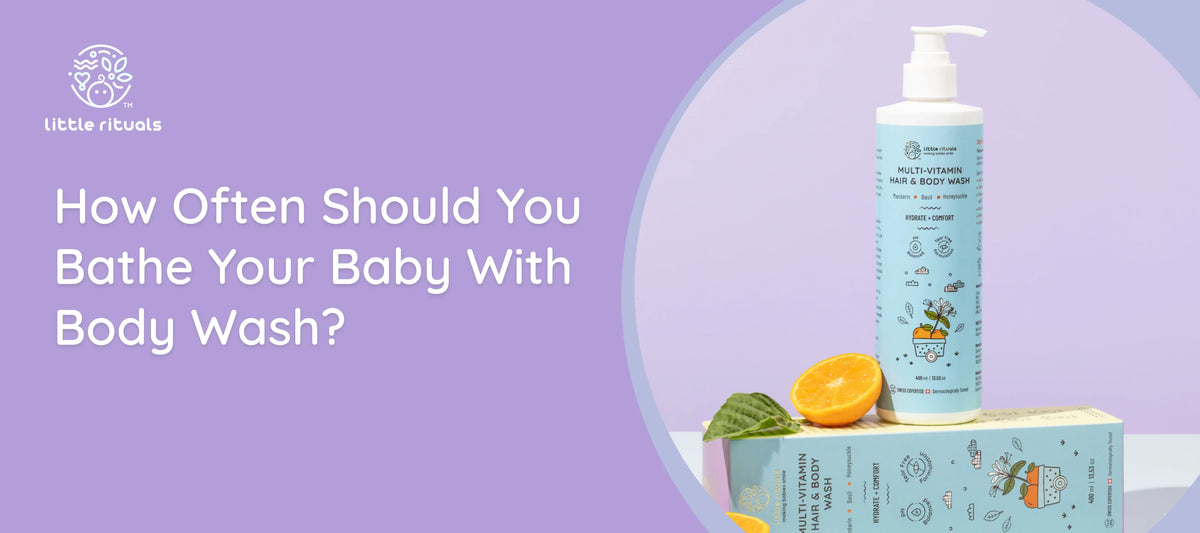
How Often Should You Bathe Your Baby With Body Wash?
Are you the parent of a newborn? Great news. Stepping into a different pedestal of life for newbie parents comes with joy and happiness, as well as a lot of responsibility. From the way of pampering to the way of carrying, they have many questions on their minds that puzzle them regarding the safety and protection of their children. One of the most asked questions is - "Do I bathe my baby every day? Are baby bath care products safe for daily use? Am I overdoing it?"
Always remember, your baby's skin is much more delicate than yours, and how often you bathe them matters more than you might think.
Well, if you're also stuck in the dilemma of confusion, then this guide is just for you. In this blog, we'll discuss baby bathing frequency, baby body wash tips, and how Little Rituals can help prevent your baby from any harsh experience. So, let's take a deep dive into reading.

Baby Bathing Frequency: What Does Science Say?
According to the American Academy of Pediatrics (AAP), you don't need to bathe your baby every day, especially in the first few months. In fact, 2–3 baths per week are usually sufficient unless your baby gets particularly dirty.
Too much bathing, especially with body wash, can strip away the natural oils that protect and moisturize your baby's skin. This can lead to dryness, irritation, and even eczema flare-ups in sensitive babies.
For newborns: Stick to sponge baths until the umbilical cord stump falls off (around 1–2 weeks after birth). After that, you can start giving your baby proper baths 2–3 times a week.
For older babies (3 months and older): You may bathe them 2–3 times a week using a gentle baby body wash. However, daily baths are fine too — as long as you're using a clean, safe, non-drying product and you're not over-scrubbing their skin.
Bottom Line: Less is more in the early months. Your baby's skin barrier is still developing, and overwashing can do more harm than good.
Related Read: Baby Skincare in Summer: 10 Scientifically-Backed Tips to Keep Your Baby’s Skin Cool, Hydrated, and Healthy
Baby Body Wash Tips Every Parent Should Know
Are you a parent of a newborn? Here are some expert baby body wash tips that every parent must consider for washing the baby's body:
Choose the Right Body Wash
Look for a body wash that is:
- Tear-free and soap-free
- Free from sulfates, parabens, synthetic fragrances, and dyes
- pH-balanced for baby's sensitive skin
- Dermatologically tested and pediatrician-approved
Little Rituals' body wash is a gentle blend of plant-powered ingredients specifically designed for a baby's tender skin. It cleanses without disrupting the skin's natural moisture barrier, making it ideal for regular use.
Use Warm, Not Hot Water
Babies can't regulate temperature like adults. Keep the water around 37–38°C (98.6–100.4°F). Always test it with your elbow or wrist.
Use a Soft Washcloth or Hands
Your baby doesn't need a loofah or sponge. A clean, soft cotton cloth on your hands is perfect for a gentle cleanse.
Be Quick but Thorough
Babies can get cold quickly. Aim for a bath time of 5–10 minutes. Focus on areas where dirt tends to collect, such as neck folds, armpits, the diaper area, behind the ears, and between fingers and toes.
Pat, Don't Rub
When drying, always pat your baby's skin gently with a soft towel. Rubbing can irritate their delicate skin.

What Happens If You Bathe Your Baby Too Often?
Well, everyone wants to pamper the child if it's clean and smells good, but the daily use of body wash can dry out the skin even if the product is gentle. Here's what to look out for baby bath care:
Signs you may be bathing too frequently:
- Flaky or dry patches of skin
- Redness or irritation
- Increased fussiness after bath time
- Signs of eczema or rashes
This doesn't mean you need to stop baths altogether. You can simply rinse with plain warm water and reserve the body wash for alternate days unless your paediatrician advises otherwise.
A Safe Baby Wash Routine You Can Follow
Here's a simple and safe baby wash routine for every parent that they can adopt:
For Babies 0–3 Months:
- Frequency: 2–3 sponge baths per week (no body wash until the cord stump falls off)
- Product: Use only lukewarm water and soft cloth
- Moisturize after bath with a gentle baby lotion or oil
For Babies 3–12 Months:
- Frequency: 2–3 baths per week with body wash (or up to daily if needed)
- Product: Gentle, natural baby body wash like Little Rituals' sulfate-free cleanser
- Moisturize immediately after bath to lock in hydration
For Toddlers:
- Frequency: Daily baths can begin if your toddler enjoys water play
- Product: Stick with gentle baby bath care products, as skin sensitivity can continue well into toddlerhood
- Teach them hygiene basics through play (e.g., washing hands and feet)
Must Read: Why the Right Face and Body Wash Makes Bath Time Better: A Science-Backed Guide for Modern Moms
Why Little Rituals Baby Body Wash Is Perfect for Your Baby's Skin
Your child's skin needs love and care, and that's all you can find in the Little Rituals Baby Body Wash. This is one of the most favourite brands for parents when it comes to baby body wash routines.
Little Rituals' 100% plant-based body wash is carefully crafted for sensitive baby skin. It's packed with skin-loving ingredients like aloe vera, chamomile, calendula, and coconut-derived cleansers. Here's why moms trust it:
- Dermatologically tested
- pH balanced for baby's skin
- No sulfates, parabens, mineral oils, or artificial fragrances
- Soap-free, tear-free formula
- Infused with gentle essential oils for natural nourishment
Formulated to be as close to nature as your baby's first breath, Little Rituals Baby Body Wash offers a comforting cleanse that doesn't strip or irritate.
Conclusion
Every baby is unique, and so is their skin. While there's no one-size-fits-all rule for baby bathing frequency, the golden guideline is to stay gentle, stay observant, and listen to your baby's skin.
Use clean, consciously formulated products, such as those from Little Rituals, that nurture your child's skin. Whether it's bath time twice a week or every day, let it be a moment of bonding, fun, and calm.
When it comes to baby bath care, it's not just about staying clean; it's about caring deeply.
Frequently Asked Questions
Can I use body wash every day?
Yes, but only if you're using a mild, baby-safe body wash and your baby's skin is not showing signs of dryness. If unsure, alternate with just water.
Should I moisturize after every bath?
Absolutely. Baby skin loses moisture quickly. Applying a baby-safe moisturizer within 2 minutes of towel drying helps lock in hydration.
What time of day is best for a baby bath?
Evening baths are great for relaxation and preparing for sleep. But if your baby is more active and alert in the morning, that's fine, too.
How much body wash should I use?
A coin-sized amount is usually enough. Don't go overboard — babies don't need a foam party.
What ingredients should I avoid in a baby body wash?
Avoid sulfates, parabens, artificial fragrances, alcohol, dyes, and essential oils that may irritate the skin (like peppermint or citrus).