Mineral Sunscreen for Babies: Safe, Gentle, and Effective Summer Protection
As the sun gets stronger in summer, protecting your child’s skin becomes even more essential. Babies and children have delicate, developing skin that needs extra love and thoughtful care. And while summer means beach trips, park playdates, and plenty of outdoor giggles, it also means increased exposure to harmful rays. That’s where the right sunscreen, especially a mineral one, makes all the difference.

Understanding Baby Skin in Summer
A baby’s skin is up to 30% thinner than an adult’s, making it more vulnerable to sun damage, dryness, irritation, and environmental stressors. During summer, UV rays are more intense, and prolonged exposure can result in:
- Sunburn (even on cloudy days)
- Heat rashes due to sweat and blocked pores
- Dehydration from skin moisture loss
- Long-term UV damage if left unprotected
Children's skin also has less melanin, which means it doesn't offer natural protection from UV rays. Therefore, a broad-spectrum sunscreen is essential, especially one tailored to children.
Why Mineral Sunscreens Are a Must for Kids
When it comes to sun protection for babies, the type of sunscreen matters. Unlike chemical sunscreens that absorb UV rays into the skin and can contain harsh ingredients, mineral sunscreens work by physically reflecting UV rays. They offer instant protection without absorbing into the skin.
Mineral sunscreens use ingredients like non-nano zinc oxide that sit on top of the skin and are less likely to cause irritation, making them the best mineral sunscreen for babies. For a deeper look into why physical blockers are preferred, read about the mineral vs chemical sunscreen for babies comparison.
Key Benefits:
- Physical barrier with instant action
- Hypoallergenic & non-irritating
- Reef-safe & environmentally friendly
- Safe for sensitive and eczema-prone skin
Related Read: Shield Their Glow With The Best Sunscreens for Indian Kids
What to Look for in a Safe Baby Sunscreen
Choosing a safe sunscreen for children involves reading beyond the SPF number. Here are the top things you should look for:
1. Non-Nano Zinc Oxide
- Offers broad-spectrum UVA & UVB protection
- Does not penetrate the skin, unlike chemical filters
2. No Chemical Filters
Avoid sunscreens with:
- Oxybenzone
- Octinoxate
- Avobenzone
- Octocrylene
- Homosalate
These are often linked to skin irritation, hormone disruption, and coral bleaching.
3. Antioxidant-Rich Botanicals
Nature’s defense can boost sunscreen efficacy:
- Raspberry extract: Natural SPF and anti-oxidants
- Aloe Vera & Chamomile: Soothing & hydrating
- Turmeric & Rosemary: Anti-inflammatory and anti-oxidative
4. Water-Resistant & No White Cast
Look for a fast-absorbing formula that leaves no residue, perfect for daily wear or playtime.
5. Broad-Spectrum Protection Beyond UV
The best sunscreens also protect from Blue Light and WiFi Radiation, a growing concern for kids exposed to screens.

How to Use Mineral Sunscreen on Babies and Kids
To ensure your child receives the best protection from harmful UV rays, follow these steps when applying mineral sunscreen:
- Apply in Advance: Gently apply the sunscreen at least 15–30 minutes before stepping outside. This gives the minerals time to settle evenly on the skin’s surface for effective sun protection.
- Cover All Exposed Areas: Be thorough while applying, don’t forget areas like the face, neck, ears, arms, legs, and tops of feet. These spots are often missed but are just as vulnerable to sunburn.
- Reapply Regularly: Even water-resistant mineral sunscreens need to be reapplied every 2 hours, especially after swimming, sweating, or towel drying.
- Daily Indoor Use: Use a thin layer indoors if your child is exposed to digital screens for long hours. Blue Light from TVs, tablets, and phones can contribute to skin stress.
- Babies Under 6 Months: It’s best to avoid direct sun exposure for infants under 6 months. Keep them in the shade, dress them in lightweight, full-sleeve clothing, and consult your pediatrician before using sunscreen.
With the right technique, mineral sunscreen becomes a simple and essential ritual to protect your child’s delicate skin.
Must Read: Newborn Baby Hair Care & Styles: Doctor-Approved Tips & Guide
Little Rituals: Delivering the Best and Safest Skincare for Your Child
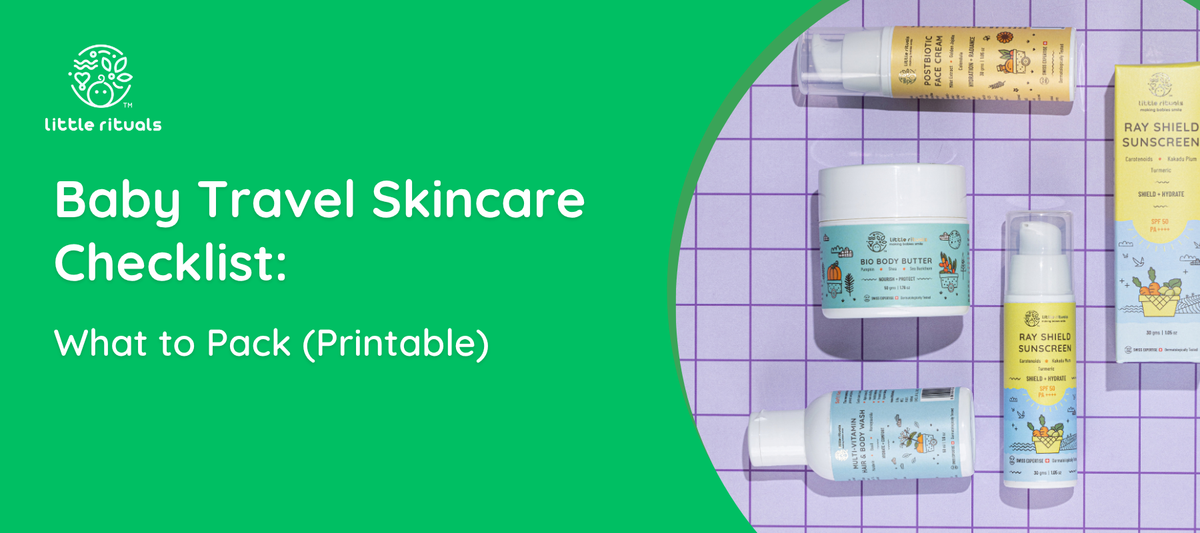
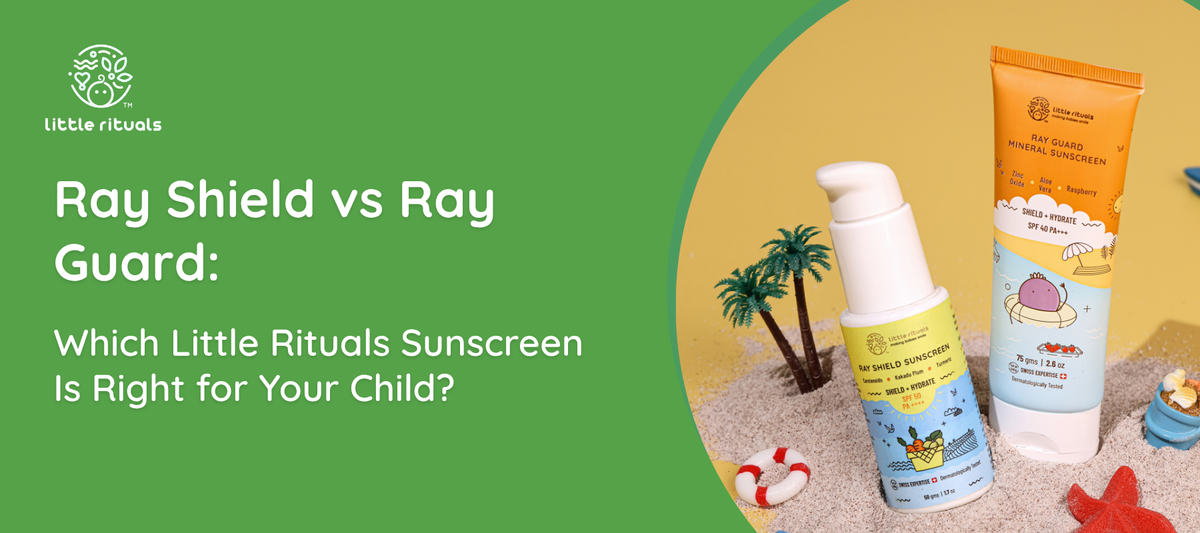
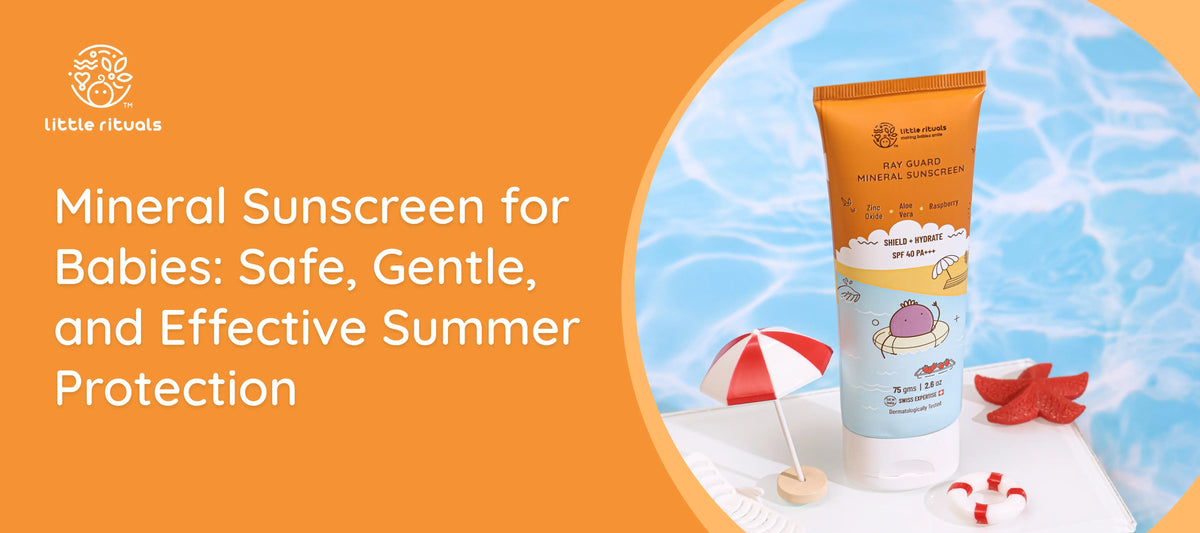
Little Rituals’ mineral sunscreens are backed by dermatological science and crafted with pure, plant-powered ingredients. Their Ray Guard Mineral Sunscreen and Ray Shield Sunscreen are not just gentle; they’re smart. Using RayBlock WiFi Defense Technology, they protect against modern aggressors like UVA, UVB, Blue Light, and WiFi radiation.
Formulated with non-nano zinc oxide, raspberry extract, aloe vera, and turmeric, they provide both a physical barrier and deep hydration. Clinically proven to reduce oxidative stress by 127%, increase skin moisture by 49%, and shield against WiFi by 73%, Little Rituals sunscreens are more than just sun protection, they're complete skin defense.
If you're searching for the baby sunscreen India trusts, choose Little Rituals for holistic, gentle, and effective summer skincare for kids.
Ready to protect your little one with confidence? Choose Little Rituals and let your child enjoy the sun safely and joyfully.
Because with Little Rituals, every touch is a promise of love, and protection.
FAQs: Sunscreen for Babies and Kids
Can I use my sunscreen on my baby?
No. Adult sunscreens may contain chemical filters that can be harmful or irritating to baby skin. Always use baby-specific mineral sunscreens.
How often should I reapply sunscreen on my child?
Every 2 hours, or immediately after swimming, sweating, or towel drying.
Is sunscreen safe for newborns?
For babies under 6 months, avoid direct sun exposure and use protective clothing. Consult your pediatrician before using any sunscreen.
What does 'non-nano' mean in sunscreen?
It means the zinc oxide particles are too large to penetrate the skin, offering safe surface-level protection.
Why should I care about Blue Light and WiFi protection?
Blue light and WiFi radiation can increase oxidative stress and long-term skin fatigue. Little Rituals sunscreens offer advanced defense against these modern threats.
What if my child has eczema or sensitive skin?
Little Rituals sunscreens are hypoallergenic, non-toxic, and made with soothing botanicals, making them safe for all skin types.