How Is Baby Skin Different from Adult Skin? Skip to content

Cart

Your cart is empty

Article: How Is Baby Skin Different from Adult Skin?

best cream for newborn dry skin on face
| by Rahul Bhati

How Is Baby Skin Different from Adult Skin?

As parents, we all want to give the best care to our little ones, especially when it comes to their skin. But did you know that baby skin is significantly different from adult skin? Understanding these differences can help you choose the right products for your baby’s delicate skin. 

In this article, we will discuss the key differences between baby skin and adult skin as a baby’s skin is more dry than an adult one, and why it is important to use the best cream for infant dry skin and other products. 

What Makes Baby Skin Different?

There are many factors that makes a baby’s skin different from an adult person:-

Thinner and More Delicate

Baby skin is much thinner and more delicate than adult skin. This means that it is more prone to damage and irritation and can be easily affected by external factors such as weather, harsh chemicals, and even rough fabrics. 

Less Oily

Baby skin produces less sebum, the natural oil that helps to keep our skin hydrated and protected. This means that baby skin is more prone to dryness and can easily become irritated if not properly moisturized. Therefore, using the best cream for newborn dry skin on face is very important. 

Higher Water Content

Baby Skin has a higher water content than adult skin, which means that it can easily lose moisture and become dry and irritated. This is why it’s important to keep your baby’s skin hydrated with gentle, moisturizing products. 

More Sensitive

Baby skin is more sensitive and reactive than adults, which means that it’s more susceptible to irritation and allergic reactions, especially to harsh chemicals and fragrances found in some skincare products. 

Why Use Baby-specific Products?

Given the unique characteristics of baby skin, it’s important to use the best cream for infant dry skin and other products that are specifically formulated for their skin. Here are some of the benefits of using baby-specific products:

  • Gentle and safe: Baby-specific products are formulated with gentle, safe ingredients that are suitable for delicate skin. They are free from harsh chemicals and fragrances that can irritate baby skin and cause allergic reactions. 
  • Effective: These products are designed to effectively clean, moisturize, and protect your baby’s skin without causing any harm. They are made with natural ingredients for their effectiveness and safety. 
  • Targeted: These products are targeted to meet your specific needs of baby skin. They are formulated to provide extra hydration, protection, and nourishment to keep your baby’s skin healthy and happy. 
  • Choose Little Rituals for Your Baby!

    At Little Rituals, we understand the importance of gentle, effective and safe skincare products for babies. That’s why we offer a range of baby-specific products that are carefully formulated with natural and organic ingredients to keep your baby’s skin healthy, hydrated, and protected. 

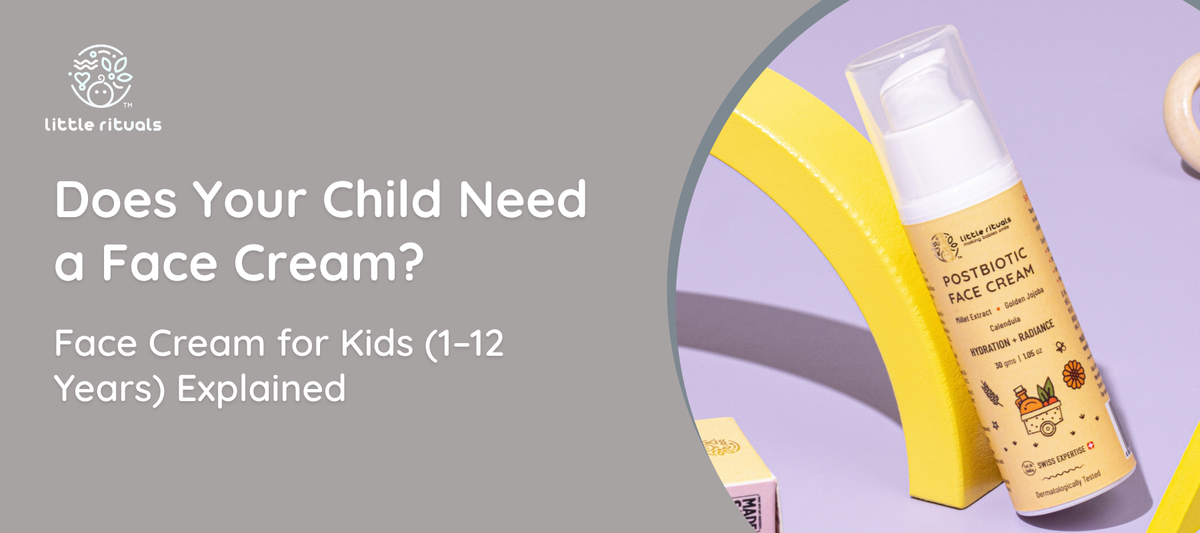
    From our gentle Baby Wash to Postbiotic Face Cream, we have the best cream for newborn dry skin on face. Shop our range today and give your baby the best care possible! 

    Other Blogs

    What is Body Butter? Benefits, How to Use It & Why Little Rituals’ Baby Bio Body Butter Stands Out

    what is body butter

    What is body butter? Body butter is a rich, creamy, and intensely nourishing moisturizer made from natural fats like shea butter, cocoa butter, and other plant oils. It differs from traditional lot...

    Body Butter vs Body Lotion — Which One Is Right for Your Skin?

    body butter vs body lotion

    Choosing the right moisturizer can feel overwhelming, especially when the options seem endless. If your skin feels dry, dull, or tight, understanding the difference between body butter vs body loti...

    The Ultimate Guide to Choosing the Best Body Butter for Dry Skin

    body butter for dry skin

    If your skin constantly feels tight, rough, or itchy despite using various lotions, the problem may not be the frequency of moisturization but the type of product you are using. The right body butt...

    How to Use Body Butter: The Complete Guide for Silky, Nourished Skin

    how to use body butter

    If you have dry, rough, or sensitive skin, knowing how to use body butter properly can completely transform your skincare routine. Body butter is a rich, creamy moisturizer designed to lock in hydr...

    7 Proven Benefits of Mineral Sunscreen for Healthier, Safer Skin

    benefits of mineral sunscreen

    Every day, our skin faces a multitude of aggressors beyond just sunlight. Ultraviolet (UV) rays, blue light from digital screens, and even radiation from WiFi devices can contribute to premature ag...

    Difference Between Mineral and Chemical Sunscreen: The Safest Choice for Your Baby’s Skin

    difference between mineral and chemical sunscreen

    As a parent, understanding the difference between mineral and chemical sunscreen is essential for protecting your baby’s delicate and sensitive skin. Babies and toddlers have thinner skin compared ...

    What is Mineral Sunscreen? A Complete Guide for Gentle Sun Protection

    what is mineral sunscreen

    Sun protection is essential for everyone, especially for babies and children with delicate, sensitive skin. If you have ever asked yourself, “what is mineral sunscreen?”, you are seeking a solution...

    What is Abhyanga Massage: The Complete Guide To The Ancient Ayurvedic Ritual

    what is abhyanga massage

    Many people search for clarity on what Abhyanga massage is, and the simplest answer is that it is an ancient Ayurvedic full body massage using warm oil to nourish the skin, calm the mind, and resto...

    Is Bottle Feeding Safe for Newborn Babies? A Complete Guide for Parents

    is bottle feeding safe for newborn baby

    Disclaimer: This article is for educational purposes only and does not replace professional medical advice. Always consult your paediatrician or lactation consultant for feeding guidance specific t...

    }