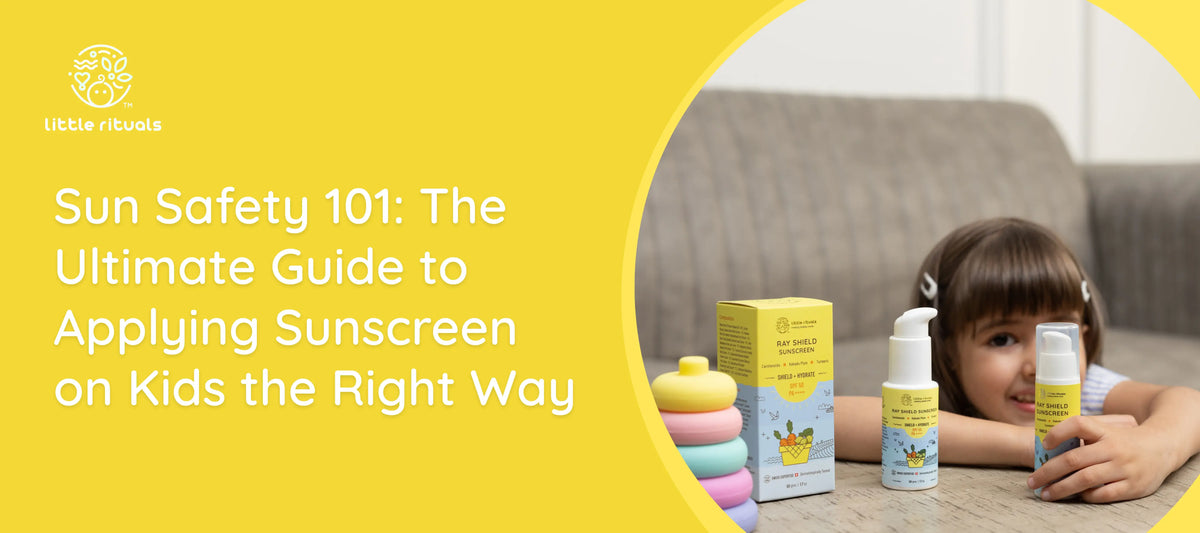
Sun Safety 101: The Ultimate Guide to Applying Sunscreen on Kids the Right Way
As parents, our top priority is ensuring the safety and well-being of our children, especially when it comes to sun protection. Babies and kids have delicate skin that is far more vulnerable to sunburn, irritation, and long-term damage from UV rays. That's why applying sunscreen properly is not just a summer ritual; it's a daily necessity. In this guide, we'll walk you through how to apply baby and kids’ sunscreen safely, share tips for choosing the right one, and highlight why Little Rituals' mineral-based sunscreens are trusted by parents and dermatologists alike.
Why Sunscreen Matters for Babies and Kids
Children's skin is thinner and contains less melanin compared to adult skin, making it significantly more sensitive to the sun. According to the American Academy of Dermatology, just one blistering sunburn during childhood can double the risk of developing melanoma later in life. Hence, sunscreen safety for infants and kids isn't just a precaution, it's a critical part of your child’s health routine.
Understanding the Science of Safe Sun Protection
Most dermatologists recommend using mineral sunscreens for both babies and kids. Unlike chemical sunscreens, which absorb UV rays into the skin, mineral sunscreens form a physical barrier that reflects UV rays. The key ingredient in these formulations is non-nano zinc oxide, which is both highly effective and safe for delicate skin.
Must Read: Mineral Sunscreen for Babies: Safe, Gentle, and Effective Summer Protection

Key Ingredients in Little Rituals Mineral Sunscreens
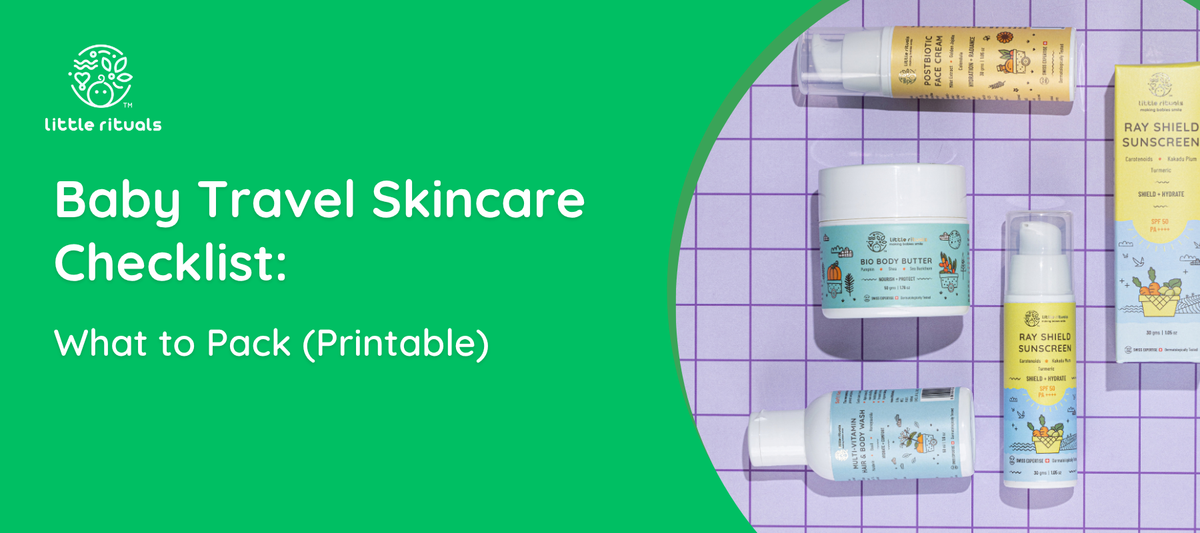
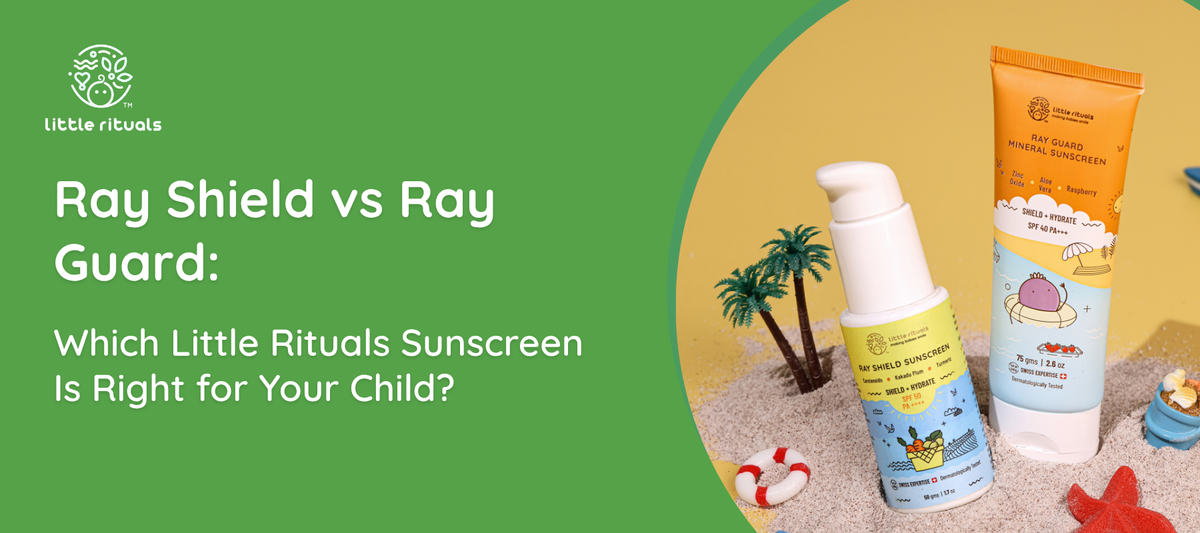
Ray Guard Mineral Sunscreen and Ray Shield Sunscreen from Little Rituals are formulated with Swiss expertise and enriched with:
-
Non-Nano Zinc Oxide: Broad-spectrum UVA/UVB protection.
-
Raspberry Extract: Natural SPF properties and antioxidant support.
-
Aloe Vera: Calms and hydrates sun-exposed skin.
-
Turmeric & Chamomile: Soothe inflammation and reduce photoaging.
-
Crambe Abyssinica Seed Oil & Wheat Germ Oil: Deep hydration and skin barrier support.
-
RayBlock WiFi Defense Technology: Unique protection against Blue Light and WiFi radiation.
Clinical studies confirm:
-
127% protection against oxidative stress
-
73% shield from WiFi radiation
-
42% block against Blue Light
-
49% increase in skin hydration
-
48% improvement in skin elasticity
How to Apply Sunscreen on Babies and Kids: Step-by-Step
Follow these practical steps to ensure you're applying sunscreen on kids effectively:
1. Apply Early
Always apply sunscreen 15–30 minutes before sun exposure to allow the protective barrier to form.
2. Use Enough Product
Use about a teaspoon for the face and a shot-glass amount (approx. 30ml) for the entire body.
3. Don’t Miss These Areas
Ears, neck, tops of feet, hands, behind knees, and the scalp (especially for thin or sparse hair).
4. Layer It Right
For daily use, layer sunscreen over Little Rituals’ Postbiotic Face Cream or Barrier Boost Body Lotion for maximum hydration.
5. Reapply Often
Reapply every two hours, or immediately after swimming, sweating, or towel drying.
6. Indoor Application Too
With increasing screen time, it’s wise to apply a thin layer indoors to protect against Blue Light.
7. Clothing Complement
Pair sunscreen use with sun-protective clothing, wide-brimmed hats, and sunglasses for comprehensive protection.
Best Way to Use Kids Sunscreen in Different Scenarios
Outdoor Play
-
Use Ray Guard Mineral Sunscreen for beach days or park outings.
-
Choose water-resistant formulas to withstand sweating or water play.
Daily Use
-
Ray Shield Sunscreen is lightweight and suitable for school days and everyday outdoor exposure.
Infants Under 6 Months
-
Pediatricians advise avoiding direct sun exposure.
-
Use physical barriers like clothing and shade.
-
Always consult a pediatrician before applying any product. However, for babies nearing 6 months, mineral sunscreens like Ray Guard are considered safe after patch testing.
What Makes Little Rituals Sunscreens Special?
Both Ray Guard and Ray Shield sunscreens by Little Rituals are:
-
Toxin-Free: No Oxybenzone, Octinoxate, or harmful filters
-
No White Cast: Absorb quickly and leave skin looking natural
-
Dermatologically Tested: Safe for even the most sensitive baby skin
-
Eco-Friendly: Reef-safe and biodegradable formulations
Backed by Swiss dermatologists and pediatricians, Little Rituals goes the extra mile with safety certifications and science-led skincare.
Storage & Safety Tips
-
Store sunscreen in a cool, dry place.
-
Check the expiry date regularly.
-
Perform a patch test on the inner elbow before full application, especially for first-time users.

Little Rituals: Delivering One of the Best and Safest Skincare Solutions for Your Little Ones
Knowing how to apply kids sunscreen the right way ensures your child stays safe, happy, and healthy under the sun. From UV rays to Blue Light and even WiFi radiation, Little Rituals sunscreens offer more than protection; they offer peace of mind.
With their science-backed formulations, toxin-free promise, and soothing botanicals, Little Rituals helps parents make the right choice, every day.
So next time you step out with your little one, remember:
Sun safety starts with the right sunscreen and the right way to apply it.
Because your child’s skin deserves nothing but the gentlest, smartest care.
FAQs: Kids and Baby Sunscreen Application
When should I start applying sunscreen to my baby?
For babies under 6 months, avoid direct sun. For older infants, apply a mineral-based sunscreen like Ray Guard after consulting your pediatrician.
2. How often should I reapply sunscreen on kids?
Every two hours and immediately after swimming or sweating.
3. What does "non-nano" mean and why is it important?
Non-nano zinc oxide doesn't penetrate the skin, making it safer for babies and kids.
4. Can I use the same sunscreen on my face and body?
Yes! Little Rituals sunscreens are gentle and safe for full-body use.
5. My child has eczema. Is it safe to use this sunscreen?
Absolutely. Little Rituals' formulas are hypoallergenic and made for sensitive skin.
6. Do kids need sunscreen indoors?
If they’re exposed to screens for long periods, yes. Blue Light can cause oxidative stress over time.
7. How much sunscreen should I use for my toddler?
One teaspoon for the face, and two tablespoons for the rest of the body.