How to Choose the Right Dandruff Shampoo for Your Infant’s Sensitive Scalp
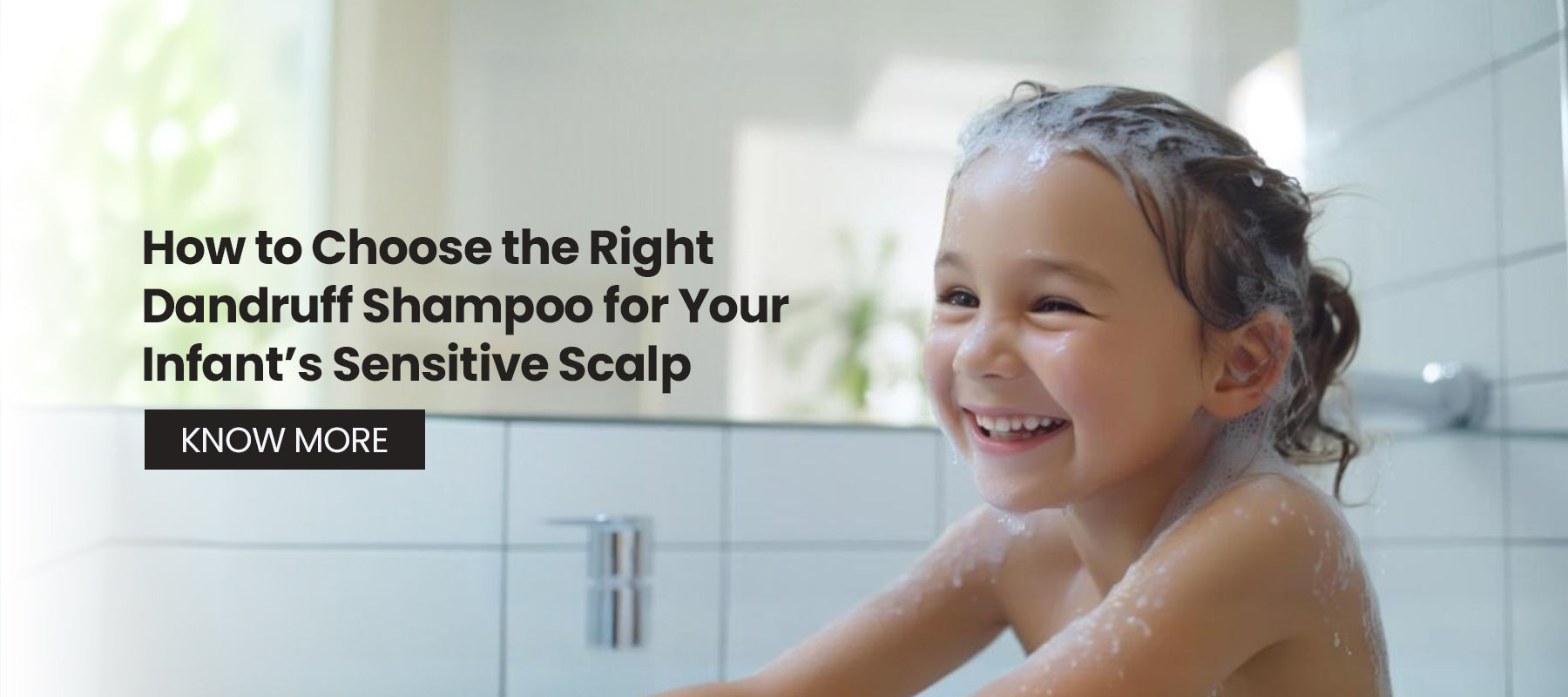
When it comes to caring for your baby, every choice feels important, especially products that come into direct contact with their delicate skin and scalp. How to Choose the Right Dandruff Shampoo is a common concern for parents when they notice flakes, dryness, or cradle cap on their baby’s head.
Infants, newborns, and toddlers often experience scalp conditions such as mild dandruff or cradle cap during their early months. While these conditions are usually harmless, using the wrong shampoo can worsen dryness, irritation, or sensitivity. That is why selecting the right baby anti dandruff shampoo is essential for maintaining a healthy scalp barrier while gently addressing flakes.
In this detailed guide, we will help you understand:
- Why babies get dandruff
- How to identify your baby’s scalp type
- What ingredients to look for (and avoid)
- How to choose the best anti dandruff shampoo for baby, newborns, and toddlers
Why Do Babies Get Dandruff?
Dandruff in babies is most commonly linked to:
- Cradle cap (seborrheic dermatitis)
- Dry or sensitive skin
- Excess oil production
- Immature skin barrier function
Unlike adult dandruff, baby dandruff is rarely caused by hygiene issues. This is why harsh medicated products should never be used. A baby dandruff shampoo should work with your baby’s natural skin cycle, not against it.
Using the best shampoo for baby dandruff helps loosen flakes, reduce irritation, and support natural scalp renewal without causing discomfort.
Understanding Your Baby’s Scalp: Dry, Oily, or Normal?
Just like adults, babies can have different scalp conditions, and knowing which one your child has helps you choose the right baby shampoo for dandruff or dryness.
Dry Scalp
Signs include:
- Loose flakes
- Tight or sensitive skin
- Mild irritation
This often happens when the scalp’s natural oils are limited. Your baby may feel uncomfortable or scratched. For dry scalps, hydrating and nourishing formulas help retain moisture and protect the skin barrier.
Oily Scalp
An oily scalp may appear greasy with buildup and visible dandruff flakes. While oil is necessary to protect skin, too much can trap dead skin cells and lead to dandruff. In these cases, you need a baby shampoo for dandruff that regulates oil without stripping hydration.
Normal Scalp
If your baby’s scalp isn’t too dry or too oily, it’s considered normal. Your focus here is on a shampoo that cleans effectively without drying or aggravating the scalp.
Understanding this foundation makes it easier to answer How to Choose the Right Dandruff Shampoo tailored to your infant’s needs.
Related Product Link: Baby Hair Conditioner
Expert Approach: How to Choose the Right Shampoo for Your Baby
Selecting the right product can feel overwhelming. Here’s what to focus on when choosing a dandruff shampoo for newborns, babies, or toddlers:
1. Gentle & Hypoallergenic Formula
Baby skin is thinner and more absorbent than adult skin. A baby anti dandruff shampoo must be:
- Hypoallergenic
- Dermatologically tested
- Free from sulphates, parabens, silicones, and artificial fragrance
These features reduce the risk of irritation and allergic reactions.
2. Tear-Free & pH Balanced
A tear-free formula ensures bath time stays calm and comfortable. This is especially important for newborns and toddlers who are sensitive to eye irritation.
3. Moisturising & Soothing Ingredients
The best shampoo for baby dandruff includes natural moisturisers such as:
- Aloe vera
- Coconut oil
- Chamomile
- Calendula
- Glycerin
These ingredients hydrate the scalp, soothe irritation, and help reduce visible flakes.
4. Mild Dandruff Control
A baby shampoo for dandruff should never rely on strong antifungal or medicated ingredients. Instead, it should gently support the scalp’s natural exfoliation process.
Shampoo Options by Scalp Type
Shampoos for Dry Scalp
If your infant’s scalp is dry or flaky:
- Choose a rich, moisturizing cleanser
- Ingredients like jojoba oil, glycerin, shea butter, and calendula help retain moisture
- Some brands combine gentle cleansing with soothing botanicals to comfort dry areas
These help lock in hydration and reduce visible scaling or roughness.
Shampoos for Oily Scalp
Babies with oil buildup need a balanced cleanser that:
- Cuts excess oil gently
- Avoids over-stripping
- Offers calming hydration simultaneously
Lightweight formulas with tea tree oil or mild surfactants can help balance oil without dryness.
Shampoos for Normal Scalp
A normal scalp benefits most from:
- Sensitive baby shampoos
- Gentle moisturisation
- No heavy botanicals that overwhelm or irritate
These are ideal as maintenance shampoos and daily moisturising washes that keep scalp balance steady.
Safety First: Ingredients to Avoid
Choose products that are:
- Sulphate-free
- Paraben-free
- Phthalate-free
- Dye-free
- Fragrance-free when possible
Harsh chemicals can increase irritation, allergic reactions, or dryness, especially for newborns and toddlers.
Dandruff Shampoo for Newborns vs Toddlers
Dandruff Shampoo for Newborns
Newborns need ultra-gentle formulas. A dandruff shampoo for newborns should:
- Be fragrance-free
- Use minimal ingredients
- Focus on soothing rather than active treatment
Toddler Dandruff Shampoo
Toddlers may need slightly stronger cleansing due to sweat and activity. A toddler dandruff shampoo should still remain gentle but provide better buildup control.
Bathing Tips: Boosting Shampoo Effectiveness
Beyond the shampoo itself, proper bathing habits help reduce irritation and dandruff symptoms:
- Wait 24+ hours after birth before the first full bath
- Use lukewarm water, never hot
- Limit full baths to 2–3 times a week (over-washing dries skin)
- Massage gently: This encourages natural oils and helps loosen cradle cap flakes
These simple routines enhance the performance of even the best shampoo for baby dandruff. You can also support scalp health with practices like scalp oiling to prevent baby dandruff.
Conclusion: Selecting the Best Baby Dandruff Shampoo
Choosing the right shampoo is essential to nurturing your baby’s scalp. By understanding How to Choose the Right Dandruff Shampoo, including scalp types and ingredient benefits, you’ll feel confident selecting a product that:
- Soothes dryness
- Balances oil production
- Reduces mild dandruff or cradle cap
- Keeps your baby comfortable and happy
At Little Rituals, we craft gentle, natural shampoos designed with your infant’s sensitive scalp in mind. Our formulas are tear-free, hypoallergenic, and enriched with calming botanicals, perfect for daily care, cradle cap relief, or as your toddler's dandruff shampoo go-to. You can also explore more guidance like baby soap vs shampoo for scalp health.
Choose Little Rituals for soft, healthy, and joyful bath time every day.
Frequently Asked Questions
Q1. Can I use dandruff shampoo on a newborn?
Yes, only use a gentle dandruff shampoo for newborns formulated for infants, never adult anti-dandruff products.
Q2. Does baby shampoo help with dandruff?
A mild baby anti-dandruff shampoo can help wash away flakes and soothe irritation on delicate scalps.
Q3. How often should I shampoo my baby’s hair?
Typically, 2–3 times per week is ideal to avoid dryness.
Q4. Can toddlers use the same dandruff shampoo?
Yes, choose an age-appropriate toddler dandruff shampoo specifically formulated for kids.
Q5. Are natural shampoos better?
Yes, natural, hypoallergenic shampoos reduce irritation risk on sensitive skin.
Q6. What ingredients soothe itch and flakes?
Aloe vera, chamomile, and calendula are known for their hydration and calming effects.
Q7. What should I avoid in baby shampoo?
Avoid sulphates, parabens, artificial fragrance, and dyes that irritate the baby's skin.
Q8. Why choose a baby-specific dandruff shampoo?
Adult formulations can be too harsh. Baby-specific shampoos protect gentle skin while treating flakiness.