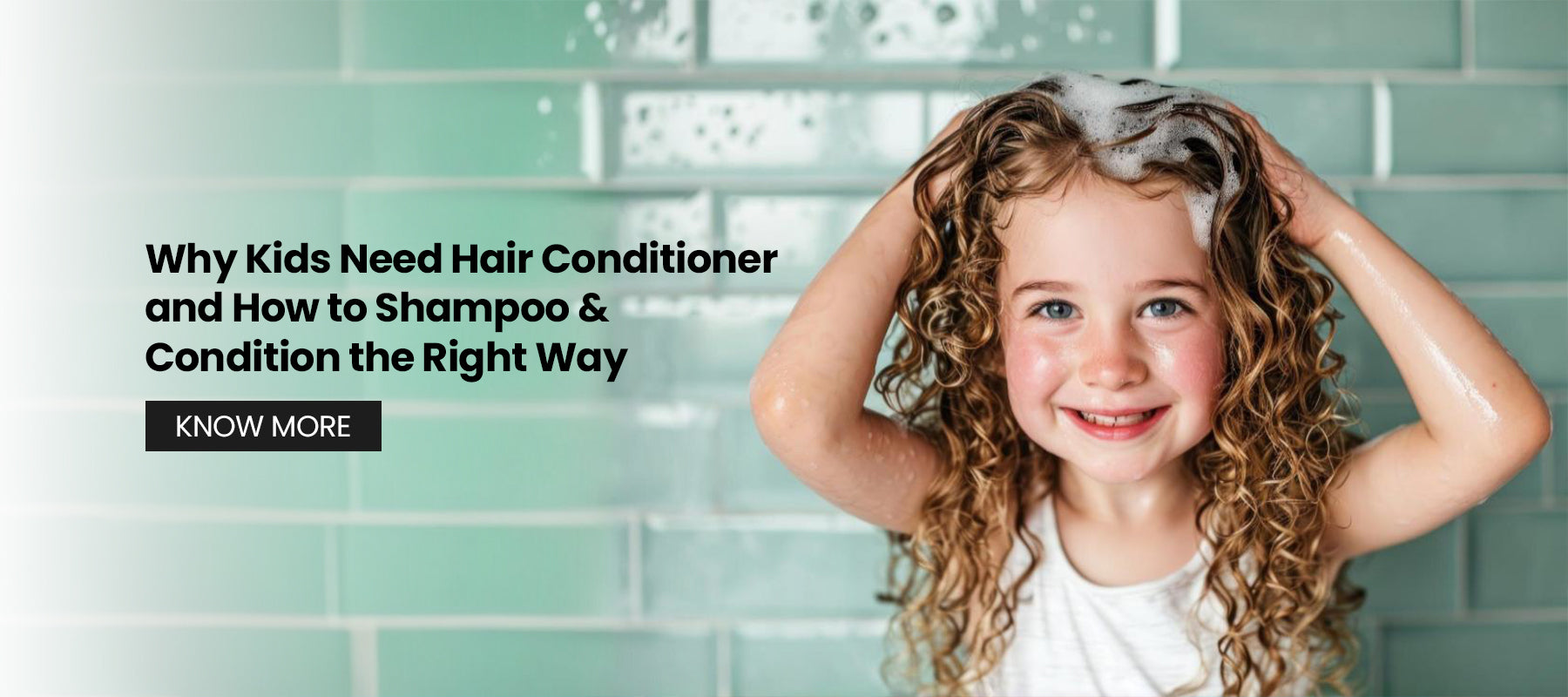
Why Kids Need Hair Conditioner and How to Shampoo & Condition the Right Way
When it comes to children’s hair care, many parents focus only on shampoo and overlook an essential step, conditioning. However, understanding the full range of kids hair conditioner benefits can help you build a healthier, gentler, and more effective hair care routine for your child.
Children’s hair is different from adult hair. It is finer in texture, more delicate in structure, and more prone to dryness, tangling, and environmental damage. Even though kids don’t typically use styling tools or chemical treatments, their hair still faces daily exposure to sun, sweat, pollution, dust, chlorine, and friction from pillows and clothing. This is why many parents looking for high-quality baby products prioritize specialized formulas that address these unique needs.
This is why adding a gentle conditioner designed specifically for children can make a significant difference.

Understanding Children’s Hair: Why It Needs Special Care
Before diving into the kids hair conditioner benefits, it’s important to understand why children’s hair behaves differently.
1. Finer Hair Strands
Children typically have thinner hair shafts compared to adults. Thinner strands lose moisture faster and break more easily.
2. Sensitive Scalp Barrier
A child’s scalp has a developing skin barrier, making it more prone to dryness, irritation, and imbalance.
3. Higher Risk of Tangles
Because children are active, running, playing, rolling, their hair experiences more friction, which leads to knots.
4. Frequent Washing
Many parents wash kids’ hair more often due to sweat and outdoor play, which can strip natural oils. This is why choosing the right new born baby products early on helps set a foundation for scalp health.
These factors make conditioning not just optional, but beneficial.
Top Kids Hair Conditioner Benefits (Explained in Detail)
1. Deep Moisture Restoration
One of the most important kids hair conditioner benefits is restoring hydration after shampooing. Shampoo cleanses the scalp by removing dirt, sweat, and excess oil, but in the process, it can also remove natural moisture.
Conditioner helps replenish lost hydration, sealing the hair cuticle and preventing excessive dryness.
Hydrated hair:
- Feels softer
- Breaks less easily
- Looks shinier
- Tangles less
2. Prevents Breakage and Split Ends
Children’s hair can snap easily during brushing, especially when dry or tangled. Conditioning strengthens the hair shaft by smoothing rough cuticles.
Over time, this reduces:
- Split ends
- Hair snapping during combing
- Excess shedding caused by breakage
This is one of the long-term kids hair conditioner benefits that parents notice after consistent use.
3. Makes Detangling Easier and Less Painful
Every parent knows the struggle of detangling knots while their child squirms or cries.
Conditioner creates slip, a smooth coating that allows strands to glide past each other. This is a common feature found in premium items inside a baby gift hamper. This reduces friction and significantly lowers detangling time.
Result:
- Less pulling
- Less pain
- Fewer tantrums
- Happier hair wash days
4. Balances and Protects the Scalp
A healthy scalp is the foundation of healthy hair.
Gentle conditioners formulated for children help:
-
Maintain natural pH balance
-
Soothe dryness
-
Prevent flakiness
-
Reduce irritation
Unlike adult products, kids’ conditioners are formulated to support delicate scalp skin.
5. Improves Hair Texture and Manageability
Conditioned hair behaves better.
It becomes:
- Easier to braid
- Easier to tie into ponytails
- Less frizzy
- More manageable for school mornings
For curly or wavy hair, this is one of the most noticeable kids hair conditioner benefits.
6. Protects Against Environmental Stressors
Children’s hair is exposed to:
- Sunlight (UV damage)
- Chlorine from swimming pools
- Pollution and dust
- Wind friction
Conditioner acts as a protective layer, reducing damage from these environmental stressors.
7. Encourages Healthy Hair Growth
While conditioner does not directly stimulate hair growth, it supports length retention.
By preventing breakage and reducing split ends, hair can grow longer without frequent trimming due to damage.
This makes healthier, fuller-looking hair over time, another valuable kids hair conditioner benefit.
When Should You Start Using Conditioner on a Baby?
The right age depends on hair length, density, and dryness levels.
Infants (0–12 Months)
Most newborns do not require conditioner. A mild, tear-free shampoo is sufficient unless hair appears dry or rough.
Toddlers (1–3 Years)
If your toddler’s hair:
- It's getting longer
- Frequently tangles
- Appears dry
You can introduce a gentle conditioner once or twice weekly.
Preschoolers (3+ Years)
This is the ideal stage to start a consistent conditioning routine, especially for children with:
- Curly hair
- Thick hair
- Frizzy texture
- Long hair
Step-by-Step Guide: How to Use Shampoo & Conditioner Correctly
To fully experience kids hair conditioner benefits, technique matters.
Step 1: Choose the Right Products
Look for:
- Sulfate-free formulas
- Paraben-free ingredients
- No harsh synthetic fragrance
- Dermatologically tested
- Plant-based or gentle botanical ingredients
Avoid adult conditioners, as they may contain heavy silicones or strong actives. If you are putting together a new born baby gift hamper, ensure the hair care is plant-based.
Step 2: Wet Hair Thoroughly
Use lukewarm water to completely saturate hair. Proper wetting ensures better cleansing and even product distribution.
Step 3: Shampoo Properly
- Use a small coin-sized amount
- Focus on the scalp
- Massage gently using fingertips
- Rinse thoroughly
Do not pile hair on top of the head; this can create tangles.
Step 4: Apply Conditioner the Right Way
- Take a small amount
- Apply only to mid-lengths and ends
- Avoid direct scalp application
- Leave on for 1–2 minutes
- Rinse completely
Applying conditioner correctly ensures you get full kids' hair conditioner benefits without greasiness.
Step 5: Dry Gently
- Pat dry with a soft towel
- Avoid rough rubbing
- Use a wide-tooth comb starting from the ends
Never brush aggressively on wet hair.
Expert Hair Care Tips for Parents
- Do Not Overwash: 2–3 washes per week are enough unless the child is sweating heavily.
- Use a Microfiber Towel: Reduces friction and frizz.
- Trim Every 8–12 Weeks: Prevents split ends from traveling upward.
- Protect Hair During Sleep: Loose braids reduce friction damage.
- Encourage a Balanced Diet: Iron, protein, biotin, and omega-3 fatty acids support healthy hair.
Common Myths About Kids' Hair Conditioner
Myth 1: Conditioner Is Only for Adults
False. Kids hair conditioner benefits apply to children just as much as adults.
Myth 2: Conditioner Causes Hair Fall
Incorrect. Breakage decreases with proper conditioning.
Myth 3: Short Hair Doesn’t Need Conditioner
Even short hair can benefit if dryness or tangling is present.
Myth 4: Natural Oils Replace Conditioner
Oils are different from conditioners and may weigh hair down.
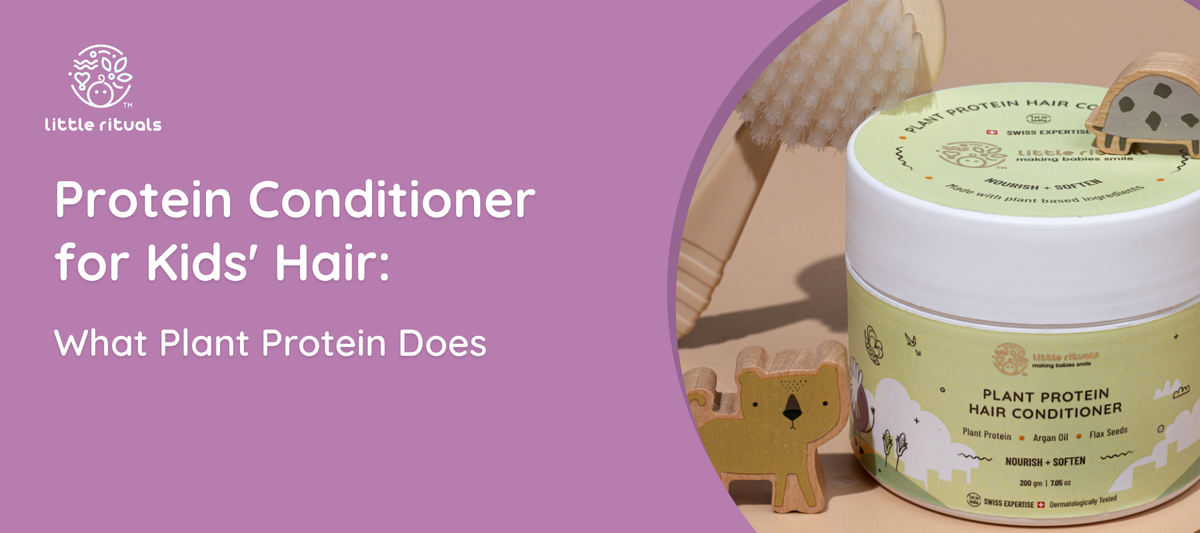
Why Choose Little Rituals for Your Child’s Hair Care?
At Little Rituals, every formula is designed with your child’s delicate needs in mind.
Our baby hair conditioner & shampoo are:
- Sulfate-free
- Paraben-free
- Made with plant-based ingredients
- Tear-free
- Dermatologically safe
We believe bath time should be a nurturing ritual, not just a routine.
Explore our safe, gentle, and thoughtfully crafted hair care range designed to deliver visible kids hair conditioner benefits while protecting your child’s sensitive scalp and hair. If you are looking for a thoughtful baby gift box, our hair care range is a perfect choice to deliver visible kids hair conditioner benefits while protecting a sensitive scalp.
Read Our Latest Blogs
Is Olive Oil Good For Baby Massage | When To Start Oil Massage For Newborn Baby | Which Oil Is Good For Baby Massage | Body Butter Vs Body Lotion Kids
Frequently Asked Questions
Q1. What are the main kids' hair conditioner benefits?
They include moisture retention, reduced tangles, less breakage, improved softness, and better manageability.
Q2. At what age can I introduce conditioner?
Usually between 1–3 years, depending on hair type and dryness.
Q3. How often should kids use conditioner?
2–3 times per week after shampooing.
Q4. Can conditioner prevent tangles completely?
It significantly reduces tangles but proper combing technique is also important.
Q5. Should conditioner be applied to the scalp?
No, focus on mid-lengths and ends.
Q6. Does conditioner make hair greasy?
Not if used in small amounts and rinsed thoroughly.
Q7. Is sulfate-free conditioner important for kids?
Yes, sulfate-free formulas are gentler on sensitive scalps.
Q8. Can conditioner help with frizzy hair?
Yes, one of the key kids hair conditioner benefits is frizz control and smoother texture.