MADE SAFE®️ USA vs Other Safety Certifications: What’s the Difference?
When it comes to skincare, especially for your baby, every ingredient matters. Parents today are more aware than ever about what goes into their child’s lotion, shampoo, and sunscreen. Labels like “organic,” “natural,” or “non-toxic” are everywhere, but do they all mean the same thing? Not quite.
That’s where certifications like MADE SAFE®️ USA come in. This certification has become one of the most trusted symbols of safety in personal care. If you are looking for a thoughtful present that meets these standards, a baby gift box from a certified brand is an excellent choice. But how is it different from other safety certifications like ECOCERT, USDA Organic, or EWG Verified? Let’s explore what sets MADE SAFE USA apart and why it’s important when choosing gentle skincare for your little one.
What Is MADE SAFE®️ USA?
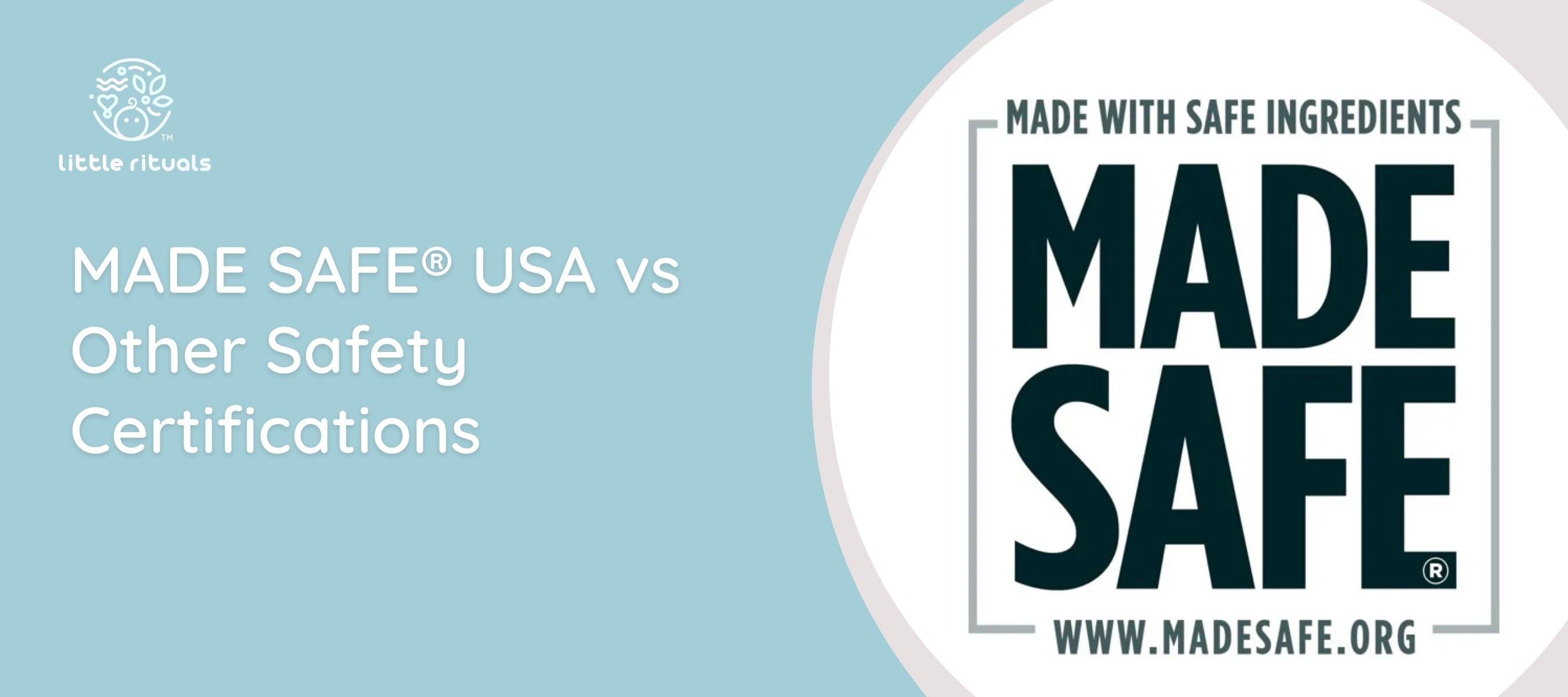
MADE SAFE®️ USA is the first comprehensive human health–focused certification in the United States. It ensures that every ingredient used in a product is free from toxic chemicals, carcinogens, endocrine disruptors, heavy metals, and harmful synthetics.
In simple terms, MADE SAFE®️ USA guarantees that a product is made without any ingredients known or suspected to cause harm to human health or ecosystems. Choosing a baby gift hamper that carries such high safety standards ensures that you are gifting only the best to a new family.
Unlike many other certifications that only focus on organic ingredients or environmental impact, MADE SAFE USA takes a more holistic approach, evaluating safety for both people and the planet.
Why Safety Certifications Matter in Skincare
Your skin absorbs what you apply on it. For babies, whose skin is up to five times thinner than an adult’s, this matters even more. Unsafe ingredients can easily penetrate and cause irritation, allergies, or long-term health effects.
That’s why safety certifications aren’t just logos, they’re proof of trust. They show that the brand has gone through rigorous testing and scientific evaluation to ensure complete safety for you and your child. When selecting a new born baby gift hamper, looking for these certifications provides an extra layer of reassurance.
At Little Rituals, this commitment to purity is at the heart of everything we do. Our products are formulated with plant-based, non-toxic, and clinically tested ingredients that meet the highest safety standards, giving parents peace of mind from day one.
How MADE SAFE®️ USA Differs from Other Certifications
Let’s understand how MADE SAFE USA compares to some of the most recognized global safety and organic certifications.
1. MADE SAFE®️ USA vs ECOCERT
ECOCERT is a European certification focused on ensuring products are made from natural and organic ingredients. However, it primarily checks for organic farming practices and sustainable sourcing, not necessarily human toxicity or chemical safety. MADE SAFE USA ensures your product is truly non-toxic for your skin, making it a vital benchmark for all baby products used in a daily routine.
MADE SAFE USA, on the other hand, goes beyond ingredients’ origins. It checks each ingredient for potential health hazards, whether it can affect the nervous system, disrupt hormones, or harm reproduction.
So while ECOCERT ensures your product is “eco-friendly,” MADE SAFE USA ensures it’s truly non-toxic for your skin.
2. MADE SAFE®️ USA vs USDA Organic
The USDA Organic certification is mainly for agricultural ingredients. It ensures that a certain percentage of a product is derived from organic farming without synthetic pesticides or GMOs.
But here’s the catch: a product can be USDA Organic yet still contain naturally derived ingredients that might cause skin irritation or be unsafe for babies.
MADE SAFE goes deeper. It screens every component, including preservatives, fragrances, and even byproducts, for toxicity. This is especially important for new born baby products where the skin barrier is still very delicate.
3. MADE SAFE®️ USA vs EWG Verified
EWG Verified (Environmental Working Group) is another respected safety label. It focuses on transparency and encourages brands to avoid chemicals of concern.
However, EWG mainly evaluates products based on available data and ingredient disclosure. MADE SAFE USA goes further by scientifically evaluating the molecular structure of each ingredient for potential harm, not just reviewing existing studies.
In short, EWG tells you what’s in the product, while MADE SAFE USA tells you if it’s truly safe.
4. MADE SAFE®️ USA vs Cruelty-Free or Vegan Certifications
Labels like “Cruelty-Free” and “Vegan” are important from an ethical standpoint, they ensure no animal testing or animal-derived ingredients.
But these certifications don’t guarantee safety for human skin. A product can be vegan yet still contain synthetic or harsh chemicals.
MADE SAFE USA, however, ensures complete human and environmental safety, giving parents holistic reassurance.
Why MADE SAFE®️ USA Certification Matters for Babies
When it comes to babies, there’s no room for compromise. Their skin barrier is still developing, making it more sensitive and prone to reactions. Many commercial skincare products contain hidden irritants such as formaldehyde releasers, parabens, sulfates, and synthetic fragrances, all of which are banned under the MADE SAFE USA standard.
Products with the MADE SAFE®️ USA seal are screened against a database of over 6,500 known harmful substances. Every ingredient must pass a multi-level safety assessment before approval. To better understand these safety standards, you can explore ingredients banned under MADE SAFE certification.
The MADE SAFE®️ Philosophy: Clean for the Whole Ecosystem
Another major difference between MADE SAFE USA and other certifications is its focus on the entire life cycle of a product. It evaluates how each ingredient impacts soil, air, water, and wildlife once it leaves your skin and enters the environment.
This ensures that what’s good for your baby is also good for the planet. It’s a forward-thinking approach that resonates with conscious families who value both health and sustainability.
How Little Rituals Aligns with MADE SAFE®️ USA Values
At Little Rituals, every formula is designed to be as gentle as nature intended. While we use multiple global safety benchmarks, our philosophy mirrors the MADE SAFE®️ USA approach:
- Clinically tested and proven safe for babies and sensitive skin
- Free from toxins, sulfates, parabens, silicones, and mineral oils
- Infused with plant actives backed by Swiss expertise
- Sustainably sourced ingredients that respect the planet
- Transparent labeling so parents know exactly what they’re using
We believe that skincare for little ones shouldn’t just feel good, it should do good. Every Little Rituals product is thoughtfully formulated to nurture delicate skin with non-toxic, scientifically validated, and nature-powered care.
Why Parents Choose Certified, Non-Toxic Skincare
Choosing a certified, safe product isn’t about following a trend; it’s about building lifelong skin health. With certified brands like Little Rituals, parents know they’re giving their child a start that’s clean, pure, and worry-free.
MADE SAFE®️ USA and similar certifications empower parents to make informed choices, free from marketing gimmicks or greenwashing. They ensure that every wash, every lotion, every tiny ritual you share with your baby is backed by science, safety, and love.
Final Thoughts: Safety That Goes Beyond Labels
While all certifications play a role in promoting better standards, MADE SAFE®️ USA stands out for its depth and transparency. It’s the only certification that truly answers the most important question:
“Is this product 100% safe for human use and our planet?”
At Little Rituals, that’s the same question we ask ourselves every day. Because your baby’s skin deserves nothing less than the purest, gentlest care nature and science can offer.
Read Our Latest Blogs
Is Olive Oil Good For Baby Massage | When To Start Oil Massage For Newborn Baby | Which Oil Is Good For Baby Massage | Body Butter Vs Body Lotion Kids
Frequently Asked Questions
Q1. What does MADE SAFE®️ USA mean?
It means the product is made without any known toxic, harmful, or unsafe ingredients for humans or the environment.
Q2. Is MADE SAFE®️ USA better than organic certifications?
Yes. MADE SAFE USA checks both organic and synthetic ingredients for human safety, not just farming practices.
Q3. Can a product be organic but not safe?
Absolutely. Some natural ingredients can still cause irritation. MADE SAFE USA ensures all ingredients are non-toxic and gentle.
Q4. How is MADE SAFE®️ USA different from EWG Verified?
EWG focuses on ingredient transparency; MADE SAFE USA tests for safety and molecular toxicity.
Q5. Why should parents look for safety certifications?
They guarantee that the product is free from harmful chemicals and is scientifically tested for safety.
Q6. Does Little Rituals have MADE SAFE USA-certified ingredients?
Our formulations align with MADE SAFE USA principles, using only safe, natural, and clinically tested plant-based ingredients.
Q7. Are cruelty-free and vegan products always safe?
Not necessarily. They ensure ethical sourcing but don’t always confirm ingredient safety like MADE SAFE USA does.
Q8. How can I choose safe baby skincare?
Look for trusted certifications like MADE SAFE USA or brands like Little Rituals that prioritize clean, toxin-free formulations.