The Best Sunscreens for Kids: Protecting Your Little Ones from UV Rays

Parents are mostly concerned about their child’s skin and healthcare. One of the most concerning topics is the potential harm caused by dangerous UV radii. Every parent nowadays is trying to find out the best sunscreen for their kids to protect them from UV rays.
To choose the appropriate sunscreen for your child, you need to know the essential ingredients that should be in your sunscreen. Delve into this blog to find out the details about sunscreen for infants.
Understanding the Value of Sunscreen for Children
After a lot of research, you need to know that children’s skin is more sensitive and vulnerable to UV radiation that is caused by the sun and excessive heat. Extended exposure can cause sunburn, early aging, and a higher chance of developing skin cancer in later life. To avoid all this, you need to buy sunscreen that works, which is a crucial first step in protecting your children from these possible risks.
Key ingredients to look for
Broad spectrum: You need to look for sunscreens that are designated as broad spectrum; they are known to offer protection against UVA and UVB radiation. Look for sunscreens that are designated as "broad-spectrum," as they offer protection against UVA and UVB radiation. UVA is linked to early aging while UVB is caused by sun rays.
SPF Level: This is the most important thing to look for in sunscreen. SPF has the ability to block UVB rays, as it is the sun protection factor in any sunscreen. Dermatologists advise children to wear at least 30 SPF. Look for long-lasting sunscreen for your baby's skin.
Water Resistance: Kids love being in the water and are usually quite active. To ensure that your sunscreen is effective even after being in the water, choose water-resistant varieties. Remember that being water-resistant does not equate to being waterproof, so you will need to reapply after swimming.
Hypoallergenic and fragrance-free: Children's skin might be sensitive; therefore, sunscreens that are hypoallergenic and fragrance-free are the best options. These formulas reduce the possibility of allergies and skin irritation, giving your child a comfortable experience.
Proper Components: Don’t choose sunscreens that include harsh chemicals like parabens and oxybenzone, as they can irritate the skin or trigger allergic reactions. Rather, choose those that have mild chemicals like titanium dioxide or zinc oxide.
Ease of Application: Select sunscreen products that are simple to apply, as kids might not be the most patient while applying sunscreen. For easy and fast coverage, spray or stick formulas might be useful, especially for kids who like to wriggle.
Find the best sunscreen for infants at Little Rituals!
Sunscreen is an essential protection for everyone, whether you talk about kids, teenagers, or adults. Everyone knows that the harm caused to the skin due to sun exposure can be hazardous to the inside of the skin as well.
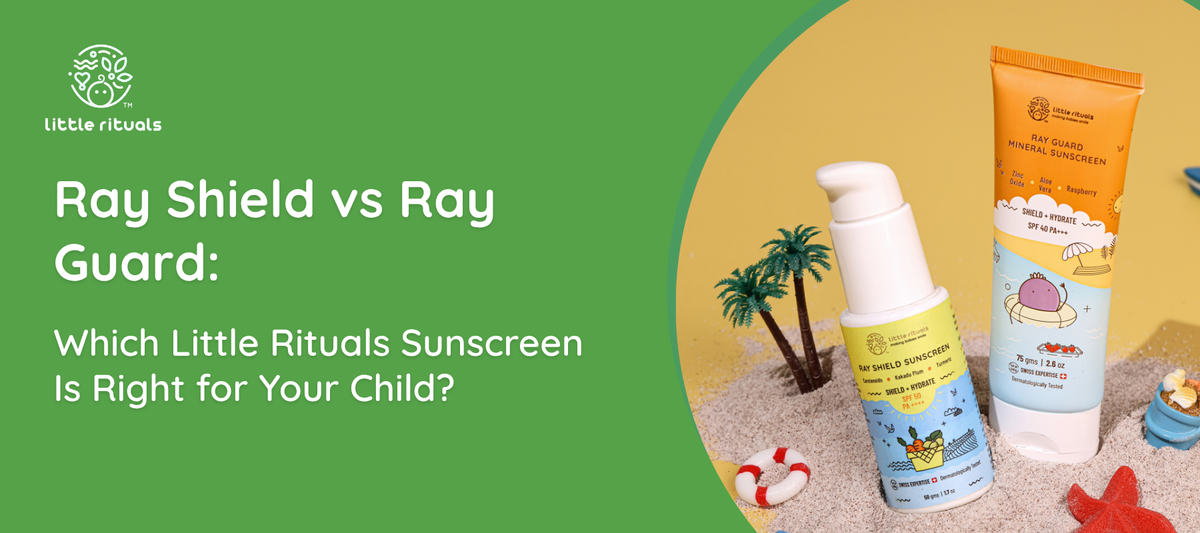
You can find sunscreen lotion for kids on the official online store of Little Rituals. They are dedicated to providing the best products for infants and kids. You can find other skin care-related products at their online store.