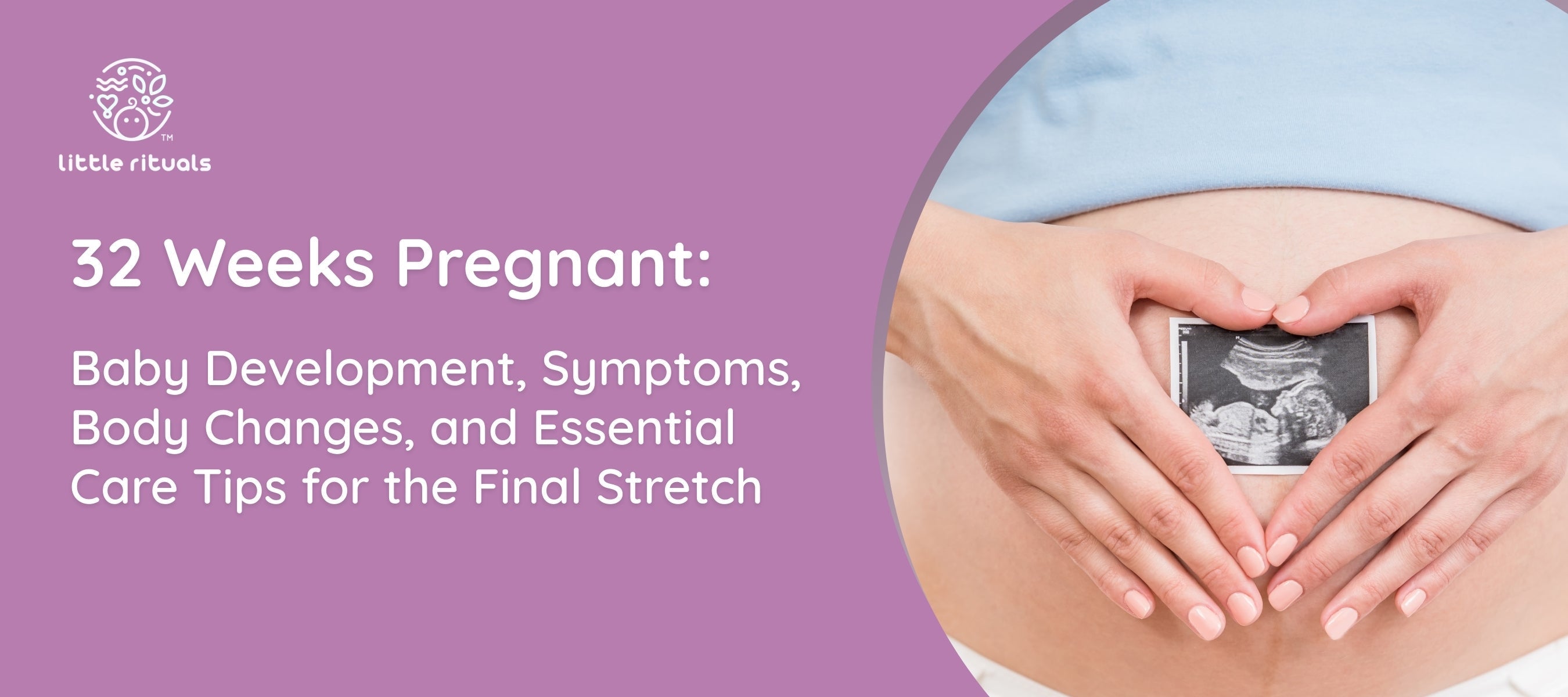
32 Weeks Pregnant: Baby Development, Symptoms, Body Changes, and Essential Care Tips for the Final Stretch
Disclaimer: This content is for informational purposes only and is not a substitute for professional medical advice. Always consult your healthcare provider.
At 32 weeks pregnant, you are about eight months into pregnancy and well into the third trimester. Your baby weighs roughly between 1.7 and 2 kilograms and continues developing lungs, brain connections, and body fat. Many mothers experience symptoms such as fatigue, swelling, heartburn, and shortness of breath as the body prepares for childbirth.
For expectant mothers, week 32 can bring a mixture of excitement and physical changes. You may notice increased tiredness, occasional practice contractions, and a growing belly that makes daily activities slightly more challenging. Understanding what happens during this week helps you stay informed and better prepared as your due date approaches.
Key Highlights at 32 Weeks Pregnant
Some important details about this stage of pregnancy include the following.
- You are approximately eight months pregnant
- Your baby is in the third trimester stage of development
- Average baby weight is around 1.7 to 2 kilograms
- Baby length is usually around 42 to 43 centimeters
- Rapid brain growth and lung development are taking place
- Mothers may experience swelling, fatigue, and mild contractions
These milestones indicate that your baby is steadily preparing for life outside the womb.
Baby Development at 32 Weeks Pregnant
During week 32, your baby continues to grow stronger and more developed each day. Several important physical and neurological changes occur during this stage.
Baby Size and Weight
At 32 weeks pregnant, your baby is often compared to the size of a large squash or cabbage. The baby’s body is filling out as fat layers form beneath the skin. These fat deposits help regulate body temperature after birth.
Typical measurements during this week include the following.
- Weight around 1.7 to 2 kilograms
- Length approximately 42 to 43 centimeters
- Continued weight gain each week
Although every baby develops at a slightly different pace, these measurements provide a general idea of growth.
Brain Development
One of the most remarkable developments during week 32 is the rapid growth of the brain. The brain’s surface becomes more complex as folds and grooves deepen. These structures increase the brain’s capacity to process information.
Important brain changes include the following.
- Formation of billions of neural connections
- Improved coordination between brain and body
- Increased sensory awareness
Your baby may begin responding more actively to sounds, light, and touch.
Lung Development
Although the lungs are still developing, they are getting closer to functioning independently. The baby begins producing surfactant, a substance that helps the lungs expand and contract properly.
During this stage the baby also practices breathing movements, even though oxygen is still supplied through the placenta.
Baby Position in the Womb
Many babies begin shifting into the head down position during week 32. This position is ideal for delivery. However, it is perfectly normal if your baby has not turned yet.
Doctors continue monitoring fetal position during routine prenatal visits.
Baby Movements and Sensations
At this stage, mothers may sometimes find it difficult to distinguish between different types of fetal sensations. Understanding the difference between normal movement and digestive sensations can help reduce anxiety. You can read more in this guide on difference between gas bubbles and baby moving.
Your Body at 32 Weeks Pregnant
As your baby grows, your body undergoes significant adjustments to accommodate the expanding uterus and increased weight.
Growing Belly and Weight Gain
By week 32, the uterus has expanded considerably and sits well above the belly button. Your abdomen may feel tighter and heavier as your baby continues growing.
Typical pregnancy weight gain by this stage ranges between the following.
- Around 9 to 12 kilograms depending on individual health factors
- Gradual weekly weight gain in the third trimester
Your doctor will monitor weight gain during prenatal appointments to ensure healthy progress.
Shortness of Breath
Shortness of breath is common during late pregnancy. The enlarged uterus pushes upward against the diaphragm, reducing lung expansion. This can make deep breathing slightly more difficult.
Simple adjustments can help reduce discomfort.
- Maintain good posture when sitting or standing
- Take slow and deep breaths
- Rest when needed
Back Pain and Pelvic Pressure
Back discomfort is another common complaint at 32 weeks pregnant. The growing baby shifts your center of gravity and places additional pressure on the lower back and pelvic muscles.
Helpful strategies include the following.
- Gentle prenatal stretches
- Supportive footwear
- Proper sleeping posture with pillows for support
Braxton Hicks Contractions
Many women begin experiencing Braxton Hicks contractions around this time. These are practice contractions that help prepare the uterus for labor.
They are usually characterized by the following.
- Irregular tightening of the abdomen
- Mild discomfort rather than intense pain
- Contractions that stop with rest or hydration
Unlike real labor contractions, they do not become stronger or more frequent.
Fatigue and Reduced Energy
Feeling tired at 32 weeks pregnant is completely normal. Your body is supporting the final stages of fetal growth while also adjusting to hormonal changes.
To manage fatigue effectively consider the following.
- Taking short rest breaks throughout the day
- Maintaining a balanced diet
- Staying hydrated
Common Symptoms at 32 Weeks Pregnant
Many physical symptoms appear more noticeable during the final trimester.
Swollen Feet and Ankles
Fluid retention often causes swelling in the feet and ankles. This condition is common during late pregnancy.
Ways to reduce swelling include the following.
- Elevating your feet when resting
- Avoiding standing for long periods
- Drinking enough water
Heartburn and Digestive Discomfort
Hormonal changes relax the muscles in the digestive tract, which may lead to heartburn.
Helpful dietary adjustments include the following.
- Eating smaller meals more frequently
- Avoiding heavy or spicy foods
- Remaining upright after meals
Sleep Disturbances
Finding a comfortable sleeping position becomes challenging as pregnancy progresses. Many women benefit from sleeping on the left side with supportive pillows.
Frequent Urination
The growing uterus places pressure on the bladder, which can lead to more frequent trips to the bathroom.
Emotional Changes
Hormonal fluctuations combined with anticipation about childbirth may affect mood. Feeling emotional or anxious during this stage is completely natural.
Some mothers also find comfort in light reading and relaxation. Exploring resources like best books to read in pregnancy can help reduce stress and support emotional wellbeing.
Medical Checkups and Monitoring at 32 Weeks
Routine prenatal appointments remain essential during this period. Doctors usually assess several aspects of maternal and fetal health.
During checkups doctors may monitor the following.
- Baby’s growth and heartbeat
- Amniotic fluid levels
- Baby’s position inside the womb
- Maternal blood pressure
- Fetal movements
Some pregnancies may involve additional ultrasounds if doctors need to track growth closely.
Tips for a Healthy Week 32 of Pregnancy
Maintaining healthy habits during this stage can improve comfort and support your baby’s development.
Balanced Nutrition
Focus on foods that provide essential nutrients, such as the following.
- Protein from eggs, beans, and lean meats
- Calcium from dairy products and leafy greens
- Iron from spinach and lentils
- Healthy fats from nuts and seeds
Gentle Physical Activity
Light exercise may improve circulation and reduce discomfort.
Suitable options include the following.
- Walking
- Prenatal yoga
- Gentle stretching
Always consult your healthcare provider before beginning any exercise routine.
Preparing Your Hospital Bag
Many parents begin packing their hospital bag for delivery list around week 32 to ensure they have all the essentials ready before labor begins.
- Medical documents and identification
- Comfortable clothing for labor and recovery
- Baby clothing and blankets
- Personal toiletries
Preparing early reduces stress as your due date approaches.
Preparing for Your Baby’s Arrival
As you enter the final weeks of pregnancy, preparation becomes an important part of daily life.
- Setting Up the Baby’s Sleeping Space: Ensuring a safe sleep environment for your newborn is essential. Many parents prepare a crib or bassinet before the baby arrives.
- Learning Basic Newborn Care: Understanding newborn care basics and preparing a checklist of newborn baby essentials can help parents feel more confident before their baby arrives.
- Creating Calm Daily Routines: Establishing simple routines early can help babies feel secure. Many families introduce calming bedtime rituals, gentle bathing routines, and soothing environments.
Create Loving Rituals for Your Baby with Little Rituals
As you prepare to welcome your baby, many parents start thinking about the small daily rituals that nurture comfort, bonding and care.
Little Rituals focuses on gentle, plant-based baby products designed for delicate newborn skin, helping families create safe and soothing routines from the very first days.
From nourishing oils to everyday baby essentials, thoughtful care products can turn simple moments, like bath time or bedtime, into calming rituals that strengthen the bond between parent and baby. These also make meaningful gifting choices such as a baby gift box or a baby gift hamper for new parents.
Explore Little Rituals and begin building beautiful, nurturing routines for your baby’s earliest days. You can also consider a thoughtfully curated new born baby gift hamper to celebrate your baby’s arrival.
Final Thoughts
Reaching 32 weeks pregnant is a meaningful milestone in your pregnancy journey. Your baby is becoming stronger every day, and your body is steadily preparing for childbirth. Although some physical discomforts may appear during this stage, they are often signs that your body is adapting to support the final stages of development.
Focusing on rest, balanced nutrition, emotional wellbeing, and regular medical care can help ensure a healthier and more comfortable pregnancy experience. The weeks ahead will bring you closer to meeting your baby for the very first time.
Read Our Latest Blogs
Is Olive Oil Good For Baby Massage | When To Start Oil Massage For Newborn Baby | Which Oil Is Good For Baby Massage | Body Butter Vs Body Lotion Kids | Difference Between Gas Bubbles And Baby Moving
Frequently Asked Questions
Q1. What happens at 32 weeks pregnant?
At 32 weeks pregnant, your baby is rapidly gaining weight, brain development accelerates, and lungs continue maturing. Many babies begin turning head-down while mothers often experience fatigue, swelling, and occasional Braxton Hicks contractions.
Q2. Why am I so tired at 32 weeks pregnant?
Fatigue happens because your body is working harder to support the baby. Hormonal changes, disrupted sleep, and increased body weight also contribute to exhaustion.
Q3. How big is the baby at 32 weeks pregnant?
Most babies weigh around 1.7–2 kg (3.8–4.4 lbs) and measure about 42–43 cm long at week 32.
Q4. How often should the baby move at 32 weeks pregnant?
Babies should move regularly throughout the day. Many doctors recommend kick counts, expecting about 10 movements within two hours during active periods.
Q5. Can babies be born healthy at 32 weeks?
Yes, babies born at 32 weeks can survive with medical care. However, they may need support in a neonatal intensive care unit (NICU) because their lungs and immune systems are still developing.
Q6. Is it normal to feel pressure in the pelvis at 32 weeks?
Yes. Pelvic pressure often occurs because the growing baby places more weight on the lower abdomen and pelvic area.
Q7. Will Braxton Hicks contractions increase at 32 weeks?
They often become more noticeable during the third trimester. These contractions are irregular and typically stop with rest or hydration.
Q8. What should I avoid at 32 weeks pregnant?
Expectant mothers should avoid smoking, alcohol, excessive caffeine, heavy lifting, and foods high in mercury. Following medical advice and maintaining a healthy lifestyle is important during this stage.