Article: Virgin vs Wood-Pressed vs Refined Coconut Oil: Which Is Safest for Babies?

Virgin vs Wood-Pressed vs Refined Coconut Oil: Which Is Safest for Babies?
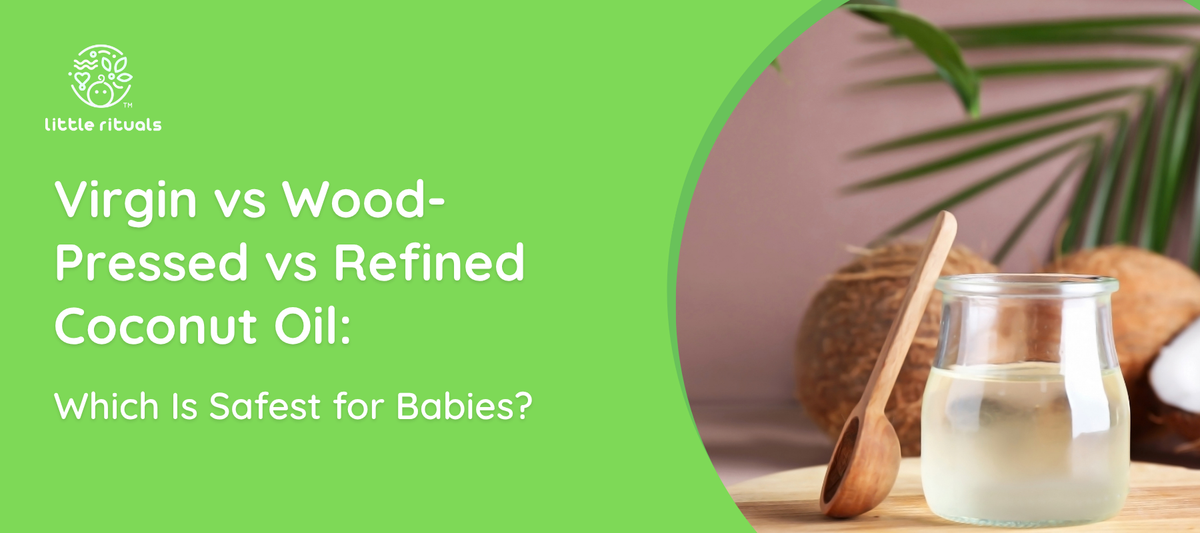
Virgin coconut oil for baby hair care can be a suitable choice when it is pure, appropriately formulated and well tolerated by the baby’s skin. Wood-pressed oils use mechanical extraction, while refined coconut oil undergoes more processing. For babies, check the complete formulation, additives, quality standards and skin response, not just the oil label.
When choosing virgin coconut oil for baby care, parents often wonder whether virgin, wood-pressed or refined coconut oil is the safest option. The answer depends on more than the extraction label. At Little Rituals, we believe baby care products should begin with thoughtful ingredients, transparent formulations and gentle daily rituals. So, let’s make the differences easier to understand.
What Is the Difference Between Virgin, Wood-Pressed and Refined Coconut Oil?
Coconut oil can look similar from one bottle to another, but the way it is extracted and processed can differ considerably.
The terms virgin, wood-pressed and refined describe different aspects of production. They should not automatically be treated as three completely separate quality categories.
What Is Virgin Coconut Oil?
Virgin coconut oil is generally produced with limited processing and retains many of the natural characteristics associated with coconut oil. It typically has a recognisable coconut aroma and flavour because it has not undergone the extensive refining used for refined oils.
For parents searching for virgin coconut oil for baby massage or skincare, the important consideration is the complete formulation. Look beyond the word “virgin” and check whether the product is designed with sensitive skin in mind.
What Is Wood-Pressed Coconut Oil?
Wood-pressed coconut oil is extracted mechanically using a traditional pressing method. The appeal lies in keeping the extraction process relatively simple and maintaining the natural character of the oil.
However, “wood-pressed” alone does not tell you everything about a finished baby-care product. The ingredient list, sourcing, additional ingredients, testing and manufacturing standards still matter.
What Is Refined Coconut Oil?
Refined coconut oil undergoes additional processing to alter characteristics such as aroma, colour and texture. It is generally more neutral in smell and appearance than less-processed coconut oil.
That does not mean every refined coconut oil is automatically unsafe for babies. It simply means parents should look beyond the processing label and evaluate the complete product before making it part of a baby's skincare routine.
Virgin vs Wood-Pressed vs Refined Coconut Oil: Processing Comparison
|
Factor |
Virgin Coconut Oil |
Wood-Pressed Coconut Oil |
Refined Coconut Oil |
|
Processing |
Generally minimally processed |
Mechanical extraction with limited processing |
More extensively processed |
|
Natural characteristics |
Usually retained to a greater extent |
Usually retained to a greater extent |
More altered through processing |
|
Aroma |
Typically retains coconut aroma |
May retain natural coconut characteristics |
Generally neutral |
|
Extraction focus |
Preserving natural oil characteristics |
Traditional mechanical pressing |
Processing for a more neutral oil |
|
What parents should check |
Ingredients, purity and formulation |
Ingredients, extraction and quality standards |
Ingredients, processing and intended use |
|
Baby-care suitability |
Depends on formulation and skin tolerance |
Depends on formulation and skin tolerance |
Depends on formulation and skin tolerance |
The key takeaway is simple: there is no single word on a bottle that can determine suitability for every baby. A thoughtfully formulated product with transparent ingredients is a more useful starting point than choosing solely because an oil is labelled virgin or wood-pressed.
Is Virgin Coconut Oil Safe for Babies?
Virgin coconut oil for baby care can be appropriate when the formulation is simple, suitable for delicate skin and well tolerated by the individual baby.
Parents should pay attention to:
-
The complete ingredient list
-
Unnecessary fragrance or added ingredients
-
The extraction and manufacturing process
-
Product quality and certification
-
Whether the oil is intended for baby skincare
-
How the baby's skin responds after application
A patch test is a sensible first step when introducing any new skincare product. Apply a small amount to a limited area and observe the skin before using it more widely.
If your baby develops persistent redness, swelling, irritation or another concerning reaction, discontinue the product and seek advice from a qualified healthcare professional. Discover Organic Baby Massage Oil India to explore gentle, plant-based massage oils that help nourish your baby’s delicate skin and support a soothing massage routine.
Is Virgin Coconut Oil Good for Baby Massage?
For many families, virgin coconut oil for baby massage is part of a simple, comforting routine. Massage allows parents to spend quiet, intentional time with their baby while the oil helps reduce friction between the hands and skin.
A good baby massage routine does not need to be complicated.
How to Massage Your Baby With Coconut Oil
-
Choose a coconut oil with a clear, transparent formulation.
-
Place a small amount in your palms.
-
Rub your hands together to spread the oil evenly.
-
Use gentle strokes rather than applying strong pressure.
-
Avoid broken, irritated or visibly inflamed skin.
-
Pay attention to how your baby's skin responds.
-
Keep the routine calm, comfortable and unhurried.
The goal is not to use a large amount of oil. A little can be enough to provide comfortable glide during massage. Learn is coconut oil good for dandruff to understand how coconut oil may affect scalp dryness, flakes, and dandruff-prone hair.
Virgin vs Wood-Pressed Coconut Oil: Are They Actually Different?
This is where coconut-oil terminology can become confusing.
Virgin generally describes the type and processing of coconut oil, while wood-pressed describes an extraction method. In other words, the terms do not necessarily represent direct opposites.
That distinction matters when shopping for coconut oil for babies.
Instead of asking only, “Is it virgin or wood-pressed?”, ask:
-
How was the coconut oil extracted?
-
How much processing does it undergo?
-
What other ingredients are present?
-
Is fragrance added?
-
Is the product formulated for sensitive skin?
-
Are quality or certification details available?
This approach gives parents a more complete picture.
Why Does Processing Matter When Choosing Coconut Oil for Babies?
Baby skin deserves a thoughtful approach because unnecessary ingredients may not be appropriate for every child.
When choosing an oil, consider these factors:
1. A Clear Ingredient List
You should be able to understand what you are applying to your baby's skin. A transparent ingredient list makes it easier to make an informed choice.
2. Minimal Unnecessary Additives
Parents may prefer formulations that avoid unnecessary fragrance and ingredients that do not serve a clear skincare purpose.
3. Appropriate Extraction
Understanding whether an oil is cold-pressed, wood-pressed or refined helps you understand how it has been produced.
4. Quality Standards
Certifications and testing can provide additional information about a product's formulation and manufacturing standards.
5. Individual Skin Response
Even a carefully formulated product may not suit every baby. Every child's skin is different, so observe the skin rather than assuming that one ingredient will work identically for everyone.
What Makes Little Rituals Coconut Oil Different?
At Little Rituals, we look at baby skincare as more than a single ingredient. Our approach combines carefully selected plant oils and actives with thoughtful formulation.
Our Wood-Pressed Organic Coconut Oil uses organic, wood-pressed Cocos Nucifera (Coconut) Oil and is formulated with plant-derived ingredients including Echium Seed Oil, sunflower unsaponifiables, Balloon Vine extract and naturally derived Vitamin E. The formulation is ECOCERT/COSMOS certified.
Little Rituals' pure organic oils include Wood-Pressed Organic Sweet Almond Oil and Wood-Pressed Organic Black Sesame Oil.
The range is also formulated without added fragrance, and Little Rituals states that its oils are dermatologist-tested and designed for sensitive skin.
This matters because choosing virgin coconut oil for baby care is not simply about picking an extraction method. It is about considering the whole formulation and the ritual in which you use it.
Which Little Rituals Products Can Complement Your Baby-Care Routine?
Baby care rarely ends with massage. A simple routine can include oils, cleansing and moisturising depending on your baby's needs.
Wood-Pressed Organic Sweet Almond Oil
Part of the BOND range, this is another plant-oil option for families looking beyond coconut oil.
Wood-Pressed Organic Black Sesame Oil
Another BOND oil that gives parents an alternative to coconut and almond oil within their massage routine.
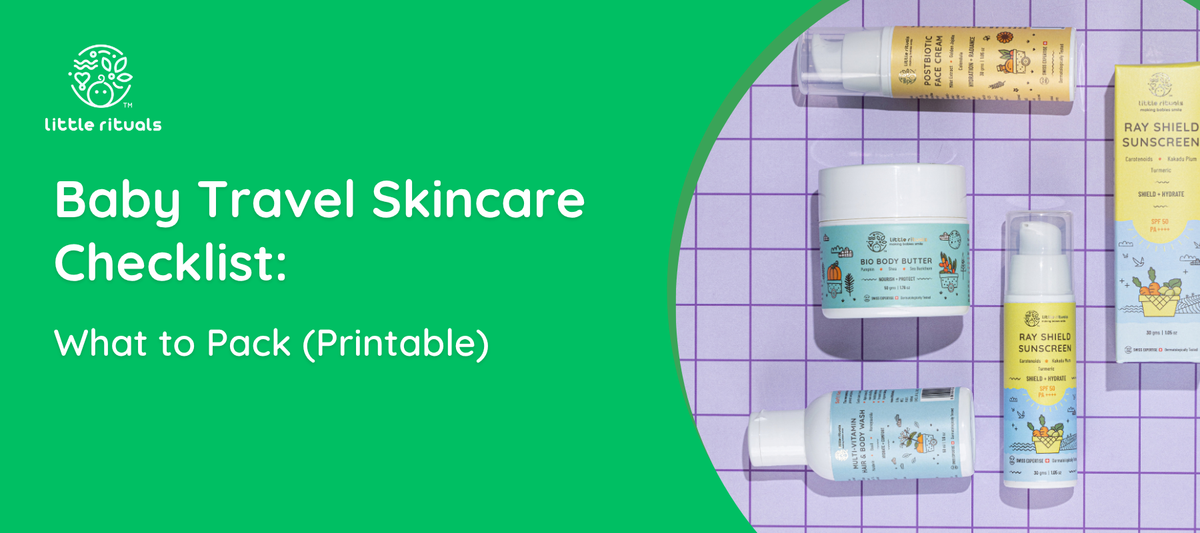
Multi-Vitamin Hair & Body Wash
For bath time, Little Rituals' PAMPER range includes its Multi-Vitamin Hair & Body Wash. The brand describes it as a multi-purpose hair and body product formulated with a mild cleanser and certified as tear-free.
Bio Body Butter
For moisturising care, the CARE range includes Bio Body Butter, designed for nourishing skin care.
Barrier Boost Body Lotion
This provides another moisturising option when a lighter lotion texture is preferred.
Together, these baby products allow parents to build a simple routine around different moments of the day rather than relying on one product for every purpose.
How to Choose the Right Coconut Oil for Your Baby
When comparing coconut oil for babies, use this checklist:
-
Read the complete ingredient list: Know exactly what you are applying.
-
Understand the extraction method: Virgin, cold-pressed, wood-pressed and refined describe different processing characteristics.
-
Look for unnecessary fragrance: Fragrance may not be suitable for every baby's sensitive skin.
-
Consider certifications: These can provide useful information about sourcing and production standards.
-
Choose an appropriate formulation: Baby-specific or sensitive-skin formulations can make the selection process easier.
-
Patch test first: Introduce new skincare products gradually.
-
Watch the skin: Your baby's response matters more than a marketing term on the label.
The best choice is the one that fits your baby's skin, your routine and your expectations around formulation and quality.
Common Mistakes Parents Make When Choosing Baby Massage Oil
Even with the best intentions, it is easy to focus on the wrong detail.
Avoid these common mistakes:
-
Choosing an oil only because the label says “natural”
-
Assuming “virgin” automatically means baby-specific
-
Confusing cooking coconut oil with a formulated baby-care product
-
Ignoring the full ingredient list
-
Choosing heavily fragranced products without considering skin sensitivity
-
Applying excessive amounts of oil
-
Skipping a patch test
-
Continuing to use a product after visible irritation develops
A thoughtful choice begins with understanding what you are buying.
Is Refined Coconut Oil Bad for Babies?
Refined coconut oil is not automatically bad for babies simply because it has undergone more processing.
The more useful question is whether the finished product is appropriately formulated, clearly labelled and suitable for the baby's skin.
Processing can change the oil's natural characteristics, including aroma and colour, but suitability cannot be determined from the word “refined” alone. Parents should consider the entire formulation and how their baby's skin responds.
How Often Can You Use Coconut Oil for Baby Massage?
There is no universal schedule that every baby needs to follow. Massage can be incorporated into a baby's routine according to the family's preference and the baby's comfort.
Use a small amount of oil, massage gently and observe the skin afterwards. If the skin becomes irritated or uncomfortable, stop using the product.
For babies with persistent or significant skin concerns, professional medical guidance is appropriate.
Make Baby Massage a Little More Thoughtful With Little Rituals
Choosing an oil for your baby does not have to mean getting lost in complicated labels. Look at the whole formulation, understand how the oil is processed and choose a product that fits your baby's skin and your family's everyday ritual.
At Little Rituals, our BOND collection brings together Wood-Pressed Organic Coconut Oil, Wood-Pressed Organic Sweet Almond Oil and Wood-Pressed Organic Black Sesame Oil, giving parents thoughtfully formulated options for their daily care rituals.
Make every massage a little more meaningful with Little Rituals. Explore our Wood-Pressed Organic Coconut Oil and discover gentle, thoughtfully formulated baby-care essentials created around the rituals that matter most.
Explore Little Rituals' Pure Organic Oils and begin your baby's everyday care ritual.
FAQs
Q1. How Should You Use Virgin Coconut Oil for Baby Massage?
Use a small amount of appropriately formulated oil on your palms and massage gently over healthy skin. Avoid broken or irritated areas, and patch test a new product before using it more widely.
Q2. Can You Use Coconut Oil for Babies Every Day?
Coconut oil can be incorporated into a baby's routine when the skin tolerates it. Daily use is not necessary for every baby. Start with a small amount and adjust according to your baby's skin and comfort.
Q3. Is Virgin Coconut Oil Better Than Refined Coconut Oil for Babies?
Virgin coconut oil undergoes less extensive processing than refined coconut oil, but “less processed” does not automatically mean better for every baby. Check the complete formulation, additives, quality information and individual skin response.
Q4. What Is the Difference Between Virgin and Wood-Pressed Coconut Oil?
Virgin generally describes the type and processing of coconut oil, while wood-pressed describes an extraction method. They are not necessarily direct alternatives, so compare the complete formulation rather than relying on either term alone.
Q5. Will Coconut Oil Suit Every Baby's Skin?
No. Every baby's skin is different, and even a carefully formulated product may not suit every child. Patch test new products and discontinue use if irritation develops.
Q6. Why Is Wood-Pressed Coconut Oil Used for Baby Massage?
Wood-pressed coconut oil is mechanically extracted and can retain the natural characteristics of coconut oil. For baby massage, the overall formulation, purity, added ingredients, and skin tolerance matter alongside the extraction method.
Q7. What Should You Look for in Coconut Oil for Babies?
Look for transparent ingredients, appropriate processing, minimal unnecessary additives, relevant quality or certification information, and a formulation suitable for delicate skin. Always consider your baby's individual response.
Q8. How Can You Introduce Coconut Oil Into a Baby's Routine?
Start with a small patch test on healthy skin. If there is no irritation, use a small amount during a gentle massage or skincare routine. Introduce one new product at a time so you can identify any reaction.