Best Lotion for Baby’s Face: A Complete Guide for Parents

The best lotion for a baby's face should be gentle, suitable for delicate skin, and designed to provide lasting moisture without unnecessary irritants. Look for a baby-specific, fragrance-free moisturiser with skin-supporting ingredients, and always patch-test a new product before regular use.
Little Rituals, your favorite brand, provides the utmost care for your loved little one, especially regarding their delicate and soft skin. Finding the perfect infant face lotion is essential as their skin is significantly more sensitive and prone to irritation. In this blog, we will share valuable tips on choosing the Best Lotion for Baby’s Face for your infant's skin type.
Understand Your Infant's Skin
Before diving into the world of baby lotions, it is crucial to understand the sensitivity of your baby's skin. An infant's skin is commonly delicate and more sensitive than an adult's, making it vulnerable to allergies, dryness, and irritation.
Because a baby's skin barrier is still developing, moisture can be lost more easily, and some skincare ingredients may irritate. This is why a simple, gentle skincare routine is generally preferable to using several different products.
For babies with particularly dry, sensitive, or eczema-prone skin, a richer cream or ointment may sometimes be more suitable than a lightweight lotion. Dermatologists commonly recommend fragrance-free moisturisers and applying them soon after bathing to help retain moisture.
When choosing the Best Lotion for Baby’s Face, parents should consider the baby's current skin condition, the ingredients used, and whether the product is specifically designed for delicate infant skin.
Tips for Choosing the Best Face Lotion
Here are some tips that can help you in getting the perfect lotion for your little one:
-
Consult a pediatrician: They are the best people you can go to to understand your infant's skin type. They can guide you on specific concerns or conditions, such as eczema or allergies, and recommend suitable products.
-
Look for gentle formulations: Go for a newborn lotion for the face that is specifically formulated for infants. Look for key phrases like 'gentle,' 'mild,' 'pediatrician recommended,' or 'baby-friendly' on the product labels. Avoid harsh ingredients in baby lotions like sulfates, parabens, and artificial fragrances.
-
Choose fragrance-free when possible: For babies with sensitive or eczema-prone skin, fragrance-free skincare is a useful choice. It is important to understand that “fragrance-free” and “unscented” are not the same. Unscented products may contain ingredients used to mask an odour, while fragrance-free products are formulated without fragrance.
-
Hypoallergenic products: These products are an ideal choice when providing care with natural ingredients and do not cause allergic reactions. These products are made with special care and undergo various testing to minimize the risk of irritation and other harm.
However, the term “hypoallergenic” does not guarantee that a product will never cause a reaction. Always check the ingredient list and observe how your baby's skin responds. -
Moisturizing ingredients: Look for lotions containing gentle, natural moisturizing ingredients to keep your baby's skin hydrated and moisturized without causing adverse reactions. Ingredients such as squalane, jojoba oil, glycerin, panthenol, and other skin-conditioning ingredients can help support comfortable, moisturised skin.
-
Consider the texture: A lightweight lotion can work well for everyday moisture, while a thicker cream or ointment may be preferable when the skin is very dry. For babies with eczema or significant dryness, dermatologists generally favour thicker creams and ointments over lotions or oils.
-
Patch test: Before applying a new lotion to your newborn's face, perform a patch test. Apply a pinch of the lotion on a small area of their skin, especially on the inner arm or behind the ear, then wait for any reaction. If irritation develops, stop using the product and speak with your pediatrician.
How to Apply Baby Face Lotion Correctly
Choosing the right product is only one part of baby skincare. Applying a moisturiser correctly can also help maintain comfortable, hydrated skin.
After gently cleansing or bathing your baby, pat the skin dry rather than rubbing it. Apply a small amount of moisturiser while the skin is still slightly damp to help lock in moisture. If your baby's skin becomes dry during the day, you can moisturise again as needed. Dermatologists recommend moisturising immediately after bathing for babies with dry or eczema-prone skin.
When applying a face moisturiser, use clean hands and gently spread a small amount over the cheeks, forehead and other dry areas. Avoid getting skincare products into your baby's eyes or mouth.
For parents looking for the Best Lotion for Baby’s Face, following the correct application routine is just as important as choosing a suitable formulation.
What Ingredients Should You Look for in a Baby Face Lotion?
When choosing the best lotion for baby's face, parents often focus on the ingredient list. Rather than looking for a long list of active ingredients, prioritise a gentle formulation designed for delicate skin.
Useful moisturising and skin-conditioning ingredients may include:
-
Squalane: Helps moisturise and soften the skin.
-
Jojoba oil: Helps support the skin's moisture balance.
-
Panthenol (Pro-vitamin B5): Helps condition and moisturise the skin.
-
Calendula: Traditionally used in skincare for its soothing properties.
-
Postbiotic ingredients: Can be included in formulations designed to support the skin's microbiome and barrier.
It is also important to remember that “natural” does not automatically mean “non-irritating.” Some babies can still be sensitive to botanical extracts or other natural ingredients, so always check the complete ingredient list and patch-test new products.
Is Lotion Better Than Cream for a Baby's Face?
Not necessarily. The best choice depends on your baby's skin needs and the product's formulation.
A lightweight lotion can be convenient for normal skin and everyday moisturising, while a thicker cream or ointment may be better for very dry skin because it can provide more occlusion. For babies with eczema or persistent dryness, ask a pediatrician or dermatologist which type is most appropriate.
Choose Little Rituals for Your Infant's Skincare
Choosing the best face lotion for your infant's skin type requires careful consideration and focus on gentle and natural formulations. Always consult with your pediatrician, read product labels, and perform patch tests to ensure the lotion is suitable for your baby.
At Little Rituals, we understand the unique needs of infant skin and offer a range of gentle, baby-friendly products, including infant face lotion, to keep your little one's skin healthy and moisturized.
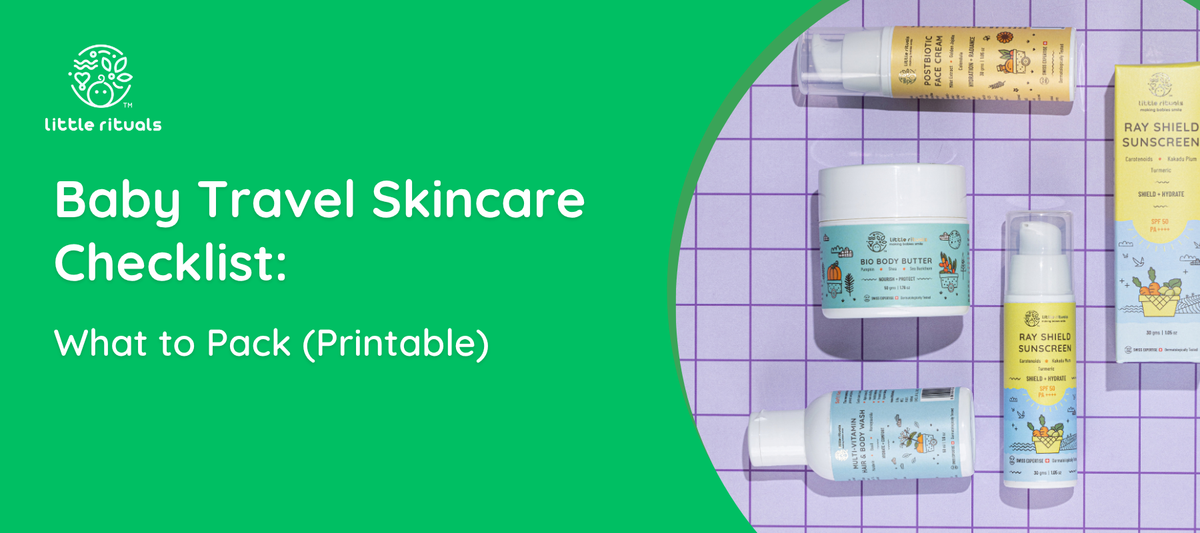
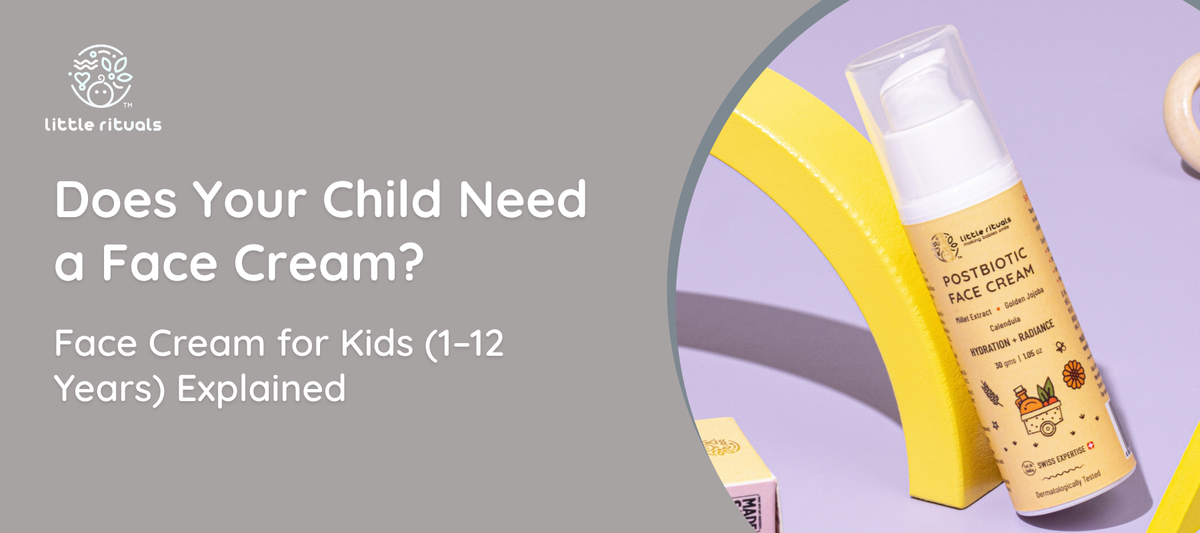
Our Postbiotic Face Cream is a daily moisturiser formulated for delicate skin with SOURFERMENT Swiss Technology, botanical extracts, squalane, jojoba oil, calendula, and postbiotic ferment. The product is described by Little Rituals as clinically and dermatologically tested and designed to support hydration, skin comfort and the skin barrier.
The product page also provides the complete ingredient list and recommends taking a small amount and gently massaging it onto the face and neck. Little Rituals advises patch testing on the inner elbow and discontinuing use if irritation occurs.
With the right choice of face lotion, you can provide the tender care your infant deserves while maintaining their skin's optimal health.
Frequently Asked Questions
Q1. What is the best lotion for a baby's face?
The best lotion for a baby's face should be gentle, baby-appropriate, and moisturising, with a formulation suited to your baby's skin needs. Fragrance-free products are generally a good option for sensitive skin.
Q2. Can I use baby lotion on my baby's face?
Yes, but choose a product specifically formulated and recommended for use on a baby's face. Avoid applying products around the eyes or mouth.
Q3. What is the best moisturiser for a newborn baby's face?
A gentle baby-specific moisturiser with minimal potential irritants is a sensible choice. If your newborn has persistent dryness, rash, or irritation, consult your pediatrician before introducing new skincare.
Q4. Is fragrance-free lotion better for a baby's face?
Fragrance-free products can be preferable for sensitive or eczema-prone skin because fragrance may trigger irritation or eczema flares. “Fragrance-free” is preferable to relying on the term “unscented.”
Q5. Can I use lotion on my baby's face every day?
Yes, a suitable baby moisturiser can be used as part of a simple daily skincare routine. Apply it according to the product directions and your baby's skin needs.
Q6. When should I apply lotion to my baby's face?
Apply moisturiser after cleansing or bathing, ideally while the skin is still slightly damp. This can help retain moisture and reduce dryness.
Q7. Is cream or lotion better for a baby's dry face?
A thicker cream or ointment may be more effective for very dry skin, while a lightweight lotion may be sufficient for normal skin. For eczema or persistent dryness, seek advice from a pediatrician or dermatologist.
Q8. How do I know if a baby face lotion is causing irritation?
Look for signs such as redness, itching, swelling, worsening dryness, or a new rash after application. Stop using the product if irritation occurs and consult a pediatrician if the reaction persists or is severe.