Protein Conditioner for Kids' Hair: What Plant Protein Does
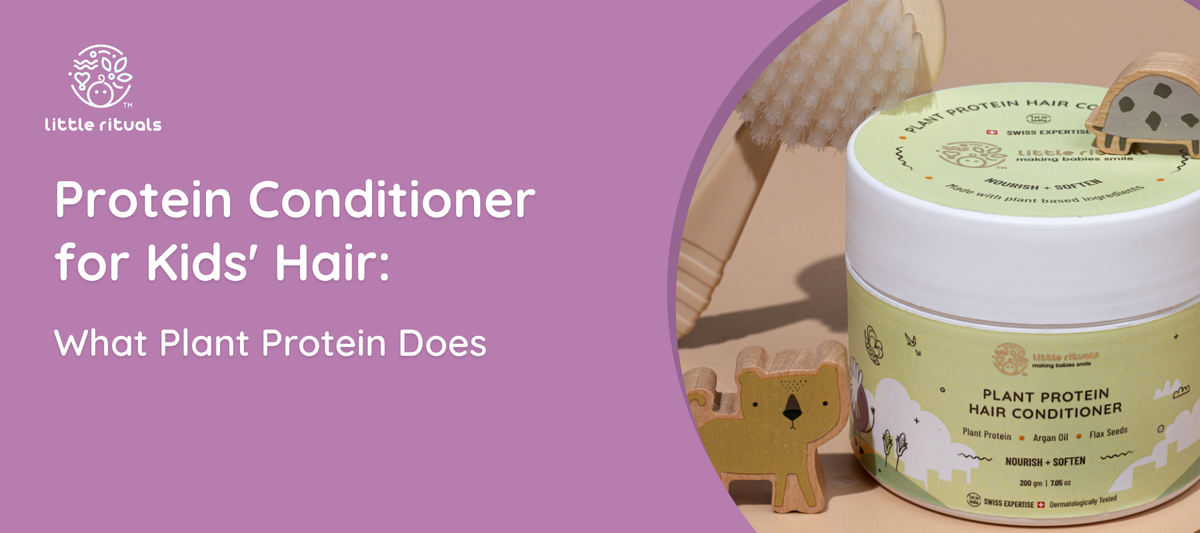
Protein conditioner can support smoother, stronger-looking and more manageable kids' hair when it contains suitable hydrolysed proteins alongside moisturising and conditioning ingredients. Plant proteins such as hydrolysed wheat, soy and corn protein can complement ingredients such as flaxseed, argan oil and shea butter to help reduce dryness, frizz and tangling.
Children's hair can be delicate, fine, dry or prone to tangles, making the right conditioner an important part of their routine. A protein conditioner for hair can combine plant-derived proteins with moisturising ingredients to improve softness, manageability and shine. But what exactly do those proteins do, and why are different plant proteins used together? Let's break down the ingredient science.
What Is a Protein Conditioner for Hair?
A protein conditioner is a hair-conditioning formula that contains proteins or hydrolysed proteins alongside ingredients that soften, smooth and improve manageability. Hydrolysed proteins are broken into smaller components so they can be incorporated effectively into cosmetic hair formulations.
The purpose is not to "feed" hair like dietary protein. Instead, cosmetic proteins are used to support the appearance and feel of the hair fibre while conditioning ingredients help with softness, detangling and smoothness.
For children's hair, the complete formulation matters more than the presence of one headline ingredient. A thoughtfully formulated conditioner can combine:
-
Hydrolysed plant proteins for conditioning and hair-fibre support
-
Botanical oils for softness and nourishment
-
Humectants for moisture support
-
Butters for richer conditioning
-
Conditioning agents for easier detangling
This combination is especially useful when hair feels dry, rough, frizzy or difficult to comb. Parents looking to build a complete routine can also explore natural baby shampoo and sulphate-free cleansing products to complement their child's conditioning routine.
What Does Plant Protein Do for Kids' Hair?
Plant proteins can help improve several cosmetic properties of the hair, including its feel, manageability, shine and resilience. Their benefits depend on the specific protein, how it has been processed and how it works with the rest of the formula.
In a children's conditioner, plant proteins can help support hair that looks or feels:
-
Dry and rough
-
Frizzy
-
Difficult to detangle
-
Less manageable after washing
-
Lacking softness or shine
The word "protein" alone, however, does not tell you how a conditioner will perform. Wheat, soy and corn proteins have different characteristics, which is why formulators may use more than one type.
3 Plant Proteins to Know in a Protein Conditioner
Little Rituals Plant Protein Hair Conditioner contains three hydrolysed plant proteins: hydrolysed wheat protein, hydrolysed soy protein and hydrolysed corn protein, each at 2% in the listed composition.
Hydrolysed Wheat Protein
Hydrolysed wheat protein is a plant-derived protein used in hair-care formulations to support the look and feel of the hair fibre.
In the Little Rituals formula, it is positioned to help improve:
-
Volume
-
Shine
-
Elasticity
-
Hair texture
The hydrolysed form makes the protein suitable for incorporation into a cosmetic hair-care formula.
Hydrolysed Soy Protein
Soy protein provides another plant-derived source of conditioning support.
In a conditioner, hydrolysed soy protein can complement other ingredients that improve the feel and manageability of the hair. The Little Rituals formulation uses it to support manageability, texture and resilience, making it particularly relevant when children's hair is difficult to comb or feels less smooth.
Hydrolysed Corn Protein
Hydrolysed corn protein adds another layer to the plant-protein blend. It helps create a conditioning effect that supports moisture retention and shine.
In the Little Rituals formula, hydrolysed corn protein is described as helping provide a protective layer that supports moisture and improves shine.
Why Does a Protein Conditioner Use More Than One Plant Protein?
Different proteins can contribute different cosmetic benefits, so combining them allows a formulation to address several aspects of hair feel and manageability.
Think of the blend as a team rather than three identical ingredients:
-
Wheat protein supports volume, shine and elasticity.
-
Soy protein supports manageability, texture and resilience.
-
Corn protein supports moisture retention and shine.
This does not mean that using more proteins automatically makes a conditioner better. What matters is how the ingredients are formulated together and how the finished product performs on the hair.
What Else Should a Protein Conditioner for Hair Contain?
Protein is only one part of a well-rounded conditioner. Children's hair also benefits from ingredients that support softness, lubrication, moisture and detangling.
The Little Rituals formula combines its plant proteins with several complementary ingredients.
Flaxseed
Flaxseed extract is listed at 5% and is used for its smoothing and detangling properties. It helps support shine, softness and manageability, making it a useful companion to the protein blend.
Argan Oil
Argan kernel oil is listed at 3%. It provides a rich conditioning element that helps soften and moisturise the hair while supporting a smoother appearance.
Shea Butter
Shea butter is included at 2% and contributes richer moisturising and softening properties. It can complement lighter conditioning ingredients when hair feels dry or rough.
Sodium PCA and Glycerin
Sodium PCA and glycerin are moisture-supporting ingredients in the formula. Sodium PCA functions as a humectant, while glycerin is widely used to help maintain moisture within cosmetic formulations.
For parents exploring more options for delicate skin alongside their child's hair-care routine, Little Rituals offers a range of baby products for sensitive skin in India.
Does Kids' Hair Need Protein and Moisture?
Yes, they serve different purposes.
Protein ingredients can support the hair's cosmetic structure, feel and resilience, while moisturising and conditioning ingredients help improve softness, lubrication and manageability.
That is why choosing a formula based solely on the word "protein" is not enough. A good protein conditioner for hair should also provide a balanced conditioning system.
For children's hair, look for a formula that combines:
-
Plant proteins
-
Moisturising ingredients
-
Conditioning agents
-
Detangling support
-
Suitable botanical ingredients
-
Clear usage and age guidance
This balanced approach is particularly helpful for hair that becomes tangled or dry after shampooing.
Who Can Use a Protein Conditioner for Kids' Hair?
A plant-protein conditioner can be useful when children's hair is:
-
Dry
-
Frizzy
-
Tangled
-
Rough-feeling
-
Difficult to comb
-
Prone to looking dull
-
Difficult to manage after washing
Little Rituals positions its Plant Protein Hair Conditioner for dry, damaged and unruly hair and describes it as suitable for babies and kids.
It can be used from newborn onwards, while regular use is typically recommended from around three years because very young babies generally have little hair and less exposure to environmental stressors.
Parents can also browse the wider baby care products collection to discover complementary essentials for their child's everyday care routine.
How to Choose the Right Protein Conditioner for Kids
Choosing children's hair care should involve more than looking for "protein" on the front of the bottle.
1. Read the ingredient list
Look for clearly identified protein sources such as hydrolysed wheat, soy or corn protein.
2. Look beyond protein
Check whether the formula also contains moisturising and conditioning ingredients such as botanical oils, butters, humectants and dedicated conditioning agents.
3. Consider the child's hair needs
Dry, curly, frizzy, fine and easily tangled hair can have different conditioning requirements.
4. Check age guidance
Always follow the manufacturer's stated age suitability and directions.
5. Look for testing and formulation information
Dermatological testing, ingredient transparency and clear manufacturing information can help parents make a more informed choice.
How to Use a Protein Conditioner for Hair
A conditioner works best when applied correctly.
-
Wash the hair with a suitable shampoo.
-
Apply an adequate amount of conditioner to damp hair.
-
Focus mainly on the lengths and ends.
-
Gently work the conditioner through tangled areas.
-
Leave it on for the recommended time.
-
Rinse thoroughly.
Little Rituals recommends applying its conditioner to damp hair after shampooing, focusing on the ends, leaving it for 2–3 minutes, and rinsing thoroughly.
Gentle handling also matters. Avoid aggressive rubbing or pulling when detangling children's hair, particularly when it is wet.
For additional hair-care guidance, parents can read about the benefits and uses of hair oil for kids when considering complementary products for their child's routine.
Is a Plant Protein Conditioner Safe for Kids?
Plant-derived ingredients are not automatically suitable for every child. Individual sensitivities can occur with both natural and synthetic cosmetic ingredients.
For this reason, parents should:
-
Follow the product's age guidance.
-
Use the product only as directed.
-
Avoid contact with the eyes.
-
Perform a patch test when recommended.
-
Stop use if irritation develops.
Little Rituals recommends a 30-minute patch test on the inner forearm and advises discontinuing use if irritation occurs.
What Makes Little Rituals Plant Protein Hair Conditioner Different?
Little Rituals Plant Protein Hair Conditioner brings several complementary ingredients together rather than relying on protein alone.
Its listed composition includes:
|
Ingredient |
Listed concentration |
Role in the formula |
|
Flaxseed extract |
5% |
Smoothing and manageability |
|
Argan kernel oil |
3% |
Softness and moisturising |
|
Hydrolysed wheat protein |
2% |
Volume, shine and elasticity |
|
Hydrolysed soy protein |
2% |
Manageability and resilience |
|
Hydrolysed corn protein |
2% |
Moisture support and shine |
|
Shea butter |
2% |
Softness and moisturising |
The formula also includes oat extract, lecithin, fenugreek, manjistha, neem and a conditioning system containing Brassicyl Valinate Esylate and cetearyl alcohol.
Little Rituals also identifies the conditioner as dermatologically tested and provides its complete composition, usage instructions, storage guidance and caution information on the product page.
How Does Little Rituals' Plant Protein Formula Work?
The formulation brings together three key components: plant proteins, botanical conditioning ingredients and a dedicated conditioning system.
The plant proteins support the hair's cosmetic structure and resilience. Argan oil and shea butter contribute softness and conditioning, while flaxseed helps with smoothness and detangling.
The formula is powered by PHYTOFORTIFY Swiss Technology, which Little Rituals uses to support conditioning, nourishment and protection against everyday hair stressors.
For parents, the practical takeaway is simple: the formula is designed to address more than one common hair-care concern at once: dryness, frizz, tangling, softness and manageability.
Give Kids' Hair Gentle Plant-Powered Conditioning
Healthy-looking children's hair does not need an overly complicated routine. The right conditioner can make washing, detangling and everyday hair care much easier.
Little Rituals Plant Protein Hair Conditioner combines hydrolysed wheat, soy and corn proteins with flaxseed, argan oil, shea butter and conditioning ingredients to support soft, smooth and manageable hair. It is designed for delicate hair and provides clear ingredient, usage and safety information for parents.
If you are looking for a protein conditioner that brings plant proteins and botanical conditioning together in one child-friendly formula, explore Little Rituals Plant Protein Hair Conditioner and make gentle hair care part of your child's everyday ritual.
FAQs
Q1. What does a protein conditioner do for kids' hair?
It helps condition the hair while plant-derived proteins support its feel, manageability, resilience and appearance. Other ingredients provide softness, moisture and detangling support.
Q2. Can protein conditioner help dry and frizzy hair?
Yes. A well-formulated conditioner can help improve dryness and frizz by combining proteins with moisturising and conditioning ingredients. Hair type and the overall formula determine the result.
Q3. Is protein conditioner suitable for children's hair?
It can be, provided the specific product is formulated and labelled for children's use. Always follow the manufacturer's age guidance and directions.
Q4. How often should children use a protein conditioner?
Use it according to the product directions and the child's hair needs. There is no universal frequency that suits every child's hair type.
Q5. Will plant protein make children's hair stiff?
Not necessarily. The finished formula matters. Protein combined with moisturising and conditioning ingredients can leave hair soft and manageable rather than stiff.
Q6. What plant proteins are used in Little Rituals Hair Conditioner?
The formula contains hydrolysed wheat protein, hydrolysed soy protein and hydrolysed corn protein, each listed at 2%.
Q7. Why are wheat, soy and corn proteins combined?
They provide complementary conditioning properties. Wheat supports volume and elasticity, soy supports manageability and resilience, while corn supports moisture retention and shine.
Q8. How should I use a protein conditioner on my child's hair?
Apply it to damp hair after shampooing, concentrate on the lengths and ends, leave it for the recommended time, and rinse thoroughly. Little Rituals recommends 2–3 minutes for its conditioner.