Does Your Child Need a Face Cream? Face Cream for Kids (1–12 Years) Explained
Yes, some children need face cream, but not every child needs one every day. A moisturiser can help when facial skin feels dry, tight, rough, or uncomfortable. The right face cream for kids depends on the child’s age, skin needs, climate, and the ingredients in the formulation. Younger children generally need simple, gentle care.
A child does not need a complicated baby skincare routine. A face cream for kids can provide useful moisture when the skin needs it, while cleansing and sun protection complete a simple routine. Little Rituals focuses on gentle, science-backed everyday care for delicate skin. So, what should parents actually look for at each age?
Why Does a Child Need a Face Moisturiser?
Children’s facial skin can become dry because of weather, frequent washing, saliva around the mouth, outdoor exposure, or naturally dry skin. Moisturisation helps reduce uncomfortable tightness and roughness while supporting the skin’s moisture barrier.
A moisturiser is not automatically necessary simply because a child is young. If the skin is comfortable and healthy, a basic routine may be enough. When dryness appears, a suitable kids face cream can become a useful addition.
The goal is simple: support comfortable skin without turning childhood skincare into an adult-style beauty routine.
Face Cream for Kids by Age: What Does Your Child Need?
|
Age |
Typical skincare focus |
Moisturiser need |
|
1–2 years |
Gentle cleansing and hydration |
Use when skin needs extra moisture |
|
3–5 years |
Simple everyday care |
Use as needed |
|
6–8 years |
Hydration and outdoor protection |
Depends on skin and climate |
|
9–12 years |
Changing skin and early puberty |
Adjust routine to individual needs |
These age groups are guides rather than strict rules. Children can have different skin needs at the same age.
1–2 Years: Keep It Simple
At this stage, skincare should remain minimal. A baby face moisturiser can be useful when facial skin becomes dry or rough, particularly during dry weather. Choose a gentle formulation and avoid introducing several new born baby products at once.
3–5 Years: Moisturise When Needed
Preschool-age children generally benefit from straightforward care. Gentle cleansing, moisturisation when required, and sun protection during outdoor activities are more useful than multiple cosmetic products.
6–8 Years: Focus on Comfort and Protection
School-age children spend more time outdoors and may encounter heat, wind, dust, and frequent cleansing. A suitable face cream for kids can help maintain comfortable skin when dryness develops. Sunscreen remains a separate daytime step.
9–12 Years: Skin Begins to Change
As puberty approaches, oil production can change and occasional spots may appear. This is the time to keep routines simple rather than introducing strong adult skincare. A gentle cleanser, suitable moisturizer, and sunscreen provide a sensible foundation.
What Ingredients Should You Look for in a Kids Face Cream?
The ingredient list matters more than trendy packaging or complicated claims. Look for formulations that provide moisture and support comfortable skin without unnecessary active ingredients.
Helpful ingredients can include:
- Jojoba oil and other gentle emollients that help soften skin.
- Sweet almond oil, which provides nourishing emollient care.
- Panthenol, a moisturising ingredient commonly used in skincare.
- Vitamin E, an antioxidant frequently included in moisturising formulations.
- Calendula and selected botanical extracts used in gentle skincare.
- Postbiotic or fermented ingredients when they are part of a well-formulated product.
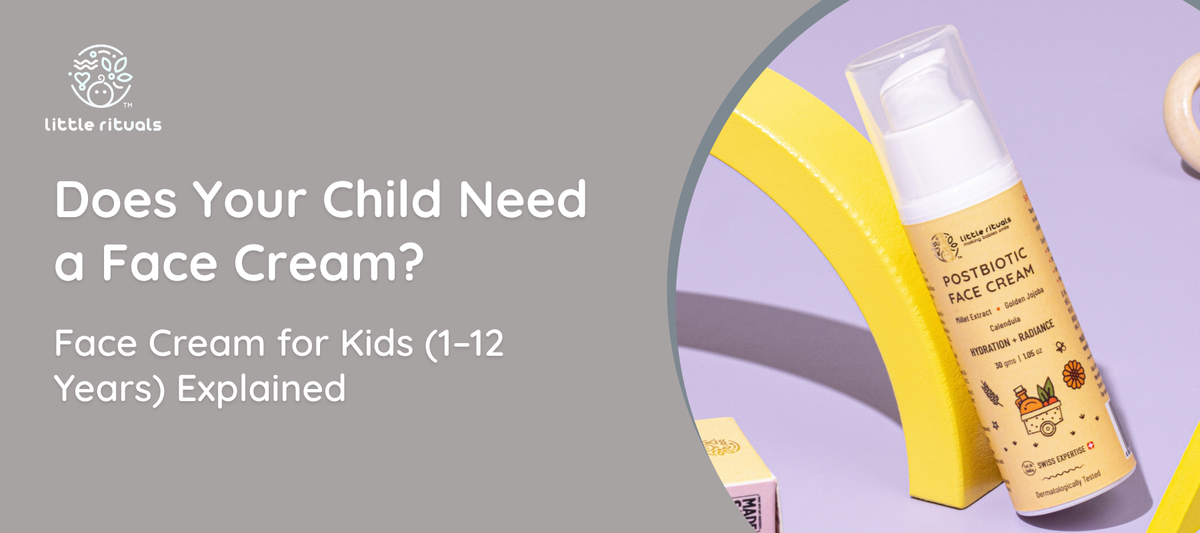
Little Rituals Postbiotic Face Cream contains jojoba oil, sweet almond oil, calendula, panthenol, vitamin E and fermented botanical ingredients. It uses SOURFERMENT Swiss Technology and is described as clinically and dermatologically tested.
What Ingredients Should Kids Avoid?
Children generally do not need strong adult-focused actives for routine skincare. Parents should be cautious with:
- Retinol or other retinoids unless specifically recommended by a healthcare professional.
- Strong exfoliating acids.
- Aggressive acne treatments without appropriate guidance.
- Heavy combinations of active ingredients.
- Strongly fragranced baby products when a child has sensitive or easily irritated skin.
The safest approach is not to create a long list of supposedly “bad” ingredients. Instead, choose products formulated for the child’s age and actual skin needs.
How to Use a Face Cream for Kids
A simple routine is easier to maintain and less likely to overwhelm young skin.
1. Cleanse Gently
Use a mild cleanser when cleansing is needed. Avoid excessive washing or scrubbing.
2. Moisturize
Apply a small amount of moisturiser to clean skin, especially where dryness is visible or the skin feels tight.
3. Protect During the Day
Use a suitable sunscreen for exposed skin during outdoor activities. Moisturiser and sunscreen have different purposes and should not be treated as interchangeable.
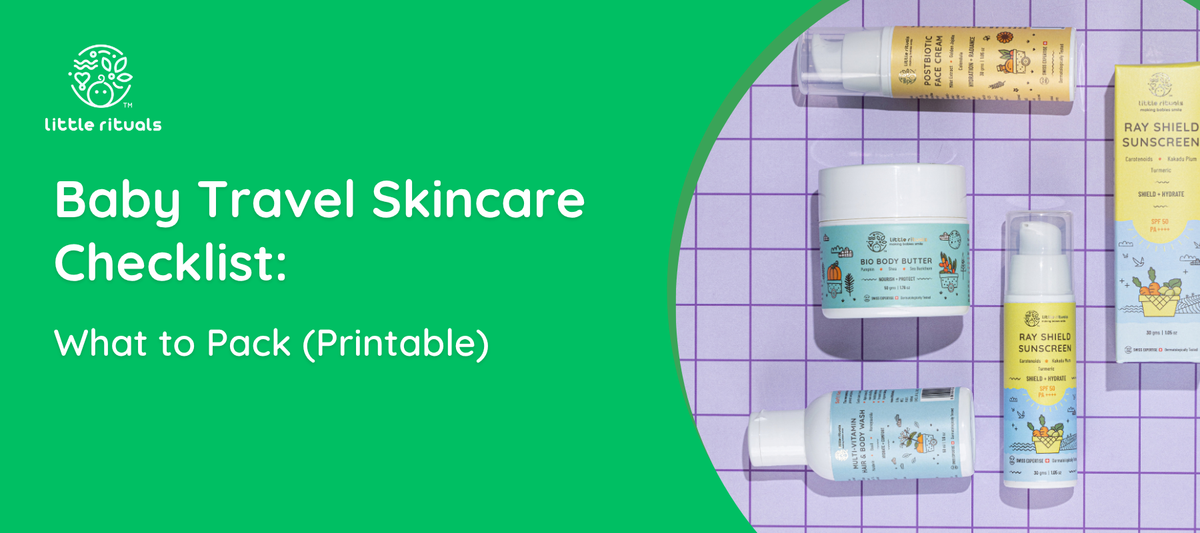
For a simple Little Rituals routine, use the Multi-Nutrient Face Wash, followed by Postbiotic Face Cream, and add Ray Shield Sunscreen or Ray Guard Mineral Sunscreen for daytime sun protection.
Does Your Child Need Face Cream Every Day?
Not necessarily. Daily use can make sense when a child has consistently dry skin or benefits from regular moisturisation. If the skin remains comfortable without moisturiser, there is no need to create an elaborate routine simply because skincare is trending.
Season and environment also matter. Winter dryness, air conditioning, frequent bathing, swimming, and outdoor exposure can all affect how the skin feels.
Can Kids Use Adult Face Cream?
An adult moisturiser is not automatically appropriate for a child. Adult products may contain anti-ageing ingredients, exfoliating acids, retinoids, stronger fragrances, or combinations designed for mature or acne-prone skin.
A better approach is to check age suitability, ingredient simplicity, intended use, and the child’s individual skin needs. When a child has a persistent skin condition, professional guidance is more appropriate than experimenting with multiple cosmetic products.
When Should Parents Seek Professional Advice?
Basic moisturization is different from treating a skin condition. Speak with a pediatrician or dermatologist when a child has:
- Persistent or worsening redness.
- Significant itching or discomfort.
- Cracking, bleeding, swelling, or painful skin.
- A rash that does not improve with basic care.
- Persistent or severe acne.
- A recurring skin concern that affects daily comfort.
A moisturiser can support hydration, but it should not replace medical evaluation or prescribed treatment. Explore baby face creams for dry skin in India to discover gentle, moisturising options that help soothe dryness and keep your baby’s delicate facial skin soft, smooth, and hydrated.
Little Rituals: Building a Simple Skincare Ritual
Little Rituals keeps children’s skincare focused on everyday care, with products across cleansing, nourishment, moisturisation, sun care, body care, and baby essentials. The brand emphasises plant-based ingredients, Swiss expertise, transparent care, and clinically tested formulations.
Its Postbiotic Face Cream is designed as a daily moisturiser for delicate skin. The lightweight formula combines fermented botanicals with ingredients such as jojoba oil, sweet almond oil, calendula and panthenol.
For families looking beyond one product, the routine can stay uncomplicated: cleanse with Multi-Nutrient Face Wash, moisturise with Postbiotic Face Cream, and add Ray Shield Sunscreen or Ray Guard Mineral Sunscreen for daytime protection. Bio Body Butter and Barrier Boost Body Lotion can complement the routine when the rest of the body needs additional moisturisation.
Choosing a Face Cream for Kids: A Parent Checklist
Before buying, ask:
- Is the product suitable for my child’s age?
- Does the skin actually need extra moisture?
- Are the ingredients clearly disclosed?
- Is the formulation simple enough for everyday use?
- Does it avoid unnecessary strong actives?
- Are the directions clear?
- Does my child have an existing skin condition that needs professional advice?
The best routine is rarely the longest one. It is the routine that fits the child’s skin, age, lifestyle, and daily needs. Explore organic baby skincare products in India 2026 to discover gentle, plant-based skincare options that help nourish, moisturise, and care for your baby’s delicate skin.
Make Skincare a Little Ritual
Children’s skincare does not need to be complicated to be thoughtful. Start with what the skin actually needs, keep the routine gentle, and introduce products with a clear purpose.
Explore Little Rituals and build a simple everyday ritual with gentle cleansing, nourishing moisturization, and sun care made with little skin in mind.
FAQs
Q1. How should I apply a kids face cream?
Apply a small amount to clean, dry skin and follow the product directions. Focus on areas that feel dry or tight rather than applying excessive product.
Q2. Can babies use a baby face moisturizer?
Yes. A suitable baby face moisturiser can be used when a baby’s facial skin needs extra hydration. Choose a gentle, age-appropriate formulation and introduce new products carefully.
Q3. Is face cream safe for children?
A properly formulated face cream for kids can be suitable for children when used as directed. Check the product’s intended age range and ingredients.
Q4. What should I look for in a face cream for kids?
Look for age-appropriate formulations with moisturising ingredients and clear ingredient information. Avoid unnecessary strong actives designed primarily for adult skincare.
Q5. Will kids need different skincare during puberty?
Yes. Puberty can change oil production and the tendency toward spots, so older children may need a slightly different but still simple routine.
Q6. Why should children avoid adult anti-aging creams?
Adult anti-ageing products may contain strong active ingredients that children do not normally need for routine skincare. A simpler, age-appropriate routine is generally more suitable.
Q7. Can kids use face cream and sunscreen together?
Yes. A moisturiser and sunscreen have different roles. Apply moisturiser as part of the skincare routine and use sunscreen as the final daytime protection step.
Q8. How do I know when my child needs a dermatologist?
Seek professional advice for persistent, painful, worsening, or unusual skin concerns, especially when basic skincare does not improve the problem.