How to Apply Sunscreen on a Baby: Step-by-Step Guide for Safe Sun Protection

Babies and toddlers have delicate, sensitive skin that is highly vulnerable to sun damage. Learning how to apply sunscreen on a baby correctly ensures complete protection. Use a pediatrician-approved mineral sunscreen, apply it 15–30 minutes before going outdoors, cover all exposed areas, and reapply every two hours. Pair sunscreen with protective clothing and hats for optimal sun safety.
Taking your baby outdoors can be an exciting experience, whether it’s a walk in the park, a sunny beach day, or a playful afternoon in the garden. However, delicate baby skin can burn easily, making sun protection crucial. Learning how to apply sunscreen on a baby safely is essential for every parent. At Little Rituals, we focus on creating gentle, effective skincare for babies, combining science-backed ingredients with pediatrician guidance to ensure your child’s skin stays safe while enjoying the outdoors.
Why Sunscreen Is Essential for Babies and Toddlers
Why Baby Skin Needs Extra Protection
Baby skin is far more sensitive than adult skin. It is thinner, less resilient, and has less melanin, which naturally protects against harmful UV rays. Because of this, babies are at a higher risk of sunburn, skin irritation, and long-term skin damage if exposed to sunlight without proper protection. Understanding how to apply sunscreen on a baby is critical to maintaining healthy skin from an early age.
When Should Babies Start Using Sunscreen?
- Babies under six months should avoid direct sun exposure whenever possible.
- For babies over six months, a pediatrician-approved mineral sunscreen can be applied to protect the skin safely.
- Sunscreen should always complement other sun protection measures such as hats, lightweight clothing, and shade.
Why Mineral Sunscreens Are Safer for Babies
- Mineral sunscreens sit on the surface of the skin rather than being absorbed, reducing the risk of irritation.
- They reflect UVA and UVB rays instead of chemically altering them.
- Gentle on sensitive baby skin and suitable for daily use.
- Our brand uses non-nano Zinc Oxide, which forms a safe physical barrier, making it an ideal choice for infants and toddlers. This focus on safety is shared across all our baby products.
How to Choose the Right Sunscreen for Your Baby
Look for These Key Features
- Broad-spectrum protection to shield against UVA and UVB rays
- Mineral filters, such as Zinc Oxide, for gentle protection
- Hypoallergenic formulas to minimize the risk of skin irritation
- Fragrance-free products to avoid allergies or reactions
- Dermatologically tested for safe use on delicate baby skin
Ingredients That Soothe and Protect Baby Skin
- Aloe vera provides hydration and soothes irritation
- Raspberry extract delivers antioxidant protection to defend against environmental stress
- Chamomile reduces redness and calms irritation
- Turmeric offers anti-inflammatory properties
These ingredients, combined with mineral filters, protect baby's skin while keeping it soft, nourished, and healthy. Consistent care is the best way to support baby hair growth and skin vitality.

How to Apply Sunscreen on a Baby: Step-by-Step Guide
Mastering how to apply sunscreen on a baby ensures full protection while keeping the experience gentle and safe for your child.
Step 1: Start With Clean, Dry Skin
Apply sunscreen immediately after your baby’s bath or after washing their face and body. Clean skin allows sunscreen to adhere properly and form an effective protective layer.
Step 2: Apply 15–30 Minutes Before Going Outside
Allow the sunscreen to form a protective barrier before exposure. Applying too late reduces its effectiveness.
Step 3: Use the Right Amount
- Apply a pea-sized amount to the face
- Place small dots of sunscreen across exposed areas such as arms, legs, and neck
Step 4: Cover All Exposed Areas
- Face
- Ears
- Neck
- Arms and hands
- Legs and feet
-
Tops of feet
Ensuring all areas are covered is crucial, as missing spots can lead to sunburn.
Step 5: Blend Gently
- Use soft, circular motions to blend the sunscreen
- Avoid the eye area to prevent irritation
- Be patient and gentle, as babies have sensitive skin
Step 6: Reapply Every Two Hours
- Reapply after sweating, swimming, or towel drying
- Always reapply before prolonged outdoor activity
Following these steps ensures your baby is fully protected. For more detailed advice, check our baby skin care tips.
Sunscreen for Toddlers: Tips Parents Should Know
Pair Sunscreen With Protective Clothing
- Wide-brimmed hats to shield the face and neck
- Lightweight, long-sleeved clothing for additional coverage
- Sunglasses to protect sensitive eyes
Avoid Peak Sun Hours
- Avoid sun exposure between 10 AM and 4 PM when UV rays are strongest
Always Patch Test New Products
- Apply a small amount on the inner elbow for 30 minutes before full use
- Check for redness or irritation before applying broadly
Don’t Forget Indoor Protection
- Even indoor light and screens emit blue light that may contribute to skin stress
- Use sunscreen if your child spends long periods near windows or devices, These protective habits are just as important as choosing the right new born baby products.
Common Sunscreen Mistakes Parents Make
- Applying sunscreen too late, reducing its effectiveness
- Missing important areas like ears, neck, and feet
- Using adult sunscreen, which can contain chemical filters harmful to baby's skin
- Not reapplying frequently enough, especially after water play or sweating
Understanding how to apply sunscreen on a baby properly avoids these common mistakes and ensures complete protection.
Can Coconut Oil Be Used in Place of Sunscreen?
Coconut oil is commonly used in India to moisturize baby skin. It can provide hydration and help soothe dry areas. Many parents use it in daily routines, especially in the context of coconut oil baby skin India care. However, coconut oil does not provide UV protection and should never replace sunscreen. Combining coconut oil with a gentle mineral sunscreen can keep baby skin nourished and protected.
Why Parents Choose Mineral Sunscreens for Baby Skin
- Provides gentle physical protection from UV rays
- Reduces the risk of irritation and allergic reactions
- Safe for sensitive and delicate skin
- Environmentally friendly, especially non-nano formulas
- Forms a physical barrier without penetrating the skin
Mineral sunscreen is the safest option for babies and toddlers, especially when parents follow correct application steps.
Our Gentle Approach to Sun Protection at Little Rituals
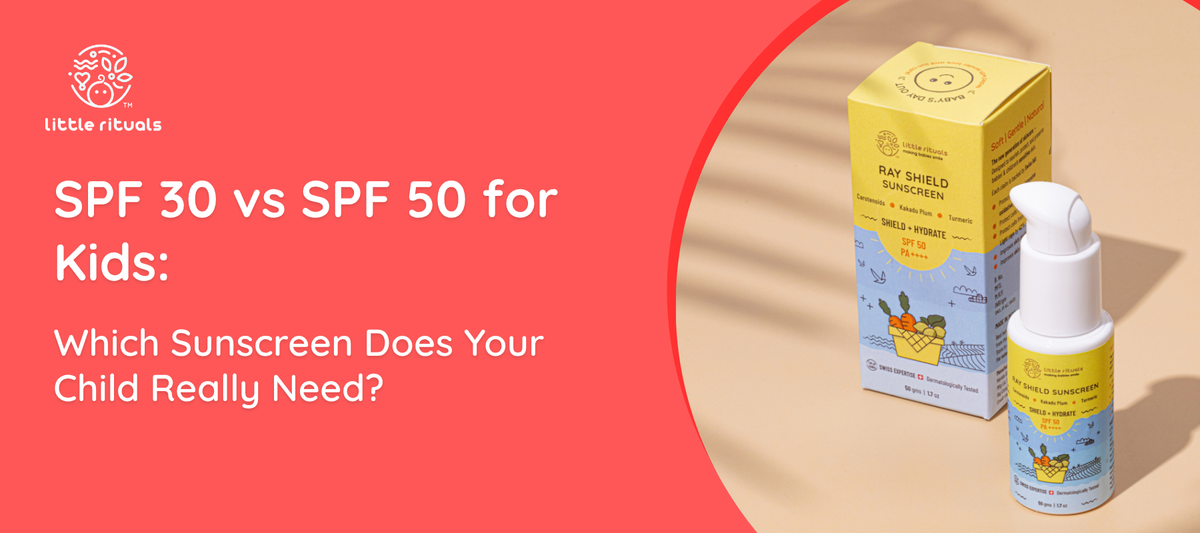
At Little Rituals, we combine pediatrician-informed formulas with Swiss dermatology expertise. Our plant-powered, hypoallergenic products ensure safety and effectiveness for delicate baby skin. Little Rituals Ray Guard Mineral Sunscreen features:
- 100% mineral protection
- Broad-spectrum UVA and UVB defence
- Soothing botanicals like zinc oxide, aloe vera and raspberry extract
- Lightweight, non-greasy texture
- Water-resistant formulation for outdoor play
This approach ensures your baby’s skin remains protected while staying soft, hydrated, and healthy. These premium formulations are perfect for gifting in a baby gift box, baby gift hamper, or new born baby gift hamper.
Make Sun Protection a Daily Little Ritual
- Apply sunscreen correctly and consistently
- Choose safe, mineral-based baby formulas
- Pair with protective clothing and hats
- Reapply every two hours and after water exposure
Building these habits early sets the foundation for lifelong skin health. Once the sunscreen is applied and your little one is ready for the day, you can complete their outfit with adorable baby girl hair accessories.
Frequently Asked Questions
Q1. How do I apply sunscreen to a baby’s face safely?
Apply a pea-sized amount to the face and blend gently in circular motions. Avoid the eye area and ensure even coverage over cheeks, forehead, and nose.
Q2. Can I use coconut oil as sunscreen for my baby?
No. Coconut oil moisturizes the skin but does not protect against UV rays. Always pair coconut oil with a mineral sunscreen for safe sun protection.
Q3. Is mineral sunscreen safe for babies under 1 year?
Yes, if approved by a pediatrician. Mineral sunscreens are gentle and suitable for babies over six months, while chemical sunscreens should be avoided.
Q4. Will sunscreen prevent all sunburn in toddlers?
Sunscreen greatly reduces the risk of sunburn but should be combined with protective clothing, hats, and avoidance of peak sun hours.
Q5. What ingredients should I look for in a baby sunscreen?
Look for non-nano zinc oxide, aloe vera, chamomile, raspberry extract, and turmeric, which provide gentle protection while soothing and hydrating sensitive skin.
Q6. Why should I reapply sunscreen every two hours?
Sweat, swimming, and friction from clothing reduce the effectiveness of sunscreen. Reapplication ensures continuous protection from harmful UV rays.
Q7. How do I patch test a new sunscreen for my baby?
Apply a small amount to the inner elbow and wait 30 minutes. Check for redness, swelling, or irritation before applying to larger areas.
Q8. Can babies wear sunscreen every day?
Yes. Daily sunscreen use is safe for babies over six months. Regular application protects against UV exposure, supports long-term skin health, and prevents early sun damage.