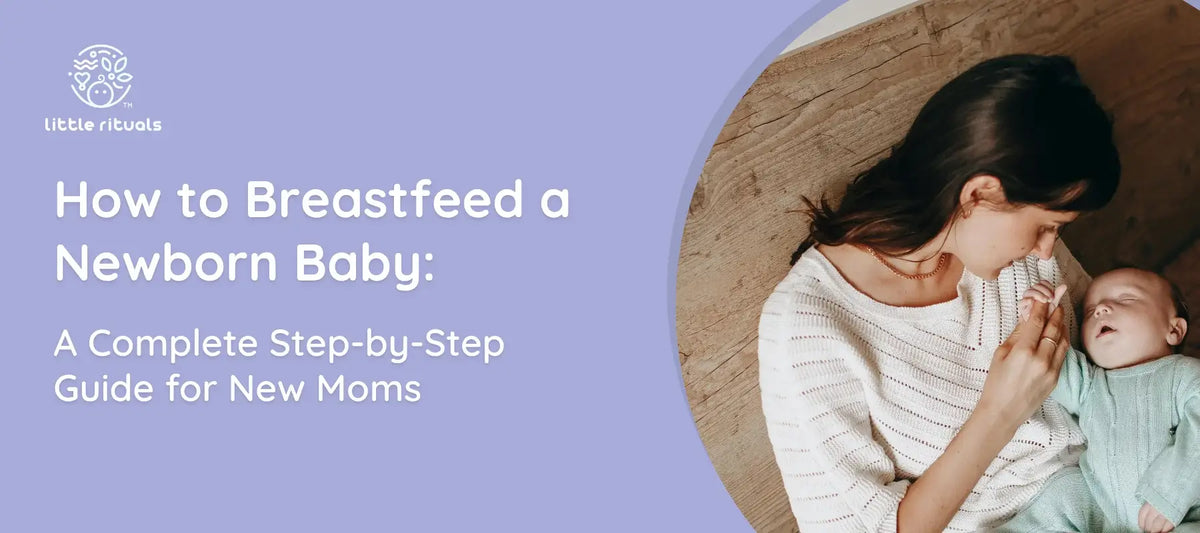
How to Breastfeed a Newborn Baby: A Complete Step-by-Step Guide for New Moms
Disclaimer: This content is for informational purposes only and is not a substitute for professional medical advice. Always consult your healthcare provider.
Learning how to breastfeed a newborn baby involves proper positioning, ensuring a deep latch, and feeding on demand. Comfort, patience, and attention to your baby’s cues are essential. Signs of effective feeding include wet diapers, relaxed posture, and audible swallowing. Seek guidance for common challenges such as sore nipples, latching issues, or low milk supply.
Learning how to breastfeed a newborn baby can feel overwhelming for new mothers. Many parents worry about whether they are doing it correctly, especially in the first few days when the baby is still learning to latch. At Little Rituals, we understand the importance of supporting new mothers through this journey by combining gentle guidance with safe, plant-based baby products. With proper positioning, patience, and awareness of your baby’s cues, you can successfully feed and bond with your newborn while building a comforting routine.
Why Breastfeeding Matters for Your Newborn
Breastfeeding is not just about nourishment; it plays a critical role in your baby’s physical and emotional development. Understanding the benefits can help you feel confident as you learn how to breastfeed a newborn baby.
Benefits for Baby
- Provides natural immunity and protection from infections
- Supplies ideal nutrition, including fats, proteins, and vitamins in the perfect balance
- Encourages emotional bonding and a sense of security through skin-to-skin contact
Benefits for Mother
- Supports postpartum recovery by helping the uterus contract
- Promotes hormonal balance, including oxytocin, which enhances emotional connection
- Strengthens maternal confidence and creates meaningful bonding moments with your baby
How to Breastfeed Newborn Baby: Step-by-Step
Step 1 – Get Comfortable
Before you begin feeding, make sure you are in a comfortable, supported position. Sit in a chair or on a bed with pillows behind your back. Support your arms and your baby with a small cushion so that you can hold them at breast level. Comfort is crucial because a relaxed mother makes feeding easier for both.
Step 2 – Position Your Baby Correctly
Positioning is key when learning how to breastfeed a newborn baby.
- Ensure tummy-to-tummy contact with your baby facing you
- Align your baby’s nose to your nipple to encourage a natural latch
- Support the baby’s head and shoulders gently without pushing on the neck
Step 3 – Help Your Baby Latch Properly
A deep and effective latch ensures proper feeding and reduces discomfort.
- Look for a wide-open mouth and flanged lips
- Ensure the baby takes in a significant portion of the areola, not just the nipple
- Avoid shallow latches, which can cause pain and reduce milk transfer
Step 4 – Let Your Baby Feed Naturally
Once latched correctly, allow your baby to feed at their own pace.
- Let them finish one breast before switching to the other
- Feed on demand, typically every 2–3 hours or when the baby shows hunger cues
- Each session may last between 10 and 45 minutes, depending on your baby’s appetite
Best Breastfeeding Positions for Newborns
Different positions can help make feeding more comfortable for you and your baby, especially when mastering how to breastfeed a newborn baby.
- Cradle Hold: Classic position where the baby’s head rests in the crook of your arm
- Cross-Cradle Hold: Baby held across the body, providing additional support for a proper latch
- Football Hold: Ideal for mothers recovering from C-section or feeding twins
- Side-Lying Position: Useful for nighttime feedings or if you need to rest while feeding
These positions allow you to adapt based on your comfort and your baby’s needs.
Signs Your Baby is Feeding Well
Knowing what to look for will help you feel confident as you learn how to breastfeed a newborn baby.
Signs of a Good Latch
- No pain or soreness during feeding
- Baby’s mouth covers more than just the nipple
- Slow, deep sucking with occasional pauses
Signs Your Baby is Full
- Relaxed hands and arms
- Content, calm behavior after feeding
- Regular wet and dirty diapers, indicating adequate milk intake
Common Breastfeeding Challenges (and Solutions)
Even with preparation, new mothers often face challenges. Here are solutions to the most common problems when learning how to breastfeed a newborn baby:
- Baby Not Latching: Try repositioning, using skin-to-skin contact, and a gentle guiding hand
- Sore Nipples: Use lanolin, express a few drops of milk for lubrication, and check latch technique
- Low Milk Supply: Increase feeding frequency, ensure proper latch, and stay hydrated
- Cluster Feeding: Normal during growth spurts; offer comfort and remain patient
Breastfeeding Tips Every New Mom Should Know
To build confidence and ensure effective feeding while learning how to breastfeed a newborn baby, keep these tips in mind:
- Feed your baby on demand rather than sticking to a rigid schedule
- Stay hydrated and maintain a nutritious diet
- Practice skin-to-skin contact to stimulate milk production and bonding
- Maintain a calm environment to reduce stress for both mother and baby
Creating a Calm Feeding Routine
Why Routine Matters for Babies
Babies thrive on predictability. A calm feeding routine helps your newborn feel secure and supports better sleep and mood.
Gentle Care Beyond Feeding
After feedings, gentle care such as soothing massage or clean‑up fosters connection. Many parents find that using safe, plant-based new born baby products helps protect and nourish delicate skin while promoting comfort after feeding and bath time. Little Rituals offers a range of naturally formulated baby skincare essentials crafted with high‑quality organic ingredients and free from harsh chemicals. Their products are designed to be gentle, effective, and safe for daily use on delicate baby skin, making them a supportive addition to your newborn care routine.
When to Consult a Doctor
Seek professional advice if any of the following occur during breastfeeding:
- Persistent nipple pain or cracking
- Baby not gaining weight
- Difficulty achieving a proper latch
- Signs of dehydration or illness
These situations ensure that both mother and baby receive the support they need while learning how to breastfeed a newborn baby. For parents navigating these early hurdles, a baby gift box or a baby gift hamper containing comforting essentials can make the journey smoother.
Final Thoughts
Learning how to breastfeed a newborn baby is a journey of patience, care, and bonding. Each feeding session is an opportunity to nourish, comfort, and connect with your baby. By observing your baby’s cues, maintaining comfort, and practicing regularly, you will gain confidence. If you are visiting a new mother, a new born baby gift hamper is a wonderful way to show support. Remember, progress is more important than perfection, and each feeding contributes to a healthy, happy start for your newborn.
Frequently Asked Questions
Q1. How often should I breastfeed my newborn?
Feed on demand, usually every 2–3 hours. Your baby may need more frequent sessions during growth spurts.
Q2. How do I know if my baby is getting enough milk?
Check for at least six wet diapers a day, steady weight gain, and alertness after feeding.
Q3. Can I combine breastfeeding and formula?
Yes. Many parents use a combination for flexibility. Gradual introduction helps baby adjust.
Q4. Is it normal for breastfeeding to hurt?
Some discomfort can occur initially. Persistent pain may indicate a shallow latch or infection and should be assessed by a lactation consultant.
Q5. Will my milk supply increase if I feed more often?
Yes. Frequent feeding stimulates milk production and helps your baby get enough nutrition. To help your child thrive, you can also learn more about how to increase newborn baby weight.
Q6. What positions are best for newborns?
Cradle, cross-cradle, football, and side-lying positions help you find comfort while ensuring an effective latch.
Q7. Why is skin-to-skin contact important?
It regulates your baby’s body temperature, promotes bonding, and can help stimulate feeding instincts. After feeding, you can continue this bonding with a gentle baby massage oil or during baby's first bath.
Q8. How long should each feeding last?
Typically 10–45 minutes. Pay attention to baby cues like sucking rhythm, swallowing, and signs of fullness rather than strict timing. For post-feeding clean-ups, consider the many baby wipes uses to keep your baby fresh and comfortable.