Baby’s First Bath: The Complete Guide for New Parents
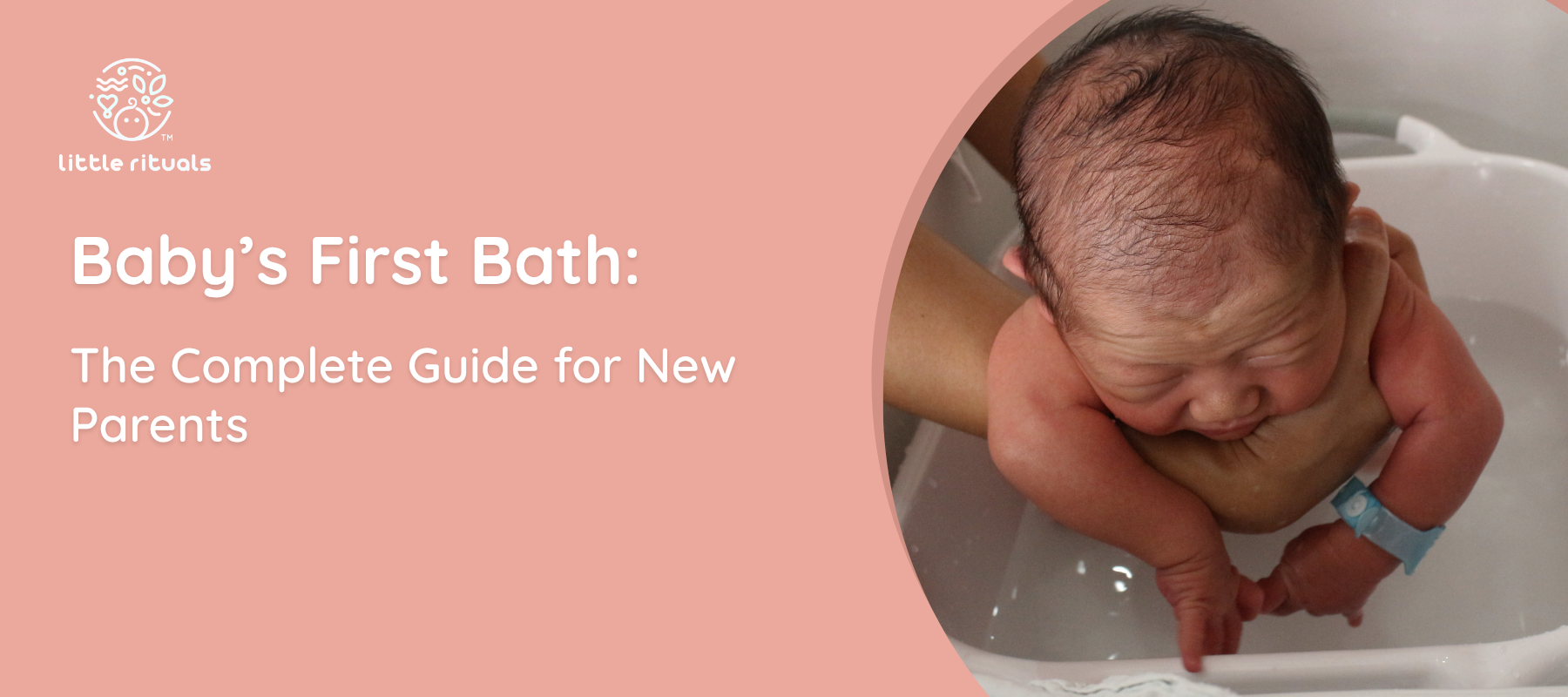
Your baby’s first bath should ideally be delayed at least 24 hours after birth. Use lukewarm water and gentle, pH-balanced cleansers suitable for newborn skin. Start with a sponge bath until the umbilical cord falls off, then transition to a tub bath. Focus on gentle cleansing, proper drying, and moisturizing to protect delicate skin and build a comforting ritual.
Giving your baby’s first bath is a meaningful moment filled with excitement and a bit of nervousness. Many new parents immediately think about the perfect routine and the perfect products. Gentle, dermatologist‑tested baby products designed for sensitive newborn skin can make all the difference in creating calm and caring moments. In this guide, you’ll learn when to bathe your baby, how to prepare, step‑by‑step bathing techniques, and safe post‑bath care to ensure a comforting experience right from the start.
When Should You Give Your Baby Their First Bath?
Knowing the right timing for your baby’s first bath is crucial. Newborns have a natural protective layer called vernix, which helps maintain skin moisture and protect against infections. Delaying the first bath allows this layer to absorb fully.
- Experts, including the World Health Organization, recommend waiting at least 24 hours after birth before giving a full bath.
- In the first few days, sponge baths are ideal while the umbilical cord stump remains intact.
- Watch for signs that your baby is ready: stable body temperature, alertness, and calm behavior.
- While cultural practices may vary, following medical guidance ensures your newborn’s safety and skin health.
Why Your Baby’s Skin Needs Extra Gentle Care
Newborn skin is delicate, fragile, and highly sensitive. Compared to adult skin, it is about 30% thinner and more prone to moisture loss and irritation. Proper care from the first bath is essential to prevent dryness, rashes, or discomfort.
- Avoid harsh soaps, detergents, or anything with artificial fragrance.
- Over-bathing can strip the skin of natural oils, leading to irritation and discomfort.
- Use plant-based, toxin-free, and pH-balanced cleansers specifically formulated for newborns.
Gentle skin care products can maintain your baby’s natural protective barrier, keeping their skin soft, nourished, and healthy.
What You Need Before Baby’s First Bath
Proper preparation ensures a safe and calming baby’s first bath experience. Gather all necessary items before starting:
- Soft, absorbent towel, preferably with a hood
- Bowl of lukewarm water, safe for delicate skin
- Soft cotton pads or washcloths
- Clean diaper and fresh clothing
- Mild, nourishing cleanser and baby oil
Choosing the Right Cleanser and Moisturizer
- Pick products free from harsh chemicals, synthetic fragrances, and dyes
- Look for dermatologist‑tested baby wash and oil formulations designed for newborn skin
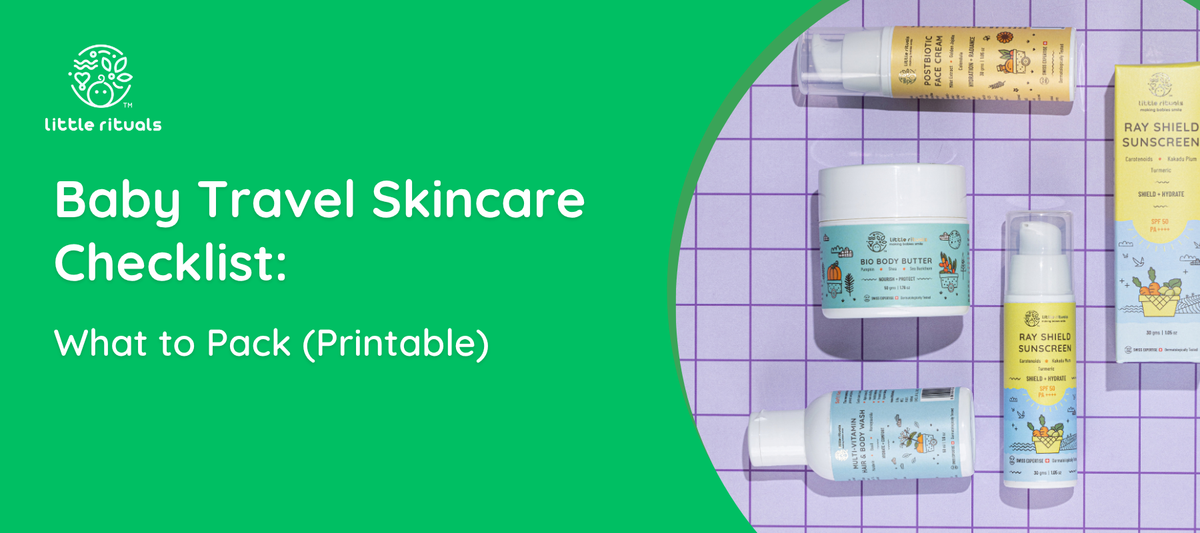
- For example, Little Rituals Baby Multi‑Vitamin Hair & Body Wash is tear‑free, plantbased, and gently cleanses without irritation, keeping delicate skin hydrated and clean
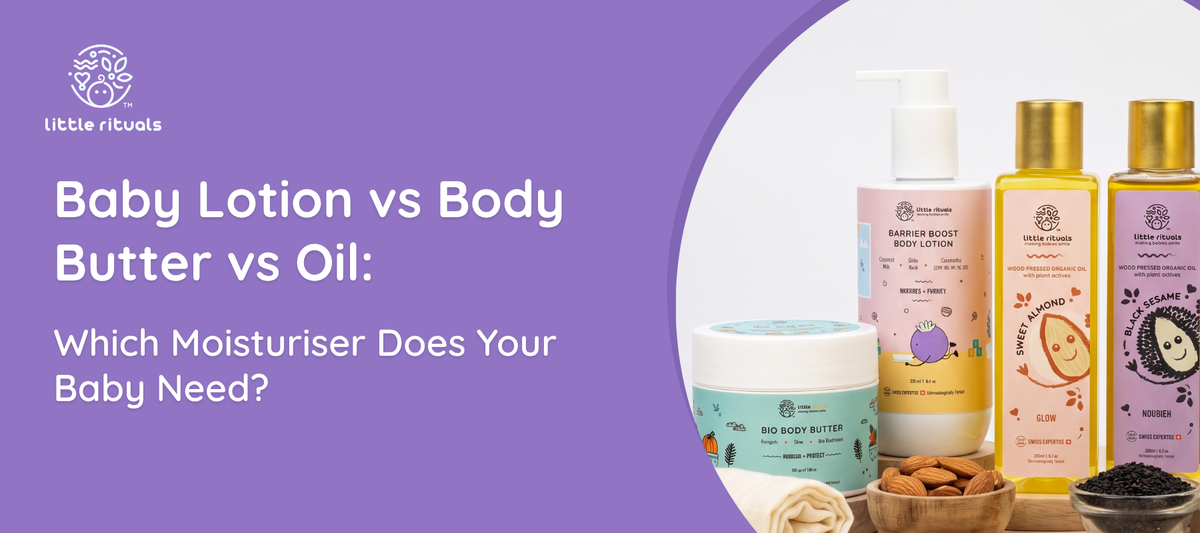
- After bathing, applying moisturizer like Little Rituals Barrier Boost Baby Body Lotion helps lock in hydration and protect newborn skin all day
Sponge Bath vs Tub Bath: What’s Best for Newborns
Choosing the right bath type depends on your baby’s age and umbilical cord status.
Sponge Bath (0–2 Weeks)
- Ideal before the umbilical cord falls off
- Clean gently with a soft cloth or sponge, starting from the face and working downwards
- Avoid full immersion until the cord stump is healed
Tub Bath (After Cord Falls Off)
- Can start once the umbilical cord stump has healed
- Supports gentle immersion, comfort, and bonding
- Helps your baby enjoy the water while feeling secure and relaxed
Step-by-Step Guide to Baby’s First Bath
Giving your baby’s first bath doesn’t have to be stressful. Follow these steps for a safe and soothing experience:
Step 1 – Set the Mood
- Keep the room warm, around 24–26°C, to prevent heat loss
- Create a calm environment by dimming lights and reducing noise
- Play soft, soothing music if it helps your baby relax
Step 2 – Check Water Temperature
- Lukewarm water around 37–38°C is ideal
- Test the water with your elbow, not your hand, to ensure it is safe for sensitive skin
Step 3 – Undress and Support Baby
- Hold your baby securely, supporting the head and neck
- Keep the body partially wrapped until ready to gently lower into the water
Step 4 – Gentle Cleansing
- Begin with the face using only water, avoiding soap on the eyes and mouth
- Clean from top to bottom, including folds of the neck, arms, legs, and diaper area
- Use minimal products to protect natural oils
Step 5 – Rinse and Wrap Quickly
- Rinse gently with lukewarm water
- Wrap your baby immediately in a soft towel to prevent heat loss
Step 6 – Post-Bath Care
Apply a gentle baby moisturizer or oil to lock in hydration. Products like Little Rituals Oils or Little Rituals Barrier Boost Body Lotion help soothe and nourish newborn skin. Regular moisturizing supports the delicate skin boundary and enhances comfort.
How Often Should You Bathe Your Newborn?
- Newborns do not need daily baths; 2–3 times per week is usually sufficient
- Focus on “top and tail” cleaning daily for the face, neck, and diaper area
- Avoid excessive bathing, which can dry out delicate skin
Common Mistakes to Avoid During Baby’s First Bath
- Bathing too soon after feeding can cause discomfort or vomiting
- Using multiple cleansers or lotions at once, which may irritate the skin
- Leaving the baby unattended even for a moment
- Incorrect water temperature, too hot or too cold, can be dangerous
Turning Bath Time into a Bonding Ritual
A baby’s first bath is more than just hygiene; it’s a chance to connect with your newborn.
- Maintain gentle eye contact
- Speak softly and move slowly
- Develop a consistent routine to help your baby feel safe and secure
- Treat bath time as a ritual, creating a sense of comfort and trust rather than a task
Final Thoughts
Your baby’s first bath is an opportunity to nurture, soothe, and connect. With the right preparation and a calm approach, it becomes an experience you will both cherish. For newborn‑friendly products that support gentle care and daily rituals, explore the Little Rituals baby care collection, including Multi‑Vitamin Body & Hair Wash for a soft cleanse and Barrier Boost Body Lotion for deep hydration and protection against dryness. These products are crafted with sensitive skin in mind and help make every bath a comforting, thoughtful ritual. You can also explore curated options like a baby gift box, baby gift hamper, or new born baby gift hamper for thoughtful newborn care. These products are crafted with sensitive skin in mind and help make every bath a comforting, thoughtful ritual.
Experience thoughtful, plant-based baby care designed to nurture from the very first bath onward. Explore Little Rituals new born baby products today.
Frequently Asked Questions
Q1. How do I give my baby’s first bath safely?
Use lukewarm water and gentle, pH-balanced cleansers. Support your baby’s head and neck at all times, and start with a sponge bath if the umbilical cord is still healing. Always pat skin dry and moisturize afterward.
Q2. Can I bathe my baby daily?
Daily baths are not necessary. Newborns can be bathed 2–3 times per week, focusing on the face, neck, and diaper area for daily hygiene.
Q3. Is it safe to use soap on newborn skin?
Only mild, pH-balanced cleansers specifically made for newborns should be used. Harsh soaps or fragranced products can dry out delicate skin.
Q4. Will my baby cry during the first bath?
Some newborns may cry due to unfamiliar sensations. Maintaining warmth, a gentle touch, and a soft voice can help soothe them.
Q5. What temperature should the bath water be?
Lukewarm water, around 37–38°C, is ideal. Always test with your elbow before placing the baby in the water.
Q6. Why should I wait 24 hours for the first bath?
Delaying the first bath preserves the protective vernix coating and stabilizes the newborn’s body temperature.
Q7. Where should I bathe my baby in the first weeks?
Use a clean, shallow basin or sink for sponge baths before the umbilical cord falls off. Ensure the area is warm, safe, and quiet.
Q8. Which products are best for newborn skin?
Plant-based, toxin-free, and dermatologist-tested cleansers and oils are recommended to maintain hydration and protect sensitive skin. You can also explore helpful reads like baby hair growth tips or understand conditions like newborn baby jaundice.