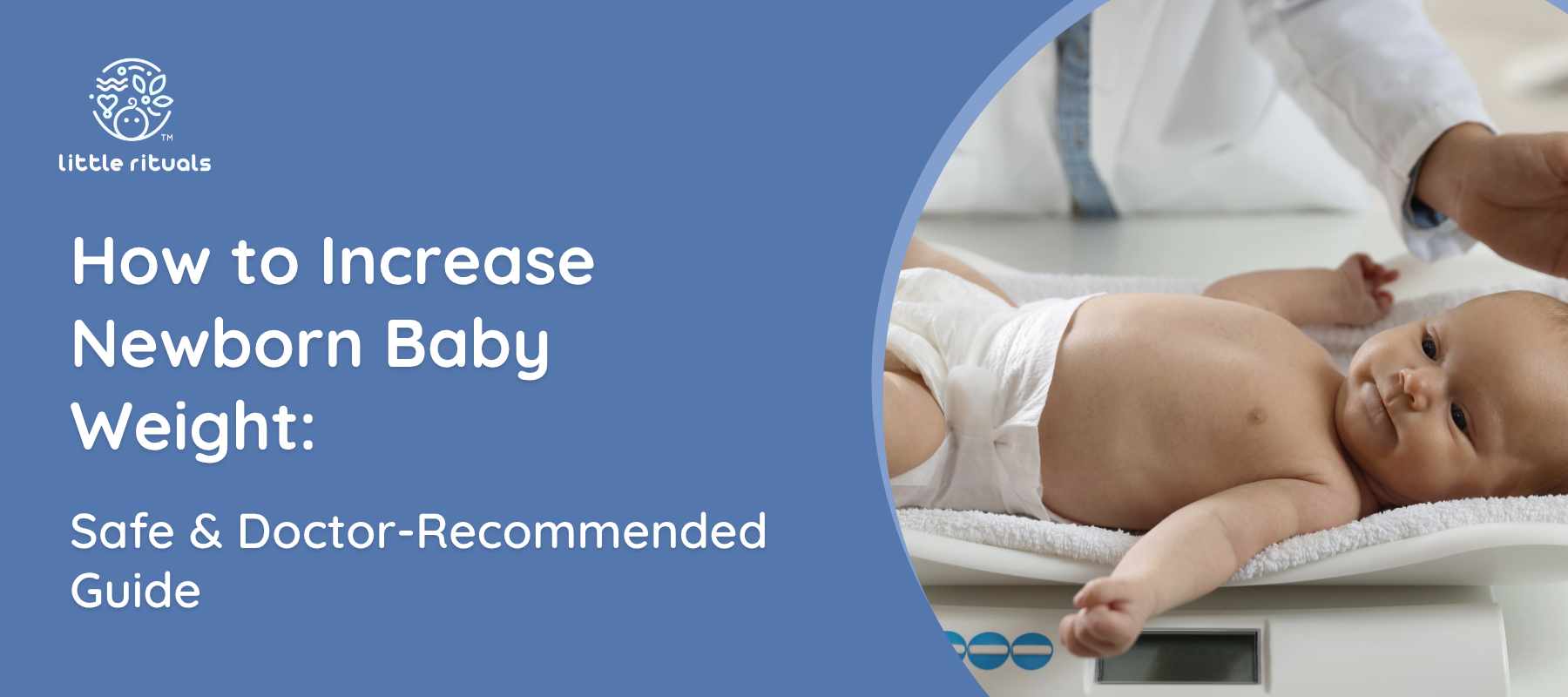
How to Increase Newborn Baby Weight (Safe & Doctor-Recommended Guide)
Disclaimer: This content is for informational purposes only and is not a substitute for professional medical advice. Always consult your healthcare provider.
Newborns may naturally lose some weight during the first week after birth, but consistent feeding, proper breastfeeding, skin-to-skin contact, and gentle daily care can help support healthy weight gain. Most babies gain about 20 to 30 grams per day after the initial weight loss. Monitoring wet diapers, feeding patterns, and developmental milestones ensures proper growth.
Understanding how to increase newborn baby weight safely is one of the biggest concerns for new parents. As you focus on nourishing feeds and gentle daily care, cchoosing the right baby products also makes a difference. Brands like Little Rituals offer plant‑based, clinically tested baby care essentials designed to support your newborn’s delicate skin and comfort as they grow.
You can also explore detailed insights on the average weight of newborn baby to better understand normal growth patterns and milestones.
Understanding Newborn Weight Gain (What’s Normal?)
Average Newborn Weight and Expected Gain
Newborns are born with an average weight ranging between 2.5 and 4 kilograms. It is normal for them to lose 5 to 10 percent of their birth weight in the first few days after birth due to fluid loss. After this initial period, healthy babies typically gain between 20 and 30 grams per day.
For deeper guidance on feeding practices that support healthy growth, you can read how to breastfeed newborn baby.
Parents should keep in mind that every baby grows at a slightly different rate, and small variations are often normal. Tracking your baby’s weight over time helps identify any concerns early.
Signs Your Baby Is Gaining Weight Properly
- Your baby has at least six to eight wet diapers per day
- Strong sucking and swallowing during feedings
- Alertness and responsiveness after feeds
- Steady weekly weight gain and positive growth milestones
These signs indicate that your newborn is feeding well and gaining weight as expected.
Why Some Newborns Don’t Gain Weight
Feeding-Related Causes
- An ineffective latch during breastfeeding can prevent proper milk intake
- Feeding too infrequently can limit calorie intake
- Switching breasts too soon may result in not receiving hindmilk, which is higher in fat
Medical and Developmental Factors
- Premature babies may have underdeveloped feeding reflexes
- Digestive issues, such as reflux or malabsorption, can limit weight gain
- Certain metabolic conditions may require specialized feeding approaches
Environmental and Care Factors
- Strict feeding schedules, rather than feeding on demand, can reduce overall intake
- Limited skin-to-skin contact may affect feeding cues and hormone regulation
- Stressful or uncomfortable environments can interfere with growth
Understanding these factors helps parents identify the most effective ways to support weight gain.
How to Increase Newborn Baby Weight Naturally
1. Focus on Effective Breastfeeding
Proper breastfeeding is one of the most reliable ways to improve newborn weight gain.
- Ensure a correct latch for optimal milk transfer
- Feed 8 to 12 times per day, following your baby’s hunger cues
- Allow your baby to finish one breast before switching to the other to get the nutrient-rich hindmilk
2. Practice Skin-to-Skin Contact
Skin-to-skin contact between parent and baby has been shown to stimulate feeding reflexes and metabolism.
- Place your baby against your chest daily for 30 to 60 minutes
- Promotes hormone regulation that supports digestion and growth
- Strengthens bonding and emotional well-being, which positively impacts feeding
3. Ensure Frequent and Full Feedings
- Feed your baby on demand rather than on a strict schedule
- Observe that your baby empties one breast before moving to the other
- Hindmilk at the end of feeding is rich in fats, essential for weight gain
4. Support with Formula if Needed
Some babies may require formula supplementation.
- Only introduce the formula under pediatric guidance
- Choose formulas designed for healthy weight gain if recommended
5. Improve Mother’s Nutrition
A mother’s diet directly affects milk quality.
- Stay hydrated throughout the day
- Include protein-rich foods, healthy fats, iron-rich meals, and nutrient-dense vegetables
- Balanced nutrition ensures the baby receives essential nutrients through breast milk
By following these strategies, parents can confidently support their baby’s growth and development.
Best Foods for Baby Weight Gain
For 0–6 months:
- Breast milk only or formula as recommended
- Exclusive feeding ensures proper nutrient intake and supports weight gain
For 6 months and beyond (solids introduction):
- Mashed banana, avocado, or sweet potato
- Ghee-based foods in moderation
- Iron-fortified cereals and soft mashed vegetables
Introducing solids gradually while maintaining breast milk or formula ensures steady growth.
Daily Baby Care Habits That Support Healthy Weight Gain
Gentle Massage Routines
- Stimulates circulation and digestion
- Enhances muscle tone and relaxation
- Encourages better sleep, indirectly supporting growth
You can explore organic baby massage oil India for safe options that support relaxation and growth.
Bathing and Skin Nourishment
- Use mild, chemical-free cleansers suitable for newborns (see tips for baby's first bath)
- Moisturize after bathing to maintain skin hydration
- Protect delicate skin from harsh chemicals that can cause irritation
Sleep and Comfort Routines
- Adequate sleep is essential for growth hormone release
- Consistent bedtime and calming routines reduce stress
- Comfortable sleep environments improve overall development
Incorporating gentle care routines with safe, high-quality new born baby products ensures comfort while promoting healthy weight gain.
For product-based support, explore cold pressed organic coconut oil baby growth.
Common Mistakes That Can Slow Baby Weight Gain
- Rigid feeding schedules rather than feeding on demand
- Ignoring latch problems or improper breastfeeding techniques
- Introducing solids too early, before six months
- Using harsh skincare or baby products that irritate delicate skin
Correcting these mistakes can significantly improve weight gain and overall well-being.
When to Consult a Doctor
- No weight gain after two weeks
- Weak or ineffective sucking reflex
- Persistent vomiting or diarrhea
- Signs of dehydration, such as fewer wet diapers
Timely consultation ensures that any underlying issues are addressed quickly.
Expert Tips for Healthy Baby Growth
- Track growth regularly using weight charts
- Follow pediatric guidance for feeding and development
- Focus on consistent care and nurturing rather than quick fixes
- Combine proper feeding with gentle daily routines for optimal growth
Build Healthy Growth Through Gentle Daily Rituals
Supporting your newborn’s weight gain isn’t limited to feeding alone. Daily rituals like skin‑to‑skin time, calming massages with plant‑based baby oils, and gentle skincare routines all contribute to comfort and well‑being. To complement these care practices, consider exploring the Little Rituals range of baby‑safe products, including thoughtfully curated options like a baby gift box, baby gift hamper, or new born baby gift hamper, formulated with natural, toxin-free ingredients, clinically tested for delicate skin, and developed to support your baby’s comfort and nurturing moments.
Explore Little Rituals baby care essentials and create daily moments that help your newborn feel calm, comfortable, and nourished, an important foundation for healthy weight gain.
Final Thoughts
Weight gain in newborns is gradual and requires a combination of nutrition, nurturing, and routine. Parents who focus on proper breastfeeding, safe supplementation when necessary, and gentle daily care will help their baby achieve healthy growth. Using safe, high-quality baby products adds reassurance while supporting daily rituals that naturally promote weight gain. Understanding how to increase newborn baby weight empowers parents to provide the best care for their child.
Frequently Asked Questions
Q1. How can I safely increase my newborn’s weight?
Focus on effective breastfeeding, frequent skin-to-skin contact, full feedings, and proper mother nutrition. Use formula supplementation only under pediatric guidance.
Q2. Can premature babies gain weight like full-term newborns?
Yes, but they require careful monitoring. Premature babies may need more frequent feeds, specialized formula, and closer medical supervision to ensure healthy growth.
Q3. Is it normal for newborns to lose weight initially?
Yes, losing 5–10% of birth weight in the first week is typical. Weight usually starts to increase steadily after this period.
Q4. Will switching to formula help if breastfeeding isn’t sufficient?
Formula can help, but it should be introduced only with pediatric guidance. Proper supplementation ensures the baby receives enough nutrients to support healthy weight gain.
Q5. What foods help babies gain weight after six months?
Introduce mashed banana, avocado, ghee-based foods, iron-fortified cereals, and soft mashed vegetables gradually while maintaining breast milk or formula.
Q6. Why isn’t my baby gaining weight despite frequent feeding?
Possible reasons include poor latch, insufficient hindmilk intake, digestive issues, or medical conditions. Consult a pediatrician if weight gain remains slow.
Q7. How do I know if my newborn is gaining weight properly?
Monitor wet diapers, alertness, feeding patterns, and weekly weight measurements. A steady gain of 20–30 grams per day after the first week is a positive sign.
Q8. What routines support newborn growth besides feeding?
Gentle massages, skin-friendly bathing, consistent sleep schedules, and a calm, nurturing environment all contribute to healthy weight gain and development.