Newborn Baby Jaundice: Causes, Symptoms, Treatment & Care Tips for Parents
Disclaimer: This content is for informational purposes only and is not a substitute for professional medical advice. Always consult your healthcare provider.
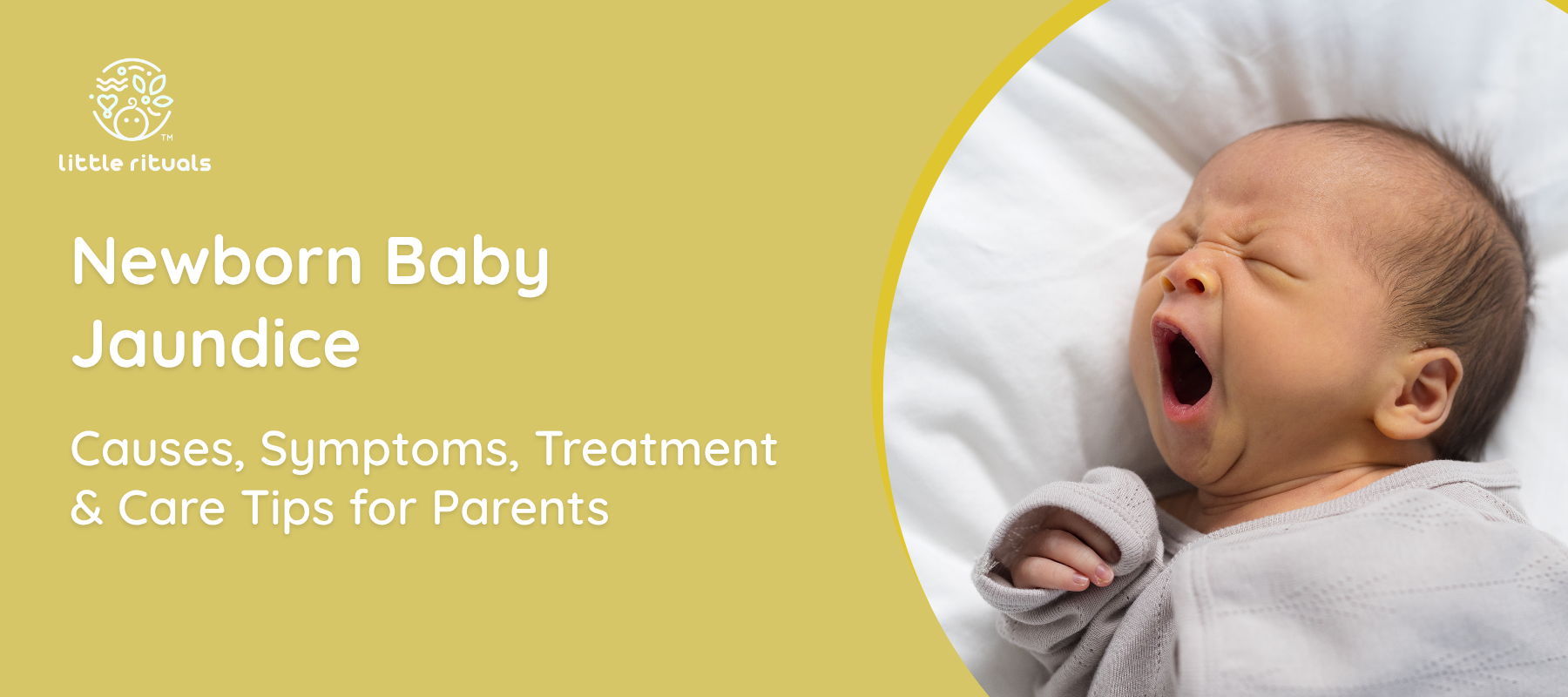
Newborn baby jaundice is a common condition where a baby’s skin or eyes turn yellow due to high bilirubin levels. Most cases are harmless and resolve within 1–2 weeks with proper monitoring and frequent feeding. Early detection, pediatric guidance, and gentle care help ensure your baby recovers safely and comfortably.
Many parents notice a yellow tint in their newborn’s skin or eyes within the first few days. This is often newborn baby jaundice, a condition that affects the majority of infants during their first week of life. While it can be concerning, most cases are temporary and manageable.
At Little Rituals, our baby care products are designed to support delicate newborn skin, ensuring hydration and protection while you care for your baby through small, comforting daily routines. Understanding newborn baby jaundice, its causes, symptoms, and care strategies can help parents feel confident in providing safe, nurturing care.
What is Newborn Baby Jaundice?
Understanding Bilirubin in Newborn Babies
Bilirubin is a yellow substance created when the body breaks down old red blood cells. In adults, the liver efficiently processes bilirubin, but in newborns, the liver is still developing and may not remove bilirubin quickly enough.
Because of this, babies often show yellowing of the skin and eyes, which is a hallmark of newborn baby jaundice. While this may look concerning, it is often a normal physiological process as the baby adapts to life outside the womb.
Why Jaundice is Common in the First Week
Newborn baby jaundice occurs frequently during the first week due to the transition from the womb environment to the outside world. There are several types of jaundice that parents should be aware of:
- Physiological jaundice – Mild yellowing that appears in most healthy newborns and usually resolves without treatment
- Breastfeeding jaundice – Occurs when the baby is not feeding effectively in the first days
- Breast milk jaundice – Can appear after the first week, but is generally harmless
- Pathological jaundice – Severe cases caused by underlying medical conditions that need immediate attention
This natural variation explains why jaundice is often observed in otherwise healthy babies
Symptoms of Newborn Baby Jaundice Parents Should Watch For
Early Signs
Parents should monitor their baby carefully for the following:
- Yellowing of the skin, starting from the face and chest
- Yellow discoloration in the eyes
- Sleepiness or unusually low activity levels
- Feeding difficulties, including reluctance to feed or poor sucking
How Parents Can Check for Jaundice at Home
- Gentle skin press test – Press the skin lightly on the nose, forehead, or chest. If the area turns yellow when pressed, it may indicate jaundice
- Observe your baby in natural daylight – Indoor lighting can distort skin color, so check skin tone in natural light for accuracy
Warning Signs Requiring Immediate Medical Attention
- Jaundice spreading to the arms, legs, or entire body
- High-pitched or inconsolable crying
- Poor feeding or refusal to feed
- Signs of dehydration, such as very few wet diapers
Recognizing these signs ensures that babies with severe newborn baby jaundice receive timely care.
What Causes Newborn Baby Jaundice?
Immature Liver Function
Most cases of newborn baby jaundice are caused by an immature liver. The liver is responsible for breaking down bilirubin, and in newborns, this process is naturally slower.
Breastfeeding Jaundice
When a baby does not receive enough milk in the first few days, bilirubin elimination through urine and stool can be delayed, leading to newborn baby jaundice.
Blood Type Incompatibility
ABO or Rh incompatibility between the baby and mother can lead to higher bilirubin levels and more noticeable jaundice.z
Premature Birth
Premature babies are more susceptible to jaundice because their livers are underdeveloped and less efficient at processing bilirubin.
Other Rare Causes
- Infection
- Liver disorders
- Genetic or metabolic conditions
Understanding these causes helps parents and pediatricians decide when newborn baby jaundice requires medical treatment.
Types of Jaundice in Newborn Babies
- Physiological jaundice – Most common and resolves naturally
- Breastfeeding jaundice – Due to insufficient milk intake
- Breast milk jaundice – Appears after the first week, but is rarely harmful
- Pathological jaundice – More severe and needs medical intervention
By knowing the type, parents can better monitor their baby’s progress and seek help if necessary.
How Doctors Diagnose Newborn Baby Jaundice
- Physical examination – Pediatricians check the skin and eyes for yellowing and assess overall health
- Bilirubin blood tests – Accurate measurement to determine the level of bilirubin in the blood
- Skin bilirubin measurement devices – Non-invasive tools that allow safe monitoring of bilirubin trends
These diagnostic steps help determine whether the newborn baby jaundice is mild and self-resolving or requires medical treatment.
Treatment Options for Newborn Baby Jaundice
Frequent Feeding
Regular feeding encourages bilirubin elimination through urine and stool, which can help reduce newborn baby jaundice.
Phototherapy (Light Therapy)
This treatment uses specialized blue light to break down bilirubin in the baby’s skin. Phototherapy is safe, effective, and commonly used in hospitals for moderate jaundice.
Exchange Transfusion
Used only in rare and severe cases, this treatment replaces some of the baby’s blood with donor blood to reduce extremely high bilirubin levels. Most babies with newborn baby jaundice recover without this procedure.
How Parents Can Support Babies Recovering from Jaundice
- Ensure frequent and consistent feeding to aid bilirubin clearance
- Monitor the baby’s skin color daily for changes • Follow all advice and checkups from your pediatrician
- Create a calm care routine that includes gentle touch, quiet environments, and safe baby handling
Using gentle, plant-based skincare products such as those from Little Rituals can also help protect and nourish sensitive newborn skin during recovery. If you are celebrating a new arrival, a baby gift box or a baby gift hamper filled with new born baby products can provide the necessary essentials for this delicate phase.
Can Newborn Baby Jaundice Be Prevented?
- Start feeding your baby early and regularly to ensure proper hydration
- Schedule routine pediatric checkups in the first week
- Monitor your baby’s skin and behavior closely to detect jaundice early
Even though newborn baby jaundice cannot always be prevented, these steps reduce the risk of severe complications and support healthy recovery.
Caring for Your Baby’s Delicate Skin
Newborn skin is extremely sensitive. Gentle, clinically tested baby care products help maintain hydration, protect the skin barrier, and avoid irritation. Parents should choose toxin-free, plant-based products that are safe for everyday use. This care complements the monitoring and treatment of newborn baby jaundice, ensuring overall comfort and well-being. A new born baby gift hamper often includes these skin-loving basics.
When to Consult Your Pediatrician
Consult a healthcare professional if:
- Jaundice lasts longer than two weeks
- Your baby is extremely sleepy or feeding poorly
- Bilirubin levels are unusually high
- Any rapid spreading or worsening of yellowing occurs
Trusting pediatric guidance is essential for safe management of newborn baby jaundice.
Final Thoughts
Newborn baby jaundice is common, usually mild, and temporary. Parents can ensure safe recovery through careful monitoring, frequent feeding, and gentle care. Small daily routines, including using products that protect delicate skin, help babies thrive and grow comfortably in these early weeks. To support your baby's health further, you can read about how to increase newborn baby weight, the best baby wipes uses, and the benefits of a baby massage oil during their recovery. For their first hygiene routines, learn more about baby's first bath to keep them comfortable.
Frequently Asked Questions
Q1. How can I tell if my newborn has jaundice?
Check for yellowing of the skin and eyes, observe your baby in natural daylight, and monitor feeding patterns and activity levels.
Q2. Can newborn jaundice be prevented?
Early and frequent feeding, close monitoring, and routine pediatric checkups reduce risks, but not all jaundice cases can be prevented.
Q3. Is newborn baby jaundice dangerous?
Most cases are mild and resolve naturally, but persistent or severe jaundice may indicate an underlying condition that requires medical attention.
Q4. Will phototherapy hurt my baby?
Phototherapy is safe, non-invasive, and carefully monitored in hospitals. It effectively reduces bilirubin without causing pain.
Q5. What causes newborn jaundice?
Causes include immature liver function, insufficient feeding, blood type incompatibility, premature birth, and rare medical conditions.
Q6. Why do premature babies get jaundice more often?
Premature babies have underdeveloped livers, making bilirubin processing slower and increasing the likelihood of newborn jaundice.
Q7. How long does newborn baby jaundice last?
Physiological jaundice typically lasts 1–2 weeks. Breast milk jaundice may appear slightly later but is usually harmless. Severe cases require medical treatment.
Q8. Can breastfeeding worsen jaundice?
Breastfeeding jaundice can occur if the baby is not feeding adequately in the early days, but improving milk intake usually resolves the condition.