Are Baby Wet Wipes Safe for Newborns? What to Check on the Label
Baby wet wipes can be suitable for newborn care when the formula, material and intended use are appropriate for delicate skin. Parents should check the label for alcohol, fragrance, fabric material, water content, pH, ingredients and usage directions rather than relying only on claims such as “gentle” or “natural.”
Newborn skin deserves thoughtful care, especially when cleaning happens several times a day. Baby wet wipes can simplify diaper changes and quick clean-ups, but the label deserves a closer look than the front of the pack. Here is what to check before making them part of your routine.
Are Baby Wet Wipes Safe for Newborns?
Yes, baby wet wipes can be used for newborn care when they are formulated for babies and used gently. Safety is not determined by one ingredient or marketing claim alone. The complete formulation, wipe material, pH, intended use and your baby’s individual skin response all matter.
For frequent cleaning, choose baby products with clear ingredient information and straightforward directions. If redness, burning, swelling or a persistent rash develops after using a new born baby products, stop using it and seek appropriate medical advice.
The Baby Wipes Label Checklist
|
Label check |
What to look for |
Why it matters |
|
Alcohol |
Alcohol-free formulation |
Helps avoid unnecessary drying or stinging |
|
Fragrance |
Clearly disclosed fragrance; fragrance-free can suit sensitive routines |
Makes the formulation easier to assess |
|
Material |
Soft, skin-friendly fabric |
Supports comfortable cleaning with less friction |
|
Water % |
High water content, with the percentage stated where available |
Shows how water-based the formula is |
|
pH |
Clearly disclosed, skin-friendly pH |
Helps assess formulation compatibility |
|
Ingredients |
Complete, readable ingredient list |
Lets parents evaluate the whole formula |
Check for Alcohol
Alcohol can be drying, so many parents prefer alcohol-free baby wipes for newborn skin. Check the ingredient declaration instead of relying only on the front label. A clear ingredient list gives you a better picture of the complete formula.
Look Closely at Fragrance
Fragrance deserves attention when choosing wipes for a newborn. Some babies tolerate scented products well, while sensitive skin may respond better to a simpler formula. If your baby has reacted to fragranced baby skincare before, a fragrance-free option can be easier to assess.
Check the Wipe Material
The liquid is only one part of a wipe. The fabric touches the skin directly, so softness, thickness and texture matter. A soft, adequately thick wipe can provide better coverage and reduce repeated passes over the same area.
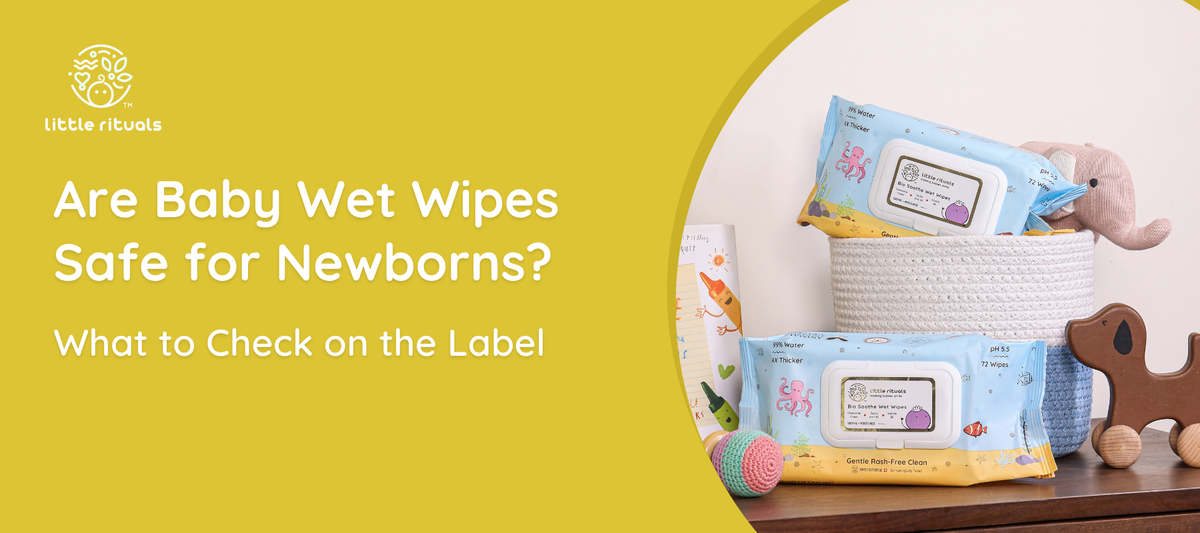
Little Rituals Bio Soothe Wet Wipes use plant-based fabric and 4× thicker material for coverage and softness.
Check the Water Content
A high water percentage is useful information, but it does not automatically make baby wet wipes suitable for every newborn. The rest of the formulation matters too.
Little Rituals Bio Soothe Wet Wipes contain 99% water. Formulation also includes Sacha Inchi Oil, Vitamin B5, Chamomile, Glycerin, Allantoin and other ingredients.
Look for pH Information
A clearly stated pH helps parents understand how a wipe has been formulated for skin. Little Rituals Bio Soothe Wet Wipes have a pH of 5.5 and are positioned for delicate skin.
Consider pH alongside the complete formulation rather than treating one number as a guarantee of safety.
What Ingredients Should Parents Look For in Baby Wipes?
A readable ingredient list is one of the most useful things on the pack. Instead of searching for one “perfect” ingredient, consider what each component does and whether the overall formula suits your baby.
Little Rituals lists ingredients including:
- Sacha Inchi Oil: helps nourish and hydrate skin.
- Vitamin B5 (Panthenol): supports moisture retention and skin comfort.
- Chamomile Extract: provides soothing care.
- Glycerin: helps draw moisture into the skin.
- Allantoin: helps soothe and protect the skin.
- Lysine: supports the skin barrier.
Little Rituals also provides the complete ingredient list and identifies naturally derived ingredients marked with an asterisk as ECOCERT/COSMOS approved.
What Ingredients Should Parents Be Cautious About?
There is no universal “bad ingredient” list that applies identically to every baby. Instead, pay attention to ingredients that may be unsuitable for your child’s skin or that you personally want to avoid.
When checking baby wipes, look carefully at:
- Added fragrance, particularly if your baby has sensitive skin.
- Alcohol, if you want to minimise potential drying.
- Strong cleansing agents that may not suit delicate skin.
- Ingredients your baby has previously reacted to.
- Products with incomplete or unclear ingredient information.
A transparent label is more useful than a long list of broad claims on the front of a pack. Discover baby wipes uses to learn how baby wipes can support convenient everyday cleaning and baby care at home or on the go.
Why Do Material and Thickness Matter?
Wiping is a physical action, so the feel of the fabric matters as much as the liquid on it. Newborn diaper changes can involve repeated cleaning, making a soft, adequately thick wipe useful for comfortable coverage.
Little Rituals Bio Soothe Wet Wipes use plant-based fabric and 4× thicker material. The formula is also described as pH 5.5 balanced and alcohol-free, with clinical and dermatological testing indicated on the product page.
How Should You Use Baby Wet Wipes Safely?
Good product selection works best with gentle technique.
- Wipe gently rather than scrubbing.
- During diaper changes, wipe from front to back.
- Use the wipe only on areas for which the product is intended.
- Keep the pack properly closed so the wipes do not dry out.
- Store the pack in a cool, dry place away from direct sunlight.
- Patch test a new product when appropriate, particularly if your baby has reactive skin.
- Stop use if irritation appears and seek professional advice when symptoms persist.
Little Rituals recommends use on the face, hands, feet and diaper area, with front-to-back wiping during diaper changes. It also advises disposing of used wipes in a bin rather than flushing them.
Baby Wipes vs Cotton and Water
Both options have a place in newborn care.
Baby wipes:
- Ready to use.
- Convenient for diaper changes and travel.
- Provide a pre-formulated cleansing solution.
-
Reduce the need to carry separate cotton and water.
Cotton and water:
- Offer a simple cleansing approach.
- Give parents direct control over what touches the skin.
- Require more preparation.
-
Can be less convenient outside the home.
The right choice depends on your baby’s skin, your routine and the situation. Explore How To Choose the Best Baby Wipes to learn how to select gentle, skin-friendly wipes based on ingredients, material, and your baby’s delicate skin needs.
How Little Rituals Approaches Baby Wipe Care
Little Rituals Bio Soothe Wet Wipes combine 99% water with a pH 5.5 formula and plant-based, 4× thicker fabric. The formulation includes Chamomile, Sacha Inchi Oil, Vitamin B5, Glycerin and Allantoin. The product is positioned as alcohol-free and marked as clinically and dermatologically tested.
The formula also uses AQUASILOILS® technology, described as a PEG-free, water-soluble blend of vegetable oils and essential amino acids. Little Rituals provides the complete ingredient list, usage directions, storage instructions and caution information on the product page.
That transparency makes it easier to compare the product against a practical label checklist instead of choosing based only on packaging language.
Your 10-Second Label Check
Before buying baby wet wipes, ask:
- Is it alcohol-free?
- Is fragrance clearly disclosed?
- What is the wipe made from?
- Is the water percentage stated?
- Is the pH disclosed?
- Is the full ingredient list available?
- Is the product intended for newborn or baby skin?
- Are storage and usage directions clear?
- Does the product provide relevant testing information?
- Does the formulation suit your baby’s individual needs?
This simple routine can make shopping for baby wipes much less confusing.
Choose With Confidence
Choosing baby wet wipes does not have to be complicated. Look at the complete label rather than relying on one attractive claim. Check the formulation, fabric, alcohol, fragrance, water content, pH, directions and transparency, then consider how your baby’s skin responds.
If you want a clearly described option for everyday clean-ups, explore Little Rituals Bio Soothe Wet Wipes. With 99% water, pH 5.5, plant-based 4× thicker fabric, alcohol-free positioning, botanical ingredients and published formulation details, they are designed around gentle cleansing and everyday skin comfort.
Frequently Asked Questions
Q1. How should I choose baby wipes for a newborn?
Check the complete ingredient list, alcohol and fragrance information, fabric material, water content, pH and usage directions. Choose a formula intended for delicate baby skin and introduce it carefully.
Q2. Can baby wipes be used at every diaper change?
Yes, if the product is designed for repeated baby use and your baby tolerates it well. Wipe gently and stop using it if irritation develops.
Q3. Is a high water percentage enough to make wipes safe?
No. Water content is useful information, but the complete formulation, fabric, preservatives, cleansing agents and your baby’s skin response also matter.
Q4. Will fragrance cause a rash in every baby?
No. Fragrance does not cause a reaction in every baby, but some sensitive skin may respond poorly to fragranced products. Check the label and choose according to your baby’s needs.
Q5. What should I check first on a baby wipes label?
Start with the ingredient list, then check alcohol, fragrance, material, water content, pH and directions. A transparent label gives you a better basis for comparison.
Q6. Why does pH matter in newborn wipes?
A skin-friendly pH can support a formulation designed with the skin’s natural balance in mind. It should be considered alongside the full ingredient list rather than as a standalone safety guarantee.
Q7. How do I store baby wet wipes after opening?
Close the pack securely after each use and store it in a cool, dry place away from direct sunlight and heat. This helps maintain the wipes’ moisture and freshness.
Q8. Can I use the same wipes on my baby’s face and diaper area?
Only when the product is specifically intended for those areas. Check the label and usage directions before using one product for multiple parts of the body.