Mineral vs Chemical Sunscreen for Babies & Kids: What's the Difference?
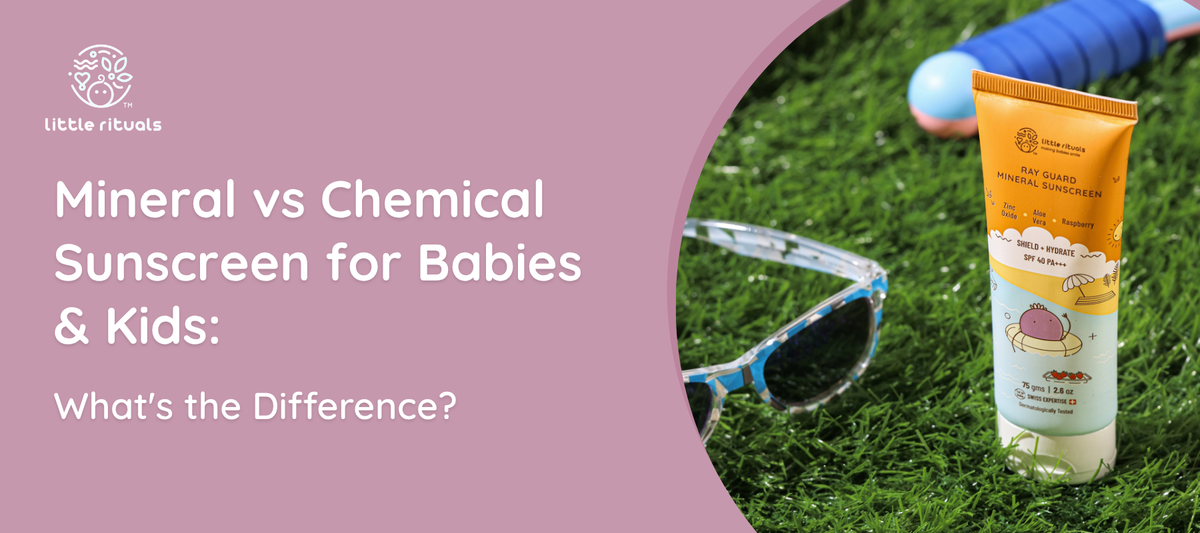
Sunscreen for kids can use either mineral or chemical UV filters. Mineral formulas commonly use zinc oxide, while chemical formulas use organic UV filters that absorb UV radiation. For babies and children, look for broad-spectrum protection, suitable SPF, age-appropriate formulas, water resistance when needed, and ingredients that suit your child’s skin.
Choosing sunscreen for kids comes down to more than picking the highest SPF on the shelf. Mineral formulas use filters such as zinc oxide, while chemical formulas use organic UV filters. Little Rituals offers sun-care options designed around delicate skin, giving parents more choices. But which formula actually makes sense for your little one? Let's break it down.
Mineral vs Chemical Sunscreen for Kids: What’s the Difference?
The biggest difference lies in the type of UV filters used and how they interact with ultraviolet radiation.
Mineral sunscreens typically use zinc oxide or titanium dioxide. These filters remain primarily at the skin surface and absorb, scatter and reflect UV radiation.
Chemical sunscreens use organic UV filters that absorb UV radiation and convert it into a small amount of heat, which is then released from the skin.
Neither category automatically makes a product suitable for every child. The complete formulation, age recommendation, broad-spectrum protection, application and your child’s skin sensitivity all matter. Discover the difference between mineral and chemical sunscreen to understand how each type works, its key ingredients, and which option may suit your skin’s needs.
What Is Mineral Sunscreen for Babies & Kids?
A mineral sunscreen uses mineral UV filters, most commonly zinc oxide and titanium dioxide.
Zinc oxide is particularly popular in baby and children's formulations because it provides broad-spectrum UV protection and is generally well tolerated by sensitive skin.
For parents looking for a baby mineral sunscreen, zinc oxide can be an appealing option because the ingredient is easy to identify on the product label.
Why Zinc Oxide Is Commonly Used
Zinc oxide offers several useful properties:
- Provides broad-spectrum UVA and UVB protection when appropriately formulated.
- Works primarily at the skin surface.
- Is commonly used in formulations designed for sensitive skin.
- Can provide immediate protection when applied correctly.
- Is suitable for many children when the formulation is age-appropriate.
However, mineral does not automatically mean every formula will feel the same. Some mineral sunscreens can feel thicker or leave a visible cast, while newer formulations can be lighter and easier to blend.
What Is Chemical Sunscreen?
Chemical sunscreens use organic UV filters rather than mineral filters such as zinc oxide.
These filters absorb UV radiation before it can cause damage to the skin. Different baby products use different combinations of filters to achieve broad-spectrum protection.
Chemical formulas are often valued for their lightweight textures and easy spreadability. They can also leave less visible residue on the skin.
For children, the important point is not to treat the word “chemical” as a synonym for “unsafe.” Instead, check the specific formula, age guidance, UV filters, SPF and how well your child tolerates the product.
Mineral vs Chemical Sunscreen: Side-by-Side Comparison
|
Feature |
Mineral Sunscreen |
Chemical Sunscreen |
|
Common UV filters |
Zinc oxide, titanium dioxide |
Organic UV filters |
|
How filters work |
Absorb, scatter and reflect UV |
Absorb UV and convert it into heat |
|
Sensitive skin |
Often preferred when skin is easily irritated |
Depends on the individual formulation |
|
Texture |
Can range from creamy to lightweight |
Often lightweight and easy to spread |
|
White cast |
Possible, depending on formulation |
Usually less visible |
|
Broad-spectrum protection |
Available when appropriately formulated |
Available when appropriately formulated |
|
Immediate protection |
Yes, when applied properly |
Follow product directions |
|
Best choice |
Depends on age, skin and formula |
Depends on age, skin and formula |
The right sunscreen for kids is ultimately the one that provides appropriate protection and can be applied generously and consistently.
Zinc Oxide vs Chemical Filters: What Should Parents Know?
If you are comparing a baby mineral sunscreen with a chemical formula, start by checking the active UV filters rather than relying only on marketing terms.
Zinc Oxide
Zinc oxide is a mineral UV filter that provides broad-spectrum protection when formulated at an appropriate concentration. It is widely used in sunscreens intended for sensitive skin and younger users.
Parents choosing zinc oxide often look for:
- Broad-spectrum UVA and UVB protection
- An age-appropriate formulation
- A comfortable texture
- Water resistance when required
- Clear ingredient information
Chemical UV Filters
Chemical sunscreens use organic filters that absorb UV radiation. Different filters have different characteristics, so one chemical sunscreen cannot be judged solely by the presence of the word “chemical.”
Texture, filter combination, concentration, stability and the rest of the formulation all influence the final product.
That is why choosing a sunscreen for kids should involve looking at the complete product rather than judging it by one ingredient category alone.
What Should You Look for in Sunscreen for Kids?
When shopping for children's sun protection, use this simple checklist.
1. Broad-Spectrum Protection
Choose a product labelled for broad-spectrum UVA and UVB protection. Both types of ultraviolet radiation can affect the skin.
2. Appropriate SPF
SPF primarily indicates protection against UVB-related sunburn. A broad-spectrum sunscreen with an appropriate SPF should be used according to the product directions.
3. Age Suitability
Always check the recommended age before applying sunscreen to a baby or young child. Infant skin needs a more cautious approach, particularly during the first months of life.
4. Water Resistance
For swimming, sweating or outdoor play, water-resistant sunscreen can be useful. It still needs to be reapplied as directed, especially after swimming or towel drying.
5. Comfortable Texture
A sunscreen that feels sticky, greasy or uncomfortable may be difficult to use consistently. The best formula is one your child will tolerate and that you can apply adequately.
6. Skin-Friendly Ingredients
If your child has sensitive or reactive skin, consider the overall formulation and avoid ingredients that have previously caused irritation.
When Can Babies Start Using Sunscreen?
Sun protection for babies should not depend on sunscreen alone.
For very young infants, shade, protective clothing and avoiding direct sun exposure are important. Once sunscreen is appropriate for the child's age, it becomes one part of a broader sun-protection routine.
Always follow the specific product's age recommendation.
For children old enough to use sunscreen, apply it generously to exposed skin and reapply according to the product instructions.
How to Choose the Right Baby Sunscreen Lotion
Choosing a baby sunscreen lotion becomes easier when you focus on practical requirements rather than packaging claims.
Ask these questions before buying:
- Is it appropriate for my child's age?
- Does it offer broad-spectrum UVA and UVB protection?
- What are the active UV filters?
- Is it suitable for sensitive skin?
- Is it water-resistant if my child will swim or sweat?
- Will my child tolerate the texture?
- Are the application and reapplication instructions clear?
For parents who prefer mineral protection, zinc oxide is one of the key ingredients to look for when comparing a baby sunscreen lotion with other options. Explore How to Apply Sunscreen on a Baby: Step-by-Step Guide to learn the correct application techniques for protecting your baby’s delicate skin from sun exposure.
How to Apply Sunscreen Correctly to Babies and Kids
Even a well-formulated sunscreen for kids cannot provide its intended protection if too little is applied or if exposed areas are missed.
Keep these habits in mind:
- Apply sunscreen generously before outdoor exposure, following the product directions.
- Cover commonly missed areas such as the ears, neck, hands and feet.
- Reapply as directed during extended outdoor activity.
- Reapply after swimming, sweating or towel drying when required.
- Use hats, protective clothing and shade alongside sunscreen.
- Avoid relying on sunscreen as the only form of sun protection.
Consistency matters. A sunscreen that is easy to apply and comfortable on the skin is more likely to become part of a child's everyday routine.
Little Rituals' Approach to Sun Care
At Little Rituals, baby skincare is designed around the idea that everyday care should feel gentle, thoughtful and practical.
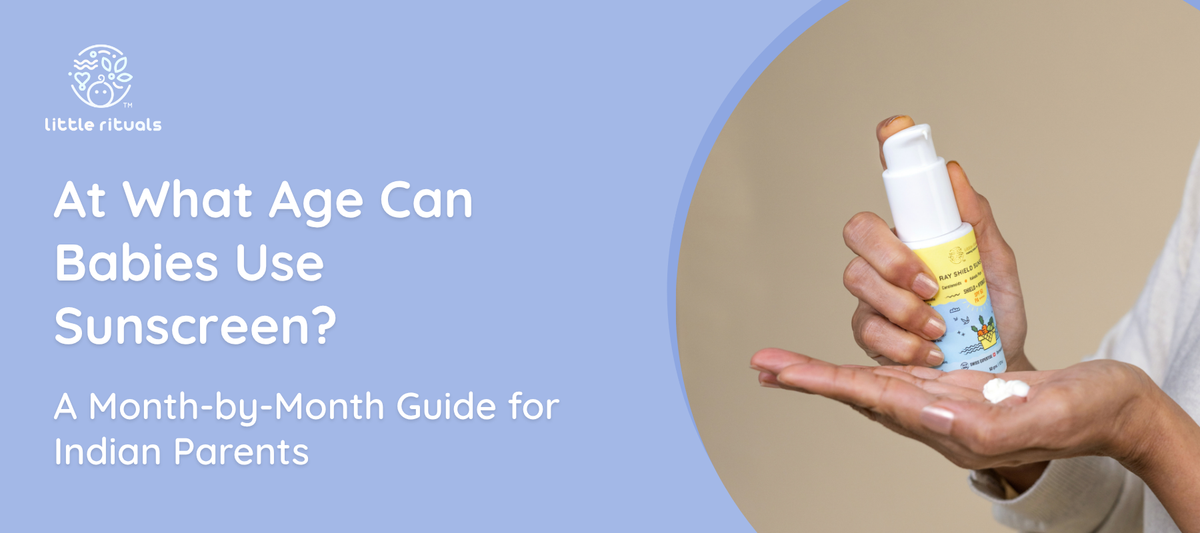
The brand's current sun-care range includes Ray Guard Mineral Sunscreen and Ray Shield Sunscreen. Ray Guard is positioned as a mineral sunscreen formulated with non-nano zinc oxide, while Ray Shield uses a different filter combination. This distinction matters because parents should always check the actual UV filters in a product rather than assuming that every sunscreen containing zinc oxide is purely mineral.
Ray Guard Mineral Sunscreen: A Mineral Option for Little Ones
For parents specifically searching for a baby mineral sunscreen, Little Rituals Ray Guard Mineral Sunscreen is formulated with non-nano zinc oxide and is positioned for babies, kids and families.
Its product information highlights:
- Mineral-based UV protection
- Non-nano zinc oxide
- Broad-spectrum UVA and UVB protection
- SPF 50 PA+++
- Water resistance
- A lightweight, non-greasy texture
- Botanical ingredients including aloe vera, raspberry and turmeric
- Suitability from 6+ months
The formula is also described as clinically and dermatologically tested. For babies and sensitive skin, Little Rituals recommends patch testing before use.
This makes Ray Guard a relevant option for parents who specifically want to explore mineral sunscreen for kids while considering texture and everyday usability. Explore Newborn Baby Skincare Products India to discover gentle skincare essentials designed to care for a newborn’s delicate skin.
Ray Shield Sunscreen: Another Little Rituals Option
Little Rituals also offers Ray Shield Sunscreen as part of its sun-care range.
Its formulation differs from Ray Guard, so it should not simply be categorised as a purely mineral sunscreen. This is a useful reminder for parents: always check the ingredient list and product age guidance before choosing a sunscreen for your child.
The right choice depends on your child's age, skin needs, intended use and personal preference.
Build a Complete Sun-Care Routine
Sunscreen works best as part of a wider skincare and sun-protection routine.
Little Rituals also offers complementary skincare such as:
- Postbiotic Face Cream for everyday facial moisturising
- Bio Body Butter for nourishing body care
- Barrier Boost Body Lotion for moisturising care
- Mini Travel Kit for families who want convenient skincare while travelling
These newborn baby products can complement a child's skincare routine, but moisturisers and body-care products should never be treated as substitutes for sunscreen.
Common Mistakes Parents Make When Choosing Sunscreen for Kids
Choosing the right sunscreen for kids is easier when you avoid these common mistakes:
- Choosing only by SPF number
- Ignoring the recommended age
- Not checking the UV filters
- Applying too little product
- Forgetting reapplication
- Missing ears, neck, hands and feet
- Relying on sunscreen instead of shade and protective clothing
- Assuming every zinc-containing formula is purely mineral
- Choosing a texture your child dislikes and will not tolerate
The goal is simple: appropriate protection, correct application and consistent use.
Give Little Skin Thoughtful Sun Protection
Choosing sunscreen does not have to be complicated. Understand the UV filters, check the age recommendation, choose broad-spectrum protection, apply it generously and make sun protection part of your child's everyday outdoor routine.
If you are looking for a baby mineral sunscreen, explore Little Rituals Ray Guard Mineral Sunscreen and discover a zinc-oxide-based option created for delicate skin. You can also explore Ray Shield and Little Rituals' complementary skincare range to build a simple routine around your child's needs.
Because protecting little skin is one of the simplest rituals worth getting right.
Frequently Asked Questions
Q1. How Should Sunscreen Be Applied to Kids?
Apply sunscreen generously to exposed skin before sun exposure, following the product directions. Reapply as instructed, especially after swimming, sweating or towel drying.
Q2. Can Babies Use Sunscreen?
Babies can use sunscreen when the product is specifically appropriate for their age. For very young infants, prioritise shade, protective clothing and avoiding direct sun exposure.
Q3. Is Mineral Sunscreen Better for Babies?
Mineral sunscreen containing zinc oxide can be a suitable option for babies because zinc oxide is commonly used in sensitive-skin and children's formulations. The product must still be age-appropriate and correctly formulated.
Q4. Will Mineral Sunscreen Leave a White Cast?
It can. Traditional mineral formulas may leave visible residue, although newer formulations can blend more easily. The final appearance depends on the zinc oxide particles, concentration and overall formulation.
Q5. What Should I Look for in a Baby Sunscreen Lotion?
Look for age suitability, broad-spectrum UVA and UVB protection, an appropriate SPF, suitable UV filters, clear application directions and a formulation your baby's skin tolerates.
Q6. Why Is Zinc Oxide Used in Children's Sunscreen?
Zinc oxide is a mineral UV filter that provides broad-spectrum protection when appropriately formulated. It is commonly included in sunscreens designed for sensitive skin and younger users.
Q7. How Often Should Sunscreen for Kids Be Reapplied?
Follow the product's specific reapplication instructions. Reapplication is particularly important during extended outdoor activity and after swimming, sweating or towel drying.
Q8. Can I Rely Only on Sunscreen for My Child?
No. Sunscreen should be combined with shade, protective clothing, hats and sensible sun exposure habits. A complete sun-protection routine provides broader protection than sunscreen alone.