Chemical vs Mineral Sunscreen for Babies: 6 Key Differences
Chemical vs mineral sunscreen for babies mainly differs in the type of UV filters used and how they interact with UV radiation. Mineral sunscreens use filters such as zinc oxide, while chemical sunscreens use organic UV filters. For babies, age, broad-spectrum protection, skin sensitivity, and the complete formulation matter most.
Choosing the right sunscreen can feel overwhelming, especially when your baby’s skin is still so delicate. Chemical vs mineral sunscreen for babies is less about picking a universally “better” category and more about understanding the filters, formulation, and age suitability. Once you know the six key differences, choosing becomes much simpler.
Chemical vs Mineral Sunscreen for Babies: What Does Each Mean?
Before comparing them, it helps to understand what “mineral” and “chemical” actually refer to. The terms describe the UV filters used in a sunscreen, not whether one product is automatically safe and the other is harmful.
What Is Mineral Sunscreen?
Mineral sunscreen uses UV filters such as zinc oxide. Zinc oxide provides broad-spectrum protection against UVA and UVB radiation and is commonly used in sunscreens formulated for sensitive skin.
Little Rituals Ray Guard Mineral Sunscreen uses non-nano zinc oxide as its mineral UV filter. The brand describes it as a broad-spectrum SPF 50 PA+++ sunscreen designed for babies aged 6 months and older. Its formula also contains ingredients such as aloe vera, raspberry, turmeric and chamomile to support soothing and moisturising care.
What Is Chemical Sunscreen?
Chemical, more precisely called organic, sunscreens use UV filters that absorb UV radiation and convert it into another form of energy. Different filters protect different portions of the UV spectrum, so the complete formulation matters.
The word “chemical” should not automatically be treated as a synonym for “unsafe.” Sunscreen safety depends on the specific filters, formulation, concentration, product testing, intended age group, and correct use.
That distinction is important when parents research mineral vs chemical sunscreen baby options.
Discover, how to apply sunscreen on a baby and learn the right age to start.
Chemical vs Mineral Sunscreen for Babies: 6 Key Differences
The easiest way to understand the choice is to look at six practical differences.
|
Difference |
Mineral Sunscreen |
Chemical Sunscreen |
|
UV filters |
Zinc oxide |
Organic UV filters |
|
Protection mechanism |
Primarily interacts with UV at the skin surface |
Absorbs UV radiation |
|
Sensitive skin |
Often preferred |
Depends on the formulation |
|
Texture |
Can range from creamy to lightweight |
Often lightweight |
|
White cast |
Possible, depending on formulation |
Usually less noticeable |
|
Baby suitability |
Commonly used in baby formulations |
Depends on the specific product and age guidance |
1. How They Protect Against UV Rays
The first difference is the type of UV filter.
Mineral sunscreens commonly use zinc oxide, which provides broad-spectrum UVA and UVB protection. Little Rituals Ray Guard uses non-nano zinc oxide as its mineral UV filter.
Chemical sunscreens use organic filters that absorb UV radiation. A formulation may contain several filters to achieve broad-spectrum coverage.
So, when comparing the two, don't focus only on whether a sunscreen is mineral or chemical. Look for broad-spectrum protection, an appropriate SPF and clear directions for use.
For babies and young children, sun protection should also include shade, protective clothing and hats rather than relying on sunscreen alone. The AAD recommends particular caution with infants under six months.
2. The Ingredients Used Are Different
The second major difference is the ingredient list.
Common mineral UV filters include:
-
Zinc oxide
Chemical sunscreen formulations can use organic filters such as BEMT/Tinosorb S. and other approved UV filters.
This is why reading the complete ingredient list is more useful than judging a product from the front label alone.
For a baby, parents may also want to consider fragrance, preservatives, moisturising ingredients and other components that can affect how comfortable the formula feels on delicate skin.
A good sunscreen should therefore be assessed as a complete formulation, rather than by one ingredient in isolation.
3. Sensitive Baby Skin May Influence Your Choice
Baby skin can be more sensitive to irritation, making formulation an important consideration.
Mineral filters such as zinc oxide are often chosen for sensitive skin. The AAD notes that these ingredients may be less irritating for infants and toddlers.
However, “mineral” does not guarantee that every baby product will suit every child. Supporting ingredients matter too. Botanical extracts, fragrances or other components can cause sensitivity in some individuals.
That is why a patch test can be a sensible precaution when introducing a new sunscreen. Little Rituals also advises patch testing its sunscreen products, particularly for babies and sensitive skin.
4. Texture and White Cast Can Be Very Different
Parents often worry about two things: “Will my baby hate the texture?” and “Will it leave a white layer?”
Traditional mineral sunscreens can sometimes leave a visible white cast, particularly when they contain higher concentrations of mineral filters or are not formulated for easy spreading. Modern formulations, however, can be much smoother.
Chemical sunscreens are often known for lighter, more invisible textures, although the actual finish depends on the product.
This is where formulation technology matters.
Little Rituals' Ray Guard Mineral Sunscreen (SPF 50 PA+++) is positioned as a lightweight, non-greasy formula using non-nano zinc oxide. The brand says its coconut-derived base helps disperse zinc oxide for a smoother application without a chalky residue.
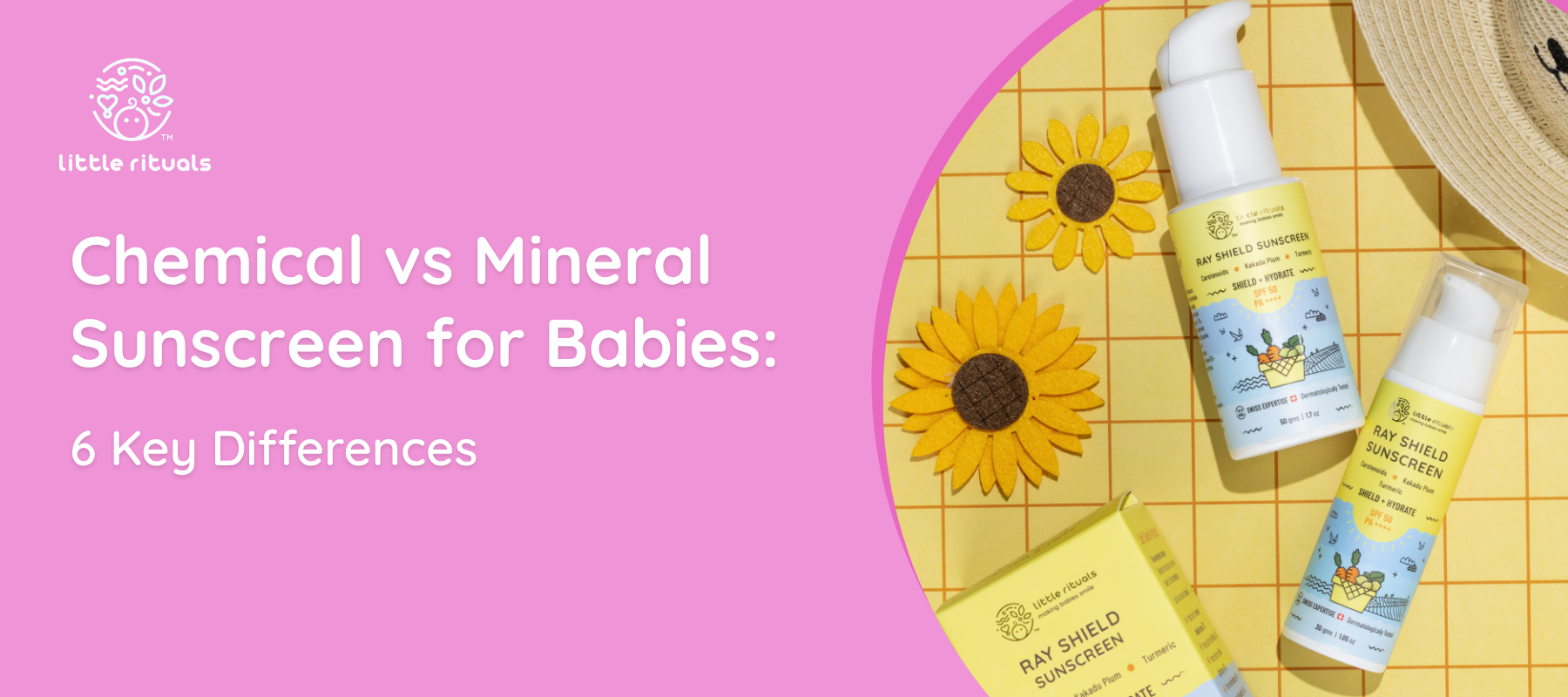
The brand's Ray Shield Sunscreen (SPF 50 PA++++) is also described as fast-absorbing and designed to leave no white cast.
In everyday life, the most useful sunscreen is one that your child tolerates well and that you can apply evenly and consistently.
5. Water Resistance Depends on the Product, Not the Category
A common misconception is that one type of sunscreen automatically works better around water.
In reality, water resistance is a product-level characteristic. Parents should check the individual label rather than assuming that a mineral or chemical formula is automatically water-resistant.
For outdoor play, swimming, or situations where your child sweats, reapplication is especially important.
Little Rituals recommends reapplying Ray Guard every two hours and after swimming or sweating.
The AAD similarly recommends reapplying sunscreen approximately every two hours while outdoors and after swimming or sweating.
Remember that no sunscreen replaces shade and protective clothing.
6. Age Suitability Matters More Than the Marketing Label
Perhaps the most important difference for parents is not actually mineral versus chemical. It is whether the specific product is appropriate for your baby's age.
For infants younger than six months, dermatologists recommend prioritising shade and protective clothing. If adequate shade and clothing are unavailable, the AAD advises using a minimal amount of broad-spectrum, water-resistant SPF 30+ sunscreen on exposed areas.
The FDA likewise advises asking a doctor before using sunscreen on children younger than six months.
For older babies, parents can look for a broad-spectrum sunscreen with an appropriate SPF, ideally one formulated specifically for infants or children.
Little Rituals offers two different sun-care options with distinct positioning. Ray Shield Sunscreen (SPF 50 PA++++) is described by the brand as suitable for babies aged 3+ months, while Ray Guard Mineral Sunscreen (SPF 50 PA+++) is described as suitable for 6+ months.
This age distinction should always be checked against the product packaging and current instructions before use.
Discover, Fragrance Free Baby Products India for gentle care for sensitive skin.
What Should Parents Look for in Baby Sunscreen?
When researching chemical vs mineral sunscreen for babies, don't stop at the filter type. Use this simple checklist:
Broad-Spectrum Protection
Choose a sunscreen that protects against both UVA and UVB radiation.
Appropriate SPF
The AAD recommends SPF 30 or higher for children aged six months and older. Higher SPF does not mean you can skip reapplication.
Baby-Appropriate Formulation
Look for a product clearly intended for babies or children and follow its age guidance.
Comfortable Texture
A sunscreen that spreads easily and feels comfortable is more likely to be used consistently.
Clear Ingredient Information
Check the UV filters and the complete formulation, especially if your child has sensitive skin.
Practical Protection
Sunscreen should work alongside shade, hats, protective clothing and sensible outdoor timing.
How to Apply Sunscreen to Your Baby
Correct application is just as important as the type of sunscreen you choose.
Apply the product generously and evenly to exposed skin according to the product's directions. Don't forget easily missed areas such as the ears, neck, hands, feet and the backs of the legs.
For baby care products that recommend application before sun exposure, follow that timing. Ray Guard, for example, recommends applying generously 15 minutes before sun exposure and reapplying every two hours or after swimming or sweating.
Sunscreen should also be combined with shade and protective clothing, particularly for very young babies.
Which Is Better: Mineral or Chemical Sunscreen for Babies?
There isn't one universal answer for every baby.
Mineral sunscreen for babies india can be a practical choice for parents who prefer zinc oxide, particularly when caring for sensitive skin. Chemical sunscreen can also provide effective UV protection when its formulation is appropriate for the child's age and used according to its directions.
The better question is: Does this specific sunscreen provide broad-spectrum protection, suit my baby's age and skin, have a formulation I trust, and can I apply it properly and consistently?
That approach is more useful than assuming that every mineral product is automatically superior or that every chemical filter is unsuitable.
Explore, Chemical Free Baby Care Products India for a gentle skincare routine.
Little Rituals: Thoughtful Sun Protection for Little Ones
For parents looking for baby-focused sun care, Little Rituals offers options designed around delicate skin and everyday outdoor protection.
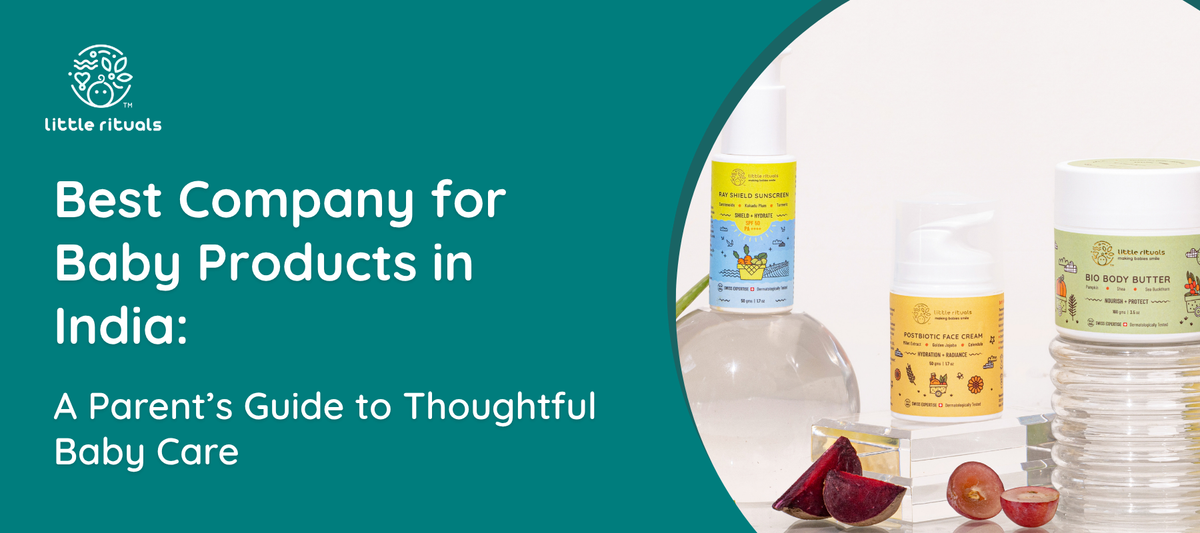
Ray Shield Sunscreen is positioned by Little Rituals for babies aged 3+ months and uses a combination of zinc oxide and BEMT in its listed formulation, alongside ingredients such as aloe vera, chamomile, cucumber, raspberry and turmeric. The newborn baby product is described as broad-spectrum and fast-absorbing with a no-white-cast finish.
Ray Guard Mineral Sunscreen is positioned for babies aged 6+ months and uses non-nano zinc oxide as its mineral UV filter. Its formula also includes aloe vera, raspberry, turmeric, and chamomile, with a lightweight, non-greasy texture and water-resistant positioning.
If you're ready to make sun protection a simple part of your child's daily routine, explore Little Rituals' Ray Shield and Ray Guard sunscreens and choose the option that best matches your baby's age, skin needs and everyday routine.
Frequently Asked Questions
Q1. How should I apply sunscreen to my baby?
Apply sunscreen generously and evenly to exposed skin according to the product directions. Reapply as directed, particularly after swimming, sweating or towel drying.
Q2. Can babies use mineral sunscreen?
Yes, mineral sunscreens containing zinc oxide are commonly used for babies and may be less irritating to sensitive skin. For infants under six months, prioritise shade and protective clothing and consult a healthcare professional about sunscreen use.
Q3. Is mineral sunscreen better for sensitive baby skin?
Mineral filters such as zinc oxide are often preferred for sensitive skin because they may be less irritating. However, the entire formulation should be considered.
Q4. Will mineral sunscreen leave a white cast?
It can, but not always. The finish depends on the formulation, filter concentration, and how the product is dispersed. Modern mineral sunscreens can be formulated to blend more easily.
Q5. What SPF should I choose for my baby?
For children aged six months and older, the AAD recommends broad-spectrum SPF 30 or higher. Younger infants require particular sun-protection precautions and medical guidance regarding sunscreen.
Q6. Why is zinc oxide commonly used in baby sunscreen?
Zinc oxide provides broad-spectrum UV protection and is generally well tolerated by sensitive skin, which makes it a common choice in baby and children's sunscreen formulations.
Q7. What is the difference between mineral and chemical sunscreen?
Mineral sunscreen uses filters such as zinc oxide while chemical sunscreen uses organic UV filters that absorb UV radiation. Both can provide UV protection when properly formulated and used.
Q8. Can I use adult sunscreen on my baby?
It's better to choose a sunscreen specifically labelled for your child's age and follow its directions. For babies, consider the UV filters, complete ingredient list, SPF, broad-spectrum protection, and skin sensitivity before use.