Coconut Oil for Cradle Cap: Does It Work? A Parent’s Guide
Coconut oil can help treat cradle cap in babies by softening flakes, deeply moisturizing the scalp, and supporting skin barrier repair. Using high-quality, wood-pressed, organic coconut oil is recommended. Gently massage onto the scalp for 15 to 20 minutes and then wash with a mild baby cleanser. Patch testing is essential, and consult a pediatrician for severe or persistent cases.
Cradle cap, the scaly, flaky patches that appear on a newborn’s scalp, is one of the most common skin conditions affecting babies. While harmless, it can concern parents, especially first-timers. Many parents turn to natural remedies, and coconut oil cradle cap solutions are among the most trusted. At Little Rituals, we combine science-backed methods with gentle, pure coconut oil, providing a safe, nurturing way to care for your baby’s delicate scalp. This guide explores why coconut oil works, how to use it effectively, and what makes quality so important in treating cradle cap naturally.
What Is a Cradle Cap?
What Causes Cradle Cap in Babies
Cradle cap, also called infant seborrheic dermatitis, is caused primarily by an overproduction of oil (sebum) combined with dead skin cells. This leads to visible flaky or crusty patches on the baby’s scalp. Contrary to some misconceptions, cradle cap is not caused by poor hygiene. Newborns are especially prone due to hormonal changes after birth. Other contributing factors include sensitivity of the scalp and mild inflammation, which may make the skin appear red or irritated in some cases.
What Does Cradle Cap Look Like
Cradle cap typically appears as:
-
Yellow or white flaky patches
-
Dry or greasy scalp
-
Mild redness in some cases
-
Patches concentrated on the crown, but can appear on eyebrows, behind the ears, or on the face
Recognizing these signs early helps parents manage the condition gently without causing discomfort to the baby.
Coconut Oil for Cradle Cap: Does It Really Work?
Why Coconut Oil Is Effective
Using coconut oil for cradle cap is supported by both traditional wisdom and modern science. Coconut oil contains lauric acid, a natural compound with antibacterial and soothing properties. When applied to the scalp, it:
-
Softens thick flakes and crusts, making removal easier
-
Deeply moisturizes the scalp to prevent dryness
-
Supports the skin barrier, reducing irritation and redness
-
Provides anti-inflammatory effects that help calm mild scalp inflammation
Is Coconut Oil Safe for Babies
High-quality, wood-pressed, organic coconut oil is gentle on newborn skin. For safety:
-
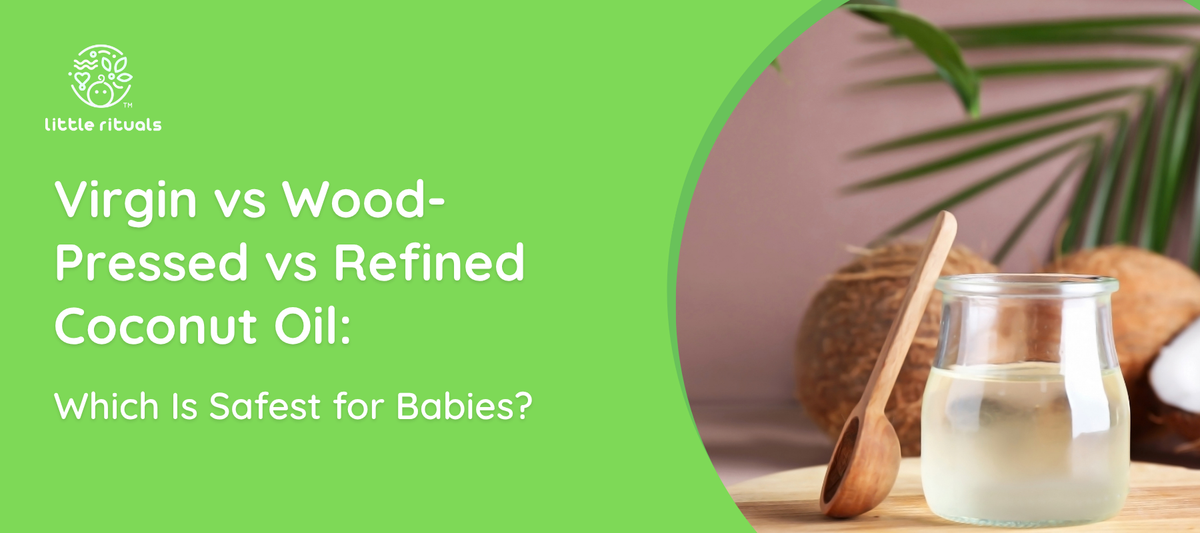
Choose wood-pressed or extra virgin coconut oil to retain nutrients, similar to insights shared in virgin coconut oil benefits
-
Patch test before applying widely
-
Avoid refined or chemically processed oils that may irritate sensitive skin
Coconut oil as a treatment for cradle cap, when used correctly, is considered safe by dermatologists and pediatric experts.
Why Quality Matters: Not All Coconut Oils Are the Same
What to Look For
When selecting coconut oil for cradle cap in babies, focus on:
-
Wood-pressed extraction that retains natural nutrients
-
Organic, toxin-free oils without chemical additives
-
Clinically tested oils suitable for delicate skin
Refined oils may have lost their beneficial properties and could contain additives that irritate a newborn’s sensitive scalp. Choosing a premium product like Little Rituals Wood-Pressed Coconut Oil ensures your baby receives pure, effective care, making it one of the best coconut oil for baby massage
How to Use Coconut Oil for Cradle Cap
Step-by-Step Treatment
Applying coconut oil as a cradle cap remedy is simple when done correctly:
-
Take a small amount of wood-pressed coconut oil
-
Gently massage oil onto the baby’s scalp using fingertips
-
Leave the oil for 15 to 20 minutes to allow flakes to soften
-
Use a soft brush or baby comb to gently loosen the flakes
-
Wash the scalp with a mild, baby-safe cleanser
How Often to Apply
For best results:
-
Use the oil 2 to 3 times per week for moderate cradle cap
-
Integrate it into a daily baby massage routine to improve scalp circulation and promote bonding, especially when you know when to start oil massage for newborn baby
Following this routine consistently can make a noticeable difference in the appearance and comfort of your baby’s scalp.
Safety Tips Every Parent Should Know
While coconut oil as a treatment for cradle cap is generally safe, parents should:
-
Avoid applying excessive amounts to prevent residue buildup
-
Never scratch or forcibly remove flakes
-
Stop use if irritation, redness, or rash occurs
-
Seek pediatric advice for severe, persistent, or widespread cradle cap
Balanced care ensures the baby’s scalp remains healthy while gently addressing the cradle cap.
Cradle Cap Treatment in India: Traditional and Modern Approaches
Coconut oil has been a trusted remedy in India for generations. Traditional baby massage practices utilize natural oils to hydrate, soothe, and nourish the scalp. Modern advancements now combine these traditional practices with clinical testing and wood-pressed extraction, ensuring safe, effective care. Using coconut oil cradle cap remedies in India aligns with both cultural practice and contemporary pediatric guidance, similar to comparisons like is olive oil good for baby massage
Modern Upgrade
-
Wood-pressed oils retain natural nutrients
-
Clinically tested oils ensure safety for sensitive skin
-
Combines traditional massage rituals with evidence-based skincare
Parents can now enjoy the benefits of natural remedies with modern reliability.
Beyond Cradle Cap: Benefits of Coconut Oil for Babies
Coconut oil does more than address the cradle cap. Regular use provides:
-
Deep moisturization to prevent flaky, dry skin
-
Support for the skin barrier, protecting against irritation
-
Assistance with peeling or shedding skin
-
Promotion of healthy hair growth, similar to benefits discussed in hair oil for kids
By integrating coconut oil as a treatment for cradle cap into daily routines, parents offer long-term skin and hair benefits.
Why We Created Little Rituals Coconut Oil
Our product is designed specifically for newborns and sensitive skin:
-
Clinically tested and dermatologically approved
-
Infused with plant-based actives for nourishment
-
Multi-purpose for scalp, skin, and hair
-
Wood-pressed to retain natural nutrients and lauric acid
Little Rituals provides a science-backed, gentle solution that respects traditional care while delivering modern efficacy, making it ideal as virgin coconut oil for baby massage
Gentle Care, Backed by Nature and Science
Give your baby the safe, effective, and pure care they deserve. Transform cradle cap treatment into a nurturing ritual with Little Rituals Wood-Pressed Organic Coconut Oil. Gentle enough for daily use and backed by clinical testing, it soothes, nourishes, and protects your baby’s delicate skin.
Discover the difference today and make coconut oil as a treatment for cradle cap a comforting. Explore essentials like new born baby gift hamper and new born baby products
Frequently Asked Questions (FAQs)
Q1. How do I use coconut oil for cradle cap in babies?
Apply a small amount of wood-pressed coconut oil, massage gently into the scalp, leave for 15 to 20 minutes, and then wash with a mild baby cleanser. Repeat 2 to 3 times per week for best results.
Q2. Can coconut oil completely remove cradle cap?
Coconut oil softens flakes and improves scalp hydration, making the cradle cap easier to manage. Severe cases may require pediatric advice.
Q3. Is coconut oil safe for newborns?
Yes, when using high-quality, wood-pressed, organic coconut oil. Always patch test first to ensure there is no sensitivity.
Q4. Will coconut oil cause irritation on my baby’s scalp?
Rarely, but if irritation occurs, stop using the oil and consult your pediatrician.
Q5. What is the best coconut oil for cradle cap?
Choose wood-pressed, organic, clinically tested coconut oil free from chemical additives for safe and effective care.
Q6. Why is coconut oil a preferred remedy in India?
It is natural, gentle, widely available, and has been used traditionally in baby massage for generations. Modern wood-pressed oils enhance safety and efficacy.
Q7. How often should coconut oil be applied to the cradle cap?
Use 2 to 3 times per week for treatment, and daily if incorporated into a gentle massage routine to improve scalp health and circulation.
Q8. Can coconut oil support baby hair growth?
Yes, by moisturizing the scalp and maintaining healthy skin, coconut oil as a treatment for cradle cap can help create an environment for stronger, healthier hair.