10 Things to Check Before Buying Baby Skincare Products
A baby skincare checklist helps parents choose products that are gentle, safe, and suitable for a baby's delicate skin. Check the ingredient list, avoid harsh chemicals, look for dermatologist-tested formulas, verify safety certifications, and choose age-appropriate products. A thoughtful purchase today can support healthier skin for years to come, but what exactly should you look for?
Welcoming a baby into your family comes with countless decisions, and choosing skincare products is one of the most important. Following a baby skincare checklist makes it easier to select gentle, safe products that support healthy skin. At Little Rituals, we believe informed choices help parents build a simple skincare routine that protects and nourishes delicate baby skin from day one.
Why You Need a Baby Skincare Checklist Before Buying
A baby's skin is significantly thinner and more delicate than an adult's, making it more vulnerable to dryness, irritation, and environmental stressors. Because the skin barrier function for babies is still developing, the products you choose matter more than you might think.
Many baby skincare products on the market feature attractive packaging and comforting claims such as "natural," "pure," or "gentle." However, these terms are not always regulated or enough to guarantee that a product is suitable for your little one.
Using a baby skincare checklist helps you look beyond marketing messages and focus on factors that truly matter, including ingredients, product testing, certifications, and suitability for your baby's skin type. Making informed decisions today can help establish healthy skincare habits from infancy.
1. Read the Ingredient List Carefully
The ingredient list is the first place every parent should look before purchasing any baby skincare product.
Products formulated with thoughtfully selected ingredients are generally better suited for delicate skin than those containing a long list of unnecessary additives. Ingredients such as aloe vera, calendula, oat extract, shea butter, coconut oil, and other plant-derived moisturisers are commonly used to support hydration and comfort.
When reviewing the label:
- Choose products with clearly listed ingredients.
- Look for ingredients that support skin hydration.
- Prefer formulations with minimal unnecessary additives.
- Understand what each key ingredient is intended to do.
If you are unfamiliar with an ingredient, take a moment to research it rather than relying solely on marketing claims.
2. Avoid Harsh Chemicals
Babies do not need products filled with unnecessary synthetic additives.
Many parents actively avoid ingredients such as:
- Parabens
- Sulphates (SLS/SLES)
- Phthalates
- Formaldehyde-releasing preservatives
- Artificial colours
- Synthetic fragrances in high concentrations
While regulations vary across countries, choosing products formulated without commonly avoided ingredients can provide additional peace of mind. Opting for a sulfate free body wash for babies ensures their natural skin microbiome isn't stripped during bath time.
Instead, look for products designed specifically for sensitive baby skin using gentle cleansing and moisturizing ingredients.
3. Look for Safety Certifications
Independent certifications help parents make informed purchasing decisions.
Although no certification replaces reading the ingredient list, recognised safety standards often indicate that products have undergone additional evaluation.
Useful certifications may include:
- MADE SAFE® Certification
- Dermatologically Tested
- Clinically Tested
- Cruelty-Free
- Vegan (where applicable)
These certifications reflect a brand's commitment to product quality and transparency. When compiling your newborn checklist, looking into authentic organic baby skincare products in India 2026 provides verified safety benchmarks for daily care.
Choosing products from brands that openly share their testing and certification process can help parents feel more confident about their purchase.
4. Choose Products Made Specifically for Babies
Adult skincare products are not formulated with a baby's developing skin in mind.
Baby-specific products are typically designed with:
- Gentle cleansing agents
- Balanced pH levels
- Mild moisturising ingredients
- Sensitive skin compatibility
- Tear-free formulations where appropriate
Products created specifically for newborns and babies take their unique skincare needs into account.
Avoid assuming that a mild adult product is automatically suitable for infant skin.
5. Check for Dermatologist Testing
Dermatologist testing is another valuable factor when evaluating baby skincare.
Products that have been dermatologically tested are assessed for skin compatibility under controlled conditions. While this does not guarantee that every child will respond the same way, it provides additional reassurance regarding product safety.
It is also helpful to understand the difference between common claims:
- Dermatologist Tested – the product has undergone skin compatibility testing.
- Hypoallergenic – formulated to reduce the likelihood of allergic reactions, although no product can eliminate risk entirely.
- Clinically Tested – evaluated through clinical assessments for specific claims.
When introducing any new product, perform a small patch test first and monitor your baby's skin for any signs of sensitivity before regular use. For parents handling dry, hyper-sensitive profiles, incorporating fragrance free baby lotions in India for sensitive skin serves as an excellent dermatologist-approved choice.
6. Choose Fragrance-Free or Naturally Fragranced Products
A pleasant fragrance may make a product appealing, but it shouldn't be the deciding factor when shopping for baby skincare. A baby's skin is highly sensitive, and strong synthetic fragrances can sometimes contribute to irritation in susceptible children.
When choosing skincare products:
- Prefer fragrance-free formulas for newborns and babies with sensitive skin.
- If a product contains fragrance, check whether it comes from naturally derived sources and is used in gentle amounts.
- Avoid products where fragrance is listed as a major selling point rather than skin health.
The goal is to keep your baby's skincare routine as simple and gentle as possible. Products that focus on nourishing the skin instead of masking scents are often a better choice for everyday use.
7. Look for Skin-Nourishing Ingredients
Not all ingredients serve the same purpose. Some cleanse, while others help maintain the skin's natural moisture barrier.
As you follow your baby skincare checklist, look for ingredients known for their gentle, moisturizing properties, such as:
- Aloe Vera
- Oat Extract
- Calendula
- Shea Butter
- Coconut Oil
- Sweet Almond Oil
- Jojoba Oil
- Plant-derived moisturisers
- Postbiotics that help support the skin barrier
These ingredients are commonly included in baby skincare products because they help keep delicate skin soft, hydrated, and comfortable. Understanding what is postbiotic skincare can illuminate how modern advancements target infant skin barrier defense seamlessly.
Remember, every baby is different. Even gentle ingredients may not suit every child, so it's always wise to introduce one new product at a time.
8. Understand Your Baby's Skin Type
Just like adults, babies can have different skin needs.
Some babies naturally have:
- Normal skin
- Dry skin
- Sensitive skin
- Combination skin
- Skin that becomes irritated more easily
Understanding your baby's skin helps you choose products that provide appropriate care without overcomplicating the routine. Designing a tailored baby skincare routine by skin type helps address specific challenges like redness or seasonal dryness effectively.
For example:
- Dry skin benefits from richer moisturisers.
- Sensitive skin often responds better to fragrance-free formulations.
- Babies with recurring skin concerns should be assessed by a healthcare professional before trying multiple new products.
Choosing products based on your baby's individual needs is far more effective than following trends.
9. Check the Brand's Transparency
A trustworthy skincare brand should be open about what goes into its products and how they are made.
Before making a purchase, consider whether the brand provides information about:
- Complete ingredient lists
- Product testing
- Safety certifications
- Manufacturing standards
- Research and formulation process
- Usage instructions
Transparent brands help parents make informed decisions rather than relying on vague marketing claims. Knowing how raw extraction methods interact with soft skin—such as checking the data on baby massage oils in india wood pressed vs refined variants—ensures you purchase only optimal-purity items.
Reading a brand's website, educational resources, and product descriptions can give you greater confidence in your purchase.
10. Read Genuine Parent Reviews
Customer reviews offer valuable insights that product descriptions cannot always provide.
Verified reviews often highlight:
- Ease of application
- Texture
- Absorption
- Everyday performance
- Packaging quality
- Long-term user experience
While every baby's skin is unique, consistent positive feedback from parents can indicate that a product performs well in real-life situations.
Look for balanced reviews rather than only perfect ratings. Honest experiences often provide the most useful information.
Common Mistakes Parents Make When Buying Baby Skincare Products
Even with the best intentions, parents can sometimes make purchasing decisions based on marketing rather than practical considerations.
Some common mistakes include:
- Buying products solely because they smell pleasant: A pleasant fragrance doesn't necessarily mean a product is better for delicate skin.
- Assuming "Natural" Always Means Safe: Natural ingredients can still cause sensitivity in some babies. Always read the complete ingredient list.
- Using Adult Skincare Products: Adult formulations are designed for mature skin and may contain active ingredients that are not appropriate for babies.
- Ignoring Product Labels: Instructions, age recommendations, and ingredient information provide important guidance for safe use. This is crucial even during standard hair routines; learning how often should you wash your babys hair prevents moisture loss from the infant scalp.
- Changing Products Too Frequently: Switching products every few days makes it difficult to understand which product is working well or causing irritation.
Consistency often helps parents better observe how their baby's skin responds.
A Simple Baby Skincare Checklist Before Every Purchase
Before adding any product to your shopping cart, ask yourself these questions:
✔ Have I read the complete ingredient list?
✔ Is it free from commonly avoided harsh chemicals?
✔ Has it been dermatologically tested?
✔ Is it specifically formulated for babies?
✔ Does it contain gentle, skin-supporting ingredients?
✔ Are there recognised safety certifications?
✔ Is it suitable for my baby's skin type?
✔ Does the brand provide transparent information?
✔ Have I read verified customer reviews?
✔ Is it appropriate for regular everyday use?
Following this baby skincare checklist can help simplify your decision-making and give you greater confidence every time you shop.
Final Thoughts
Choosing baby skincare products doesn't have to feel overwhelming. A little research goes a long way when it comes to protecting your baby's delicate skin.
By following a practical baby skincare checklist, you can look beyond attractive packaging and focus on what truly matters—gentle ingredients, safety testing, product transparency, and suitability for your baby's unique skin needs.
Every baby deserves skincare that supports healthy skin without unnecessary complexity. Making thoughtful choices today helps build a gentle skincare routine that grows with your child.
Why Parents Choose Little Rituals
At Little Rituals, every product is thoughtfully developed to care for delicate baby skin with a science-backed and safety-first approach.
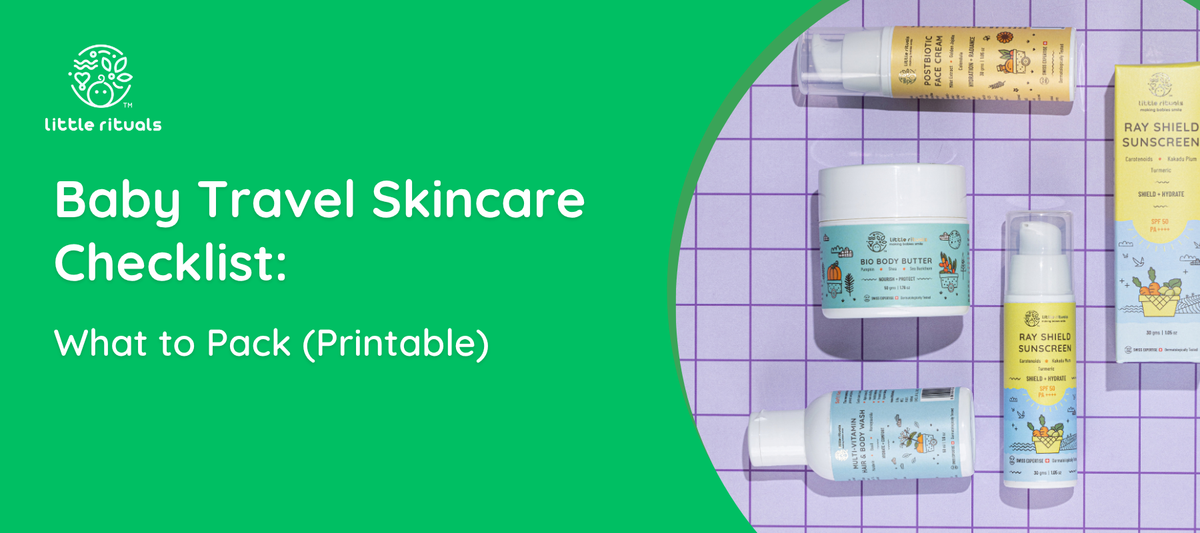
The brand offers a complete range of baby skincare essentials, including gentle hair and body washes, nourishing face creams, barrier-supporting body lotions, mineral sunscreen, rich body butter, and wood-pressed massage oils. Their formulations are created with carefully selected ingredients and are designed specifically for babies' unique skincare needs.
What sets Little Rituals apart is its commitment to transparency, high safety standards, and thoughtfully crafted formulations that help parents shop with confidence.
Whether you're preparing for your newborn's arrival or updating your baby's daily skincare routine, Little Rituals offers products designed to support healthy, comfortable skin from the very beginning.
Frequently Asked Questions
Q1. How do I choose safe baby skincare products?
Start by following a baby skincare checklist that includes checking the ingredient list, looking for dermatologist-tested products, avoiding harsh chemicals, and choosing formulations made specifically for babies.
Q2. Can I use regular skincare products on my baby?
No. Adult skincare products are formulated for mature skin and may contain ingredients that are too strong for a baby's delicate skin. Always choose products designed specifically for infants.
Q3. Can fragrance-free products be better for sensitive baby skin?
Many parents and healthcare professionals prefer fragrance-free products for babies with sensitive skin because they reduce unnecessary exposure to added fragrances that may trigger irritation in some children.
Q4. Is dermatologist-tested baby skincare always safer?
Dermatologist testing adds an extra level of confidence by assessing skin compatibility. However, every baby's skin is different, so a patch test is still recommended before regular use.
Q5. Is natural baby skincare always the best option?
Not necessarily. While many natural ingredients are gentle, "natural" does not automatically mean suitable for every baby. Always evaluate the full ingredient list and choose products based on your baby's individual needs.
Q6. Will using the right skincare products help prevent dry skin?
Gentle cleansers and moisturisers formulated for babies can help maintain the skin's natural moisture barrier and reduce dryness when used as part of a consistent skincare routine.
Q7. What ingredients should I avoid in baby skincare products?
Many parents choose to avoid products containing parabens, sulphates, phthalates, artificial colours, and high levels of synthetic fragrance. Reading ingredient labels helps you make informed purchasing decisions.
Q8. Why is a baby skincare checklist important?
A baby skincare checklist helps parents evaluate products based on ingredients, safety testing, certifications, and suitability rather than marketing claims. It simplifies shopping while supporting healthier skincare choices for babies.