Baby Face Cream & Body Lotion Guide: How to Choose the Best Baby Face Cream and Baby Body Lotion
A baby's skin is remarkably different from an adult's skin. It is thinner, loses moisture more quickly, and has a developing protective barrier, making it more susceptible to dryness and environmental changes. This is why choosing the right baby face cream and baby body lotion is an important part of your little one's daily skincare routine.
Whether you're caring for a newborn, infant, or toddler, using products specifically developed for delicate skin can help maintain hydration and support the skin barrier function for babies. While many parents focus only on body moisturisers, facial skin deserves equal attention because it is constantly exposed to wind, changing temperatures, saliva, food residue, and frequent wiping.
At Little Rituals, skincare is designed around gentle botanical ingredients combined with advanced skincare science to help support healthy skin from the very beginning. This guide explains everything parents should know about selecting the best baby face cream, choosing the best baby body lotion, understanding different moisturisers, and building a simple baby skin care routine that works throughout the year.
Cream vs Lotion vs Body Butter: What's the Difference?
Although creams, lotions, and body butters all help keep skin moisturised, they are formulated differently and offer varying levels of hydration. Understanding these differences allows parents to choose the right product for different areas of the body and different seasons.
A baby's face is exposed throughout the day, while the body is usually protected by clothing. This means facial skin often requires targeted care with a specialised baby cream for the face, whereas the body benefits from lightweight moisturisation that can be easily applied after every bath.
Weather also plays a significant role. During hot and humid months, lightweight lotions generally provide enough hydration. During colder months, however, skin can lose moisture much faster, making richer creams or body butters a better choice for babies with dry or rough skin.
Choosing the right moisturiser isn't about selecting the richest product available—it is about matching the product to your baby's individual skin needs.
Baby Face Cream
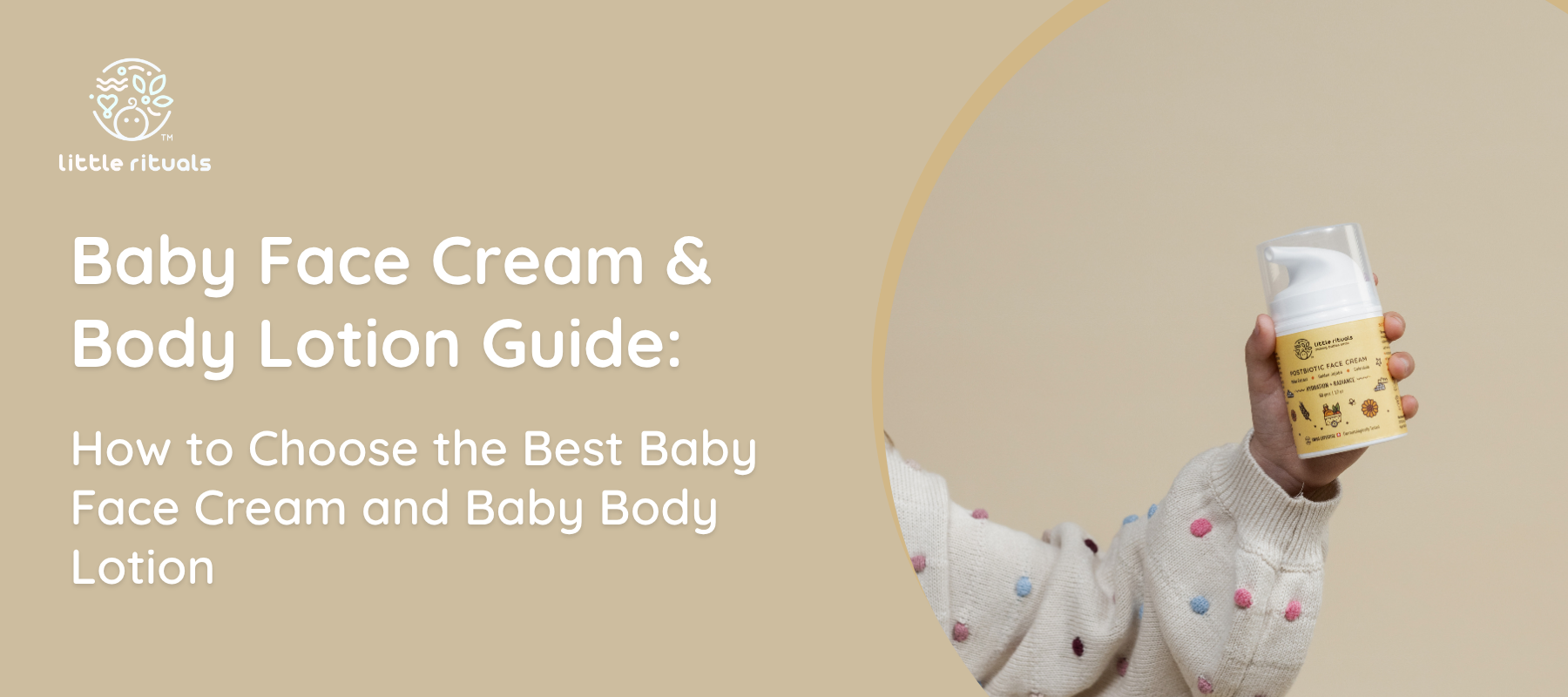
A baby cream for the face is specially formulated for the delicate skin on a baby's cheeks, forehead, chin, and around the mouth. Facial skin is more exposed to environmental factors such as wind, dry air, and temperature changes, making it more prone to dryness and irritation.
A good kids face cream should:
-
Deliver lightweight yet lasting hydration
-
Help support the skin's natural barrier
-
Absorb quickly without leaving a greasy residue
-
Be suitable for everyday use
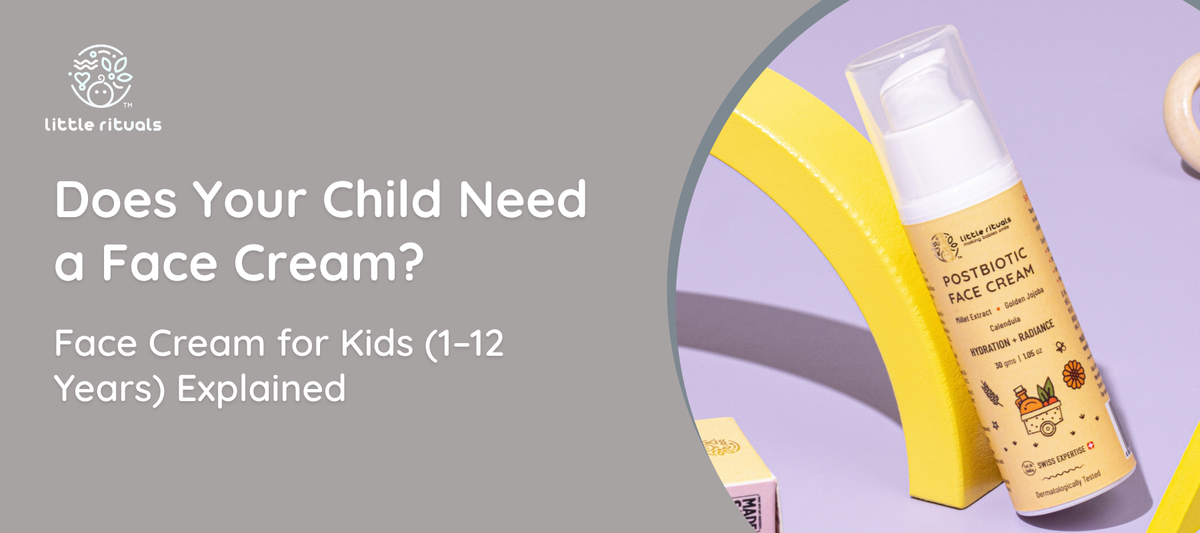
Little Rituals' Postbiotic Face Cream is formulated with advanced postbiotic technology, nourishing botanical ingredients, and skin-barrier-supporting actives to help keep delicate facial skin hydrated and comfortable.
Baby Body Lotion
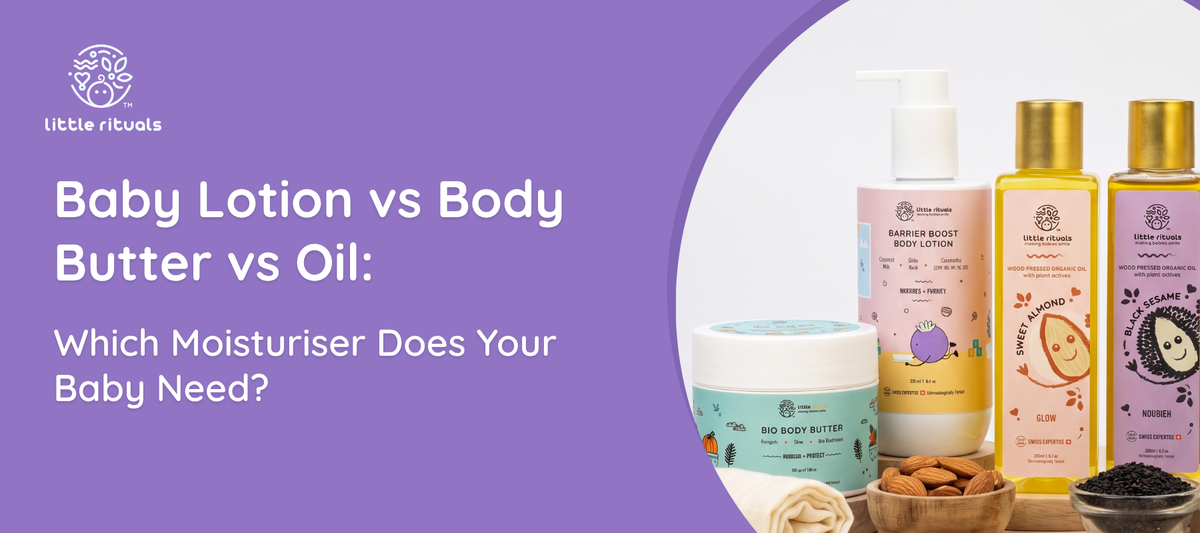
A baby body lotion is designed for everyday moisturisation after bathing. It spreads easily across larger areas of the body and absorbs quickly, making it ideal for daily use.
When selecting the best baby body lotion, look for formulas that help strengthen the skin barrier while providing lasting hydration without feeling heavy.
Little Rituals' Barrier Boost Body Lotion is formulated with five essential ceramides and advanced Ceramylox™ Swiss Technology to help replenish moisture and support healthy skin.
Baby Body Butter
Body butter has a richer consistency than lotion and provides intensive nourishment for babies experiencing very dry or rough skin.
It can be especially useful:
-
During winter
-
For dry elbows and knees
-
On rough patches
-
When additional overnight hydration is needed
Little Rituals' Bio Body Butter offers rich nourishment with plant-based ingredients that help soften and comfort dry skin.
|
Product |
Best For |
Texture |
|
Baby Face Cream |
Delicate facial skin |
Medium |
|
Baby Body Lotion |
Everyday body moisturising |
Lightweight |
|
Body Butter |
Very dry skin and winter care |
Rich |
Best Baby Face Cream: What to Look For?
Selecting the best baby face cream involves much more than choosing a product labelled "natural" or "gentle." Reading the ingredient list and understanding how different ingredients support delicate skin can help parents make more informed decisions.
An effective face cream should hydrate without overwhelming the skin. It should absorb easily, leave the skin feeling comfortable, and provide lasting moisture throughout the day. Products designed for babies are generally formulated to respect the skin's natural pH while helping reinforce the protective barrier that keeps moisture in and environmental irritants out.
Parents should also consider seasonal changes. During winter, facial skin may require slightly richer hydration, while warmer months may call for lighter formulations that absorb quickly.
A well-formulated baby cream for the face should become part of a consistent daily skincare routine rather than something used only when dryness appears.
Ingredients for Dry & Sensitive Skin
Understanding skincare ingredients helps parents move beyond marketing claims and choose products that genuinely benefit their baby's skin.
-
Learning about what is postbiotic skincare helps parents understand how these components support the skin's microbiome, which plays an important role in maintaining a healthy skin barrier. A balanced microbiome contributes to smoother, healthier-looking skin while helping maintain moisture levels.
-
Ceramides are naturally found within the skin barrier and act like tiny building blocks that hold skin cells together. When the skin lacks ceramides, moisture escapes more easily, leading to dryness. Replenishing ceramides helps strengthen the barrier and improve long-term hydration.
-
Calendula has long been appreciated for its soothing botanical properties. It helps comfort delicate skin and is commonly included in products designed for babies and sensitive skin.
-
Golden Jojoba Oil closely resembles the skin's natural oils, making it an excellent moisturiser that hydrates without leaving excessive residue. It helps soften the skin while supporting its natural balance.
-
Squalane provides lightweight nourishment and helps reduce moisture loss without clogging pores. Combined with Panthenol (Vitamin B5), it contributes to soft, smooth, well-hydrated skin.
When these ingredients are thoughtfully combined in a single formulation, they provide comprehensive support for babies experiencing everyday dryness or sensitivity.
How Our Postbiotic Face Cream Helps
Little Rituals' Postbiotic Face Cream combines botanical care with advanced skincare science.
Its formula features:
-
SOURFERMENT™ Swiss Technology
-
Postbiotic skin support
-
Austrian Golden Millet
-
Calendula
-
Golden Jojoba Oil
-
Lightweight, non-greasy texture
-
Dermatologically tested formulation
-
Suitable for delicate and sensitive skin
By supporting the skin's microbiome and natural barrier, the cream helps maintain hydration while keeping your baby's face soft and comfortable throughout the day.
Best Baby Body Lotion: What to Look For?
The best baby body lotion should provide lasting hydration while helping strengthen the skin's natural barrier.
Look for products that offer:
-
Ceramides
-
Barrier-supporting ingredients
-
Fast absorption
-
Non-sticky finish
-
Gentle everyday hydration
-
Dermatologically tested formulations
Little Rituals' Barrier Boost Body Lotion combines Ceramylox™ Swiss Technology with five essential ceramides to deliver long-lasting moisture while supporting healthy skin.
Applying Lotion on a Newborn Safely
Newborn skin requires extra care, so applying lotion correctly is just as important as choosing the right product.
Follow these simple steps:
-
Bathe your baby using a gentle cleanser.
-
Pat the skin dry without rubbing.
-
Apply lotion while the skin is still slightly damp.
-
Massage gently using soft circular motions.
-
Avoid the eyes and inside the mouth.
-
Perform a patch test before introducing any new product.
If your baby experiences persistent redness, irritation, or unusual skin changes, consult a healthcare professional.
When to Use Body Butter Instead of Lotion
While lotion is suitable for daily moisturising, body butter offers deeper nourishment when skin requires additional care.
Consider body butter when:
-
Winter weather causes dryness
-
Skin feels rough or flaky
-
Dry patches appear on elbows or knees
-
Overnight hydration is needed
Little Rituals' Bio Body Butter provides rich moisturisation that helps keep dry skin soft and comfortable without feeling overly heavy.
Choosing by Skin Type
Just like adults, every baby has unique skin characteristics. Personalizing your approach with a dedicated baby skincare routine by skin type allows you to care for their unique epidermal needs effectively.
-
Babies with normal skin generally require lightweight daily moisturisation to maintain hydration and support healthy barrier function. Consistency is often more important than using multiple products.
-
Dry skin may appear flaky, rough, or tight after bathing. In these cases, products containing ceramides, postbiotics, and nourishing botanical oils can help restore moisture more effectively. Applying moisturiser twice daily may provide additional comfort.
-
Sensitive skin benefits from simplified skincare routines using gentle, dermatologically tested formulations. Introducing too many products at once can make it difficult to identify the cause of irritation if it occurs.
-
Some children may also have combination skin, where the cheeks become dry while other areas remain normal. Using a baby face cream alongside a lightweight baby body lotion allows parents to tailor hydration according to each area's needs.
Observing how your baby's skin changes with weather, bathing frequency, and age helps you adjust the routine over time.
Common Mistakes Parents Make
Many skin concerns can be avoided by following a few simple practices.
Common mistakes include:
-
Using adult moisturisers
-
Applying products to completely dry skin
-
Skipping moisturiser after bathing
-
Choosing products based only on fragrance
-
Ignoring seasonal skincare changes
-
Not checking ingredient lists
A consistent routine often delivers better results than frequently changing products.
Building a Simple Baby Skincare Routine
Consistency plays a significant role in maintaining healthy baby skin. Rather than applying multiple products occasionally, a simple daily routine using gentle formulations often provides the best long-term results.
-
In the morning, cleanse only if necessary before applying a baby face cream to protect exposed facial skin throughout the day. Follow with a baby body lotion to maintain hydration, especially after dressing.
-
During the evening, a structured baby bath time routine guide presents an excellent opportunity to replenish lost moisture. Cleansing with a gentle wash removes sweat, milk residue, and everyday impurities without unnecessarily stripping natural oils.
-
After bathing, gently pat the skin dry before applying moisturiser within the first few minutes. If certain areas become particularly dry during colder months, applying body butter over those spots can provide additional nourishment overnight.
Maintaining the same routine each day not only supports healthy skin but also creates comforting rituals that many babies come to recognise as part of their bedtime routine. These consistent moments of care contribute to both skin wellness and bonding between parent and child.
Give Your Little One the Gentle Care They Deserve
Healthy skin begins with a simple, consistent routine and products that are thoughtfully created for delicate skin. Little Rituals combines botanical ingredients with advanced skincare science to help nourish, hydrate, and support your baby's developing skin barrier. Whether you're looking for the best baby face cream, a nourishing baby body lotion, or richer care for dry skin, explore the Little Rituals Care Collection and build a skincare ritual your little one can grow with.
FAQs
Q1. What's the difference between body lotion and body butter for babies?
Body lotion has a lightweight texture that's ideal for daily moisturising, while body butter is thicker and provides intensive nourishment for very dry skin or colder weather. Many parents use lotion daily and reserve body butter for rough or flaky areas.
Q2. What is the best baby face cream?
The best baby face cream is one that's specifically formulated for delicate skin, provides long-lasting hydration, supports the skin barrier, and contains gentle, dermatologist-tested ingredients suitable for everyday use.
Q3. How do I know if my baby has dry or sensitive skin?
Dry skin often appears flaky, rough, or tight, while sensitive skin may become red or irritated more easily. If symptoms persist or worsen, consult a healthcare professional for personalised advice.
Q4. How often should I apply baby body lotion?
Applying baby body lotion once or twice daily is usually sufficient. Moisturising immediately after bathing helps lock in hydration and keeps the skin soft.
Q5. Can I apply lotion on a newborn's face?
Body lotions are generally formulated for larger areas of the body. For facial care, it's usually better to use a baby face cream specifically designed for delicate facial skin, unless your healthcare professional recommends otherwise.
Q6. Is face cream necessary for babies, or just body lotion?
A body lotion hydrates the body, but a baby face cream is formulated for the unique needs of facial skin, which is thinner and more exposed to environmental factors. Many parents choose to use both as part of a daily skincare routine.
Q7. Will body butter clog my baby's skin?
Body butter is richer than lotion but doesn't necessarily clog the skin when used appropriately. Apply a small amount to particularly dry areas rather than the entire body unless extra nourishment is needed.
Q8. Why does my baby's skin become dry after bathing?
Bathing can temporarily remove some of the skin's natural oils. Applying moisturiser while the skin is still slightly damp helps restore hydration and supports the skin's natural moisture barrier.