At What Age Can Babies Use Sunscreen? A Month-by-Month Guide for Indian Parents
Baby sunscreen is generally introduced as a regular part of sun protection from 6 months onwards. For babies younger than 6 months, prioritise shade, protective clothing, and hats; sunscreen can be used on small exposed areas when adequate protection is unavailable. After 6 months, use broad-spectrum sunscreen on exposed skin alongside shade and clothing.
Your baby's first sunny outing brings a simple question: when is it actually safe to start using sunscreen? The answer depends on your little one's age, skin exposure, and the type of protection you choose. For Indian parents, understanding these age-specific differences can help make everyday walks, holidays, and outdoor play safer, without making sun care complicated.
Why Do Babies Need Special Sun Protection?
A baby's skin is delicate, and prolonged exposure to ultraviolet (UV) radiation can cause sunburn and skin damage. That makes sun protection an important part of everyday baby skincare , particularly during outdoor walks, holidays, park visits, and family outings.
For Indian families, sun protection also needs to fit real-life routines. A short morning walk, an afternoon at the park, or a holiday near the beach can all mean significant sun exposure.
The key is to think beyond sunscreen. Effective protection combines:
- Shade whenever possible
- Lightweight clothing that covers the skin
- A wide-brimmed hat
- Limiting prolonged exposure when UV levels are strongest
- Age-appropriate sunscreen on exposed skin
Sunscreen should never be treated as permission to keep a baby in direct sunlight for longer.
At What Age Can Babies Use Sunscreen?
The answer changes as your baby grows. Here is a simple age-by-age guide for parents.
|
Baby's Age |
Sunscreen Guidance |
Main Sun-Protection Approach |
|
0–6 months |
Prioritise shade and protective clothing. Sunscreen may be used on small exposed areas when adequate protection is unavailable. |
Shade, covering clothing and hat |
|
6–12 months |
Sunscreen can be used on exposed skin. |
Broad-spectrum sunscreen, clothing and shade |
|
1–3 years |
Use sunscreen consistently during outdoor exposure. |
Sunscreen, clothing, hat and shade |
|
3+ years |
Continue a regular sun-safe routine. |
Sunscreen, clothing, shade and sun-safe habits |
0–6 Months: Focus on Shade and Covering
For babies under 6 months, direct sunlight should be avoided as much as possible. Use a stroller canopy, umbrella, or natural shade, and dress your baby in cool clothing that covers the arms and legs.
A wide-brimmed hat can help protect the face, ears, and neck.
Sunscreen is not completely off-limits at this age. When shade and protective clothing are unavailable, a small amount can be applied to exposed areas such as the face. This is particularly useful when you cannot fully cover a small area of skin.
If your baby is younger than 6 months and you are planning significant outdoor exposure, discuss the situation with your paediatrician.
6–12 Months: Start Building a Sunscreen Routine
Once your baby is over 6 months, sunscreen becomes a practical part of regular outdoor sun protection. Apply it to exposed areas while continuing to use shade, hats, and protective clothing.
When choosing sunscreen for babies, look for:
- Broad-spectrum UVA and UVB protection
- An age-appropriate formulation
- A product designed for babies or children
- A formula that suits your baby's skin
- Clear directions for application and reapplication
Mineral filters such as zinc oxide can be useful for sensitive areas. The American Academy of Pediatrics also recommends zinc oxide or titanium dioxide for sensitive areas such as the nose, cheeks, ears and shoulders.
1–3 Years: Make Sun Protection a Habit
Toddlers are more mobile, which means they can spend much longer outdoors without parents noticing how much sun exposure they are getting.
Apply sunscreen before outdoor activities and remember areas that are easily missed, including:
- Ears
- Back of the neck
- Hands
- Feet
- Tops of the shoulders
- Face and nose
For children in this age group, sunscreen for baby should remain only one part of the routine. Hats, shade, and suitable clothing still matter.
3+ Years: Continue the Routine
At 3 years and beyond, sun protection should become an everyday habit rather than something reserved for holidays.
Teach your child simple habits such as wearing a hat, staying in the shade, and allowing an adult to apply sunscreen properly.
As children become more independent, encourage them to understand why sun protection matters rather than making it feel like another chore. Explore How to Apply Sunscreen on a Baby: Step-by-Step Guide to learn the correct application techniques for protecting your baby’s delicate skin from sun exposure.
How to Choose the Right Baby Sunscreen
Choosing a newborn baby products is not simply about finding the highest SPF on the shelf. Look at the complete formulation and the age recommendation.
Choose Broad-Spectrum Protection
Broad-spectrum sunscreen protects against both UVA and UVB radiation. AAP guidance recommends choosing a broad-spectrum product and applying enough to cover exposed skin.
Consider Mineral Filters
Zinc oxide and titanium dioxide are mineral UV filters. They can be particularly useful for sensitive areas and sensitive skin.
A mineral formula can also make it easier for parents to understand what type of UV filter they are applying to their child's skin.
Check the Age Recommendation
Always read the baby care products label before applying it to your baby. A product's stated age suitability matters because formulations and directions can differ.
If your baby has particularly sensitive or reactive skin, perform a patch test according to the product's directions and stop using the product if irritation develops.
How Should Parents Apply Sunscreen for Babies?
Good application matters as much as choosing the right product.
Apply Before Going Outdoors
Apply sunscreen approximately 15–30 minutes before outdoor exposure, following the product's instructions.
Cover Exposed Skin
Pay attention to areas parents commonly miss:
- Face
- Nose
- Ears
- Neck
- Hands
- Feet
- Back of the knees
Keep sunscreen away from the eyes. If it gets into your baby's eyes, gently wipe the area and hands with a damp cloth.
Reapply Every Two Hours
Sunscreen needs regular reapplication during outdoor activity. Reapply every two hours and after swimming, sweating, or towel drying.
Can Babies Use Adult Sunscreen?
Not every adult sunscreen is suitable for babies. Babies have different skin-care needs, so choose an age-appropriate product and check its ingredients, directions, and recommended age range.
A baby-friendly formula should be comfortable enough for regular use without making application unnecessarily difficult. For sensitive areas, mineral UV filters such as zinc oxide or titanium dioxide are useful options. Discover the difference between mineral and chemical sunscreen to understand how each type works, its key ingredients, and which option may suit your skin’s needs.
What Else Protects Babies From the Sun?
Even the best baby sunscreen works best as part of a wider sun-safety routine.
Remember these simple measures:
- Keep babies under 6 months out of direct sunlight whenever possible.
- Use stroller canopies, umbrellas, or natural shade.
- Dress your baby in lightweight clothing that covers the skin.
- Use a wide-brimmed hat.
- Limit prolonged exposure during the strongest sunlight.
- Reapply sunscreen during longer outdoor activities.
- Never rely on sunscreen as the only protection.
UV exposure can still occur on cloudy days, and UV rays can reflect from surfaces such as water, sand and concrete.
Little Rituals Baby Sunscreen Options
At Little Rituals, sun care is designed to fit naturally into a baby's broader skincare routine.
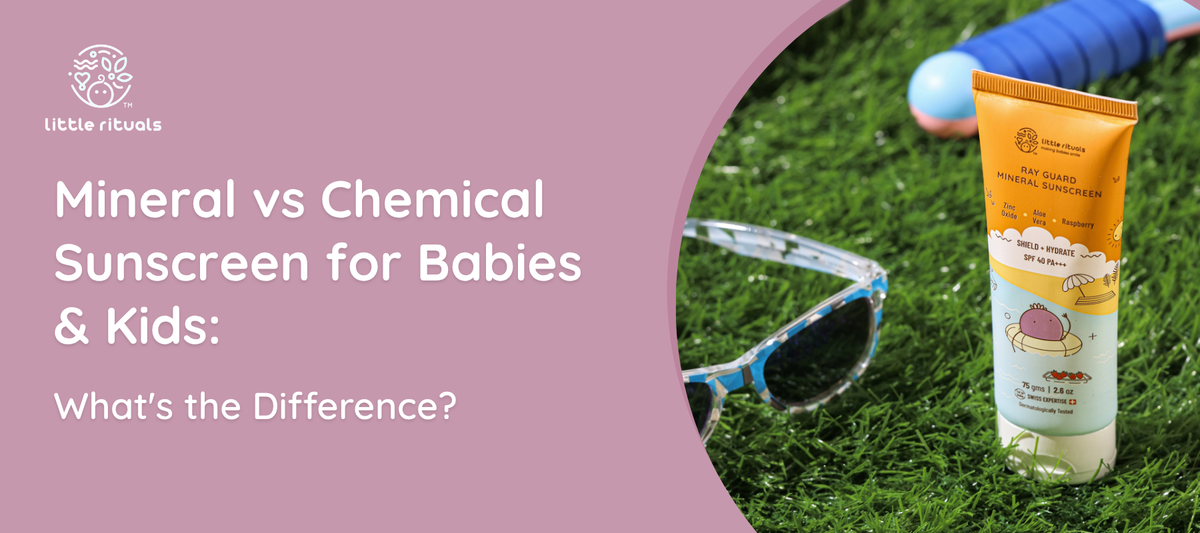
Ray Guard Mineral Sunscreen
Little Rituals Ray Guard Mineral Sunscreen uses non-nano zinc oxide and provides SPF 50 PA+++ protection. It is formulated for babies 6 months and older, with directions recommending application before sun exposure and reapplication every two hours or after swimming or sweating.
The formula also includes ingredients such as aloe vera, raspberry extract, chamomile and cucumber extract. A patch test is recommended for babies and sensitive skin.
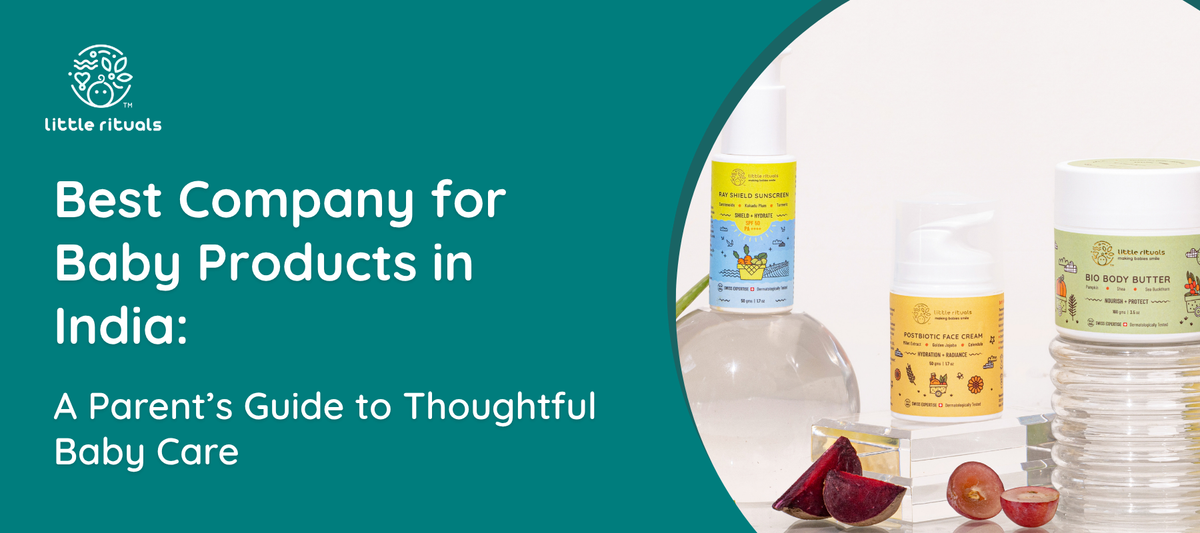
Ray Shield Sunscreen
Little Rituals Ray Shield provides broad-spectrum UVA and UVB protection and combines zinc oxide with another broad-spectrum UV filter, along with antioxidant and skin-supporting ingredients. The product directions recommend applying it before sun exposure and reapplying after swimming or sweating.
Because product age recommendations can differ, always check the current product label and follow age-specific paediatric guidance.
Build a Gentle Baby Skincare Routine
Sun protection is only one part of caring for your little one's skin. A simple routine can include gentle cleansing, moisturising and barrier support alongside outdoor protection.
Little Rituals' baby-care range includes baby products such as:
- Postbiotic Face Cream for facial moisturising
- Bio Body Butter for nourishing dry skin
- Barrier Boost Body Lotion for body moisturisation
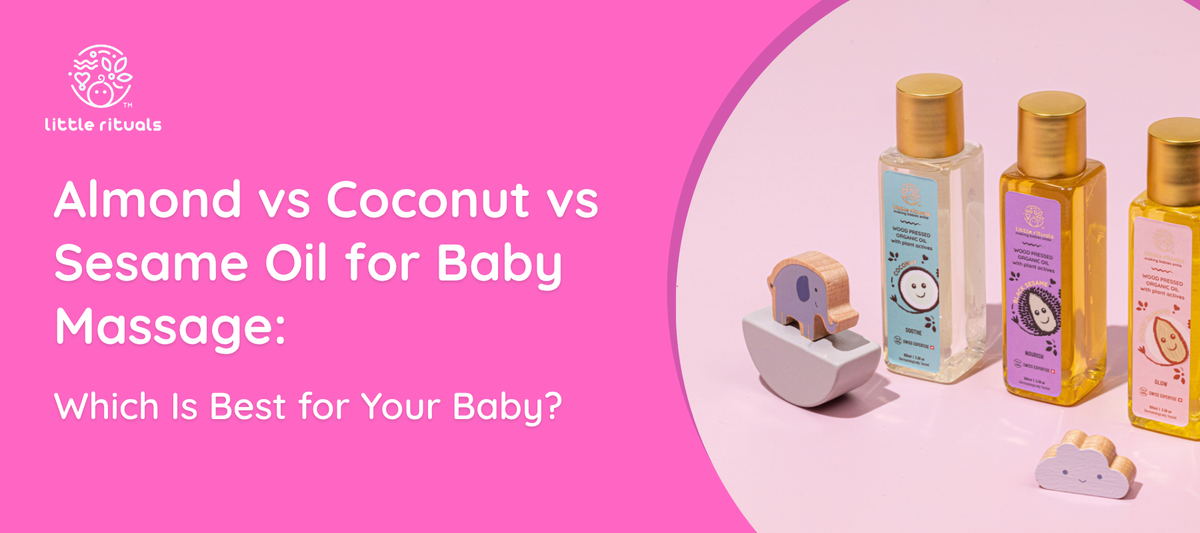
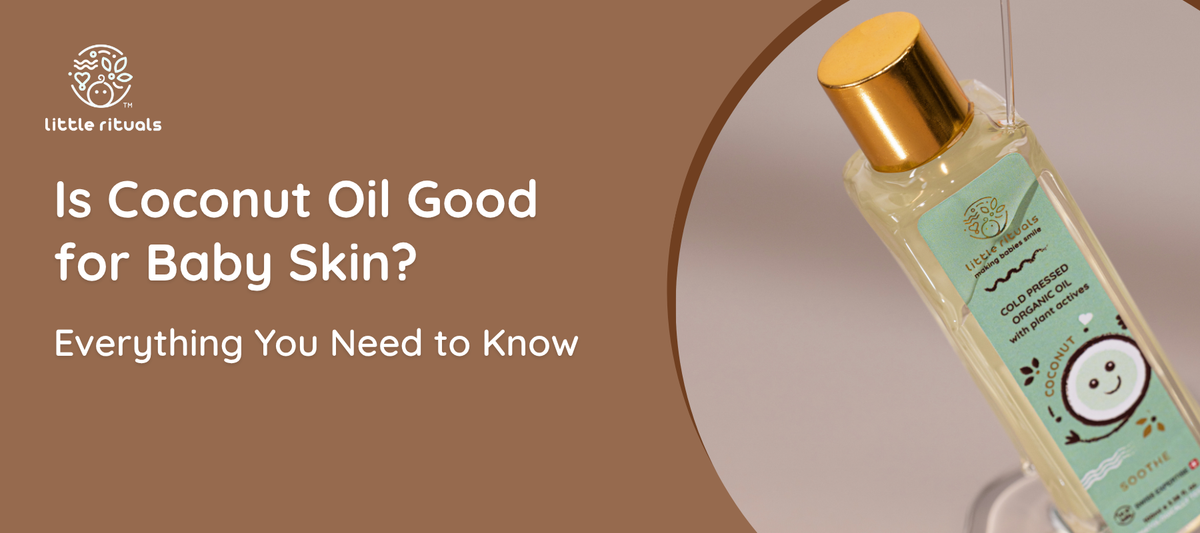
- Wood Cold Pressed Organic Oils for baby massage
- Multi-Vitamin Hair & Body Wash for everyday cleansing
- Bio Soothe Wet Wipes for convenient hygiene
- Ray Guard Mineral Sunscreen and Ray Shield Sunscreen for sun protection
Together, these products can help make everyday baby skincare feel simple, consistent, and considered.
The Right Sun Protection Changes as Your Baby Grows
The question is not simply whether babies can use sunscreen. The right approach changes with age.
For the first six months, focus on shade, protective clothing and avoiding direct sunlight. After six months, introduce an appropriate sunscreen alongside those measures. As your child grows, turn sun protection into a simple everyday habit.
For Indian parents, that means keeping a hat nearby, choosing shade when possible, and having the right baby sunscreen ready before outdoor adventures.
Make Sun Protection a Gentle Little Ritual
When your little one is ready for regular sunscreen, choose a formula that fits comfortably into your everyday routine. Explore the Little Rituals baby sunscreen collection and discover Ray Guard Mineral Sunscreen and Ray Shield Sunscreen alongside gentle baby skin-care essentials designed for everyday care.
Frequently Asked Questions
Q1. How often should I reapply sunscreen to my baby?
Reapply sunscreen every two hours during outdoor activity and after swimming, sweating, or towel drying. Always follow the product's specific directions.
Q2. Can I use sunscreen on a baby under 6 months?
Yes, but shade and protective clothing should be the first choice. Sunscreen can be used on small exposed areas when adequate clothing and shade are unavailable.
Q3. Is mineral sunscreen suitable for babies?
Mineral sunscreens containing zinc oxide or titanium dioxide are suitable options, particularly for sensitive areas. Choose an age-appropriate, broad-spectrum formula.
Q4. Will sunscreen protect my baby completely from the sun?
No. Sunscreen is only one part of sun protection. Shade, protective clothing, and hats should also be used.
Q5. What SPF should I choose for my baby?
Choose a broad-spectrum, age-appropriate sunscreen and follow the product label. SPF measures protection against UVB; broad-spectrum protection covers both UVA and UVB.
Q6. Why does sunscreen need to be reapplied?
Sunscreen can wear away over time, swimming, sweating and towel drying. Reapplication helps maintain protection during continued outdoor exposure.
Q7. How should I protect my baby on cloudy days?
Continue sun protection outdoors because UV rays can pass through clouds. Shade, protective clothing, and appropriate sunscreen remain useful.
Q8. What should I do if my baby develops a rash after sunscreen?
Stop using the product and speak with your child's doctor, particularly if the reaction is significant or persistent. A patch test before wider application can help identify sensitivity.