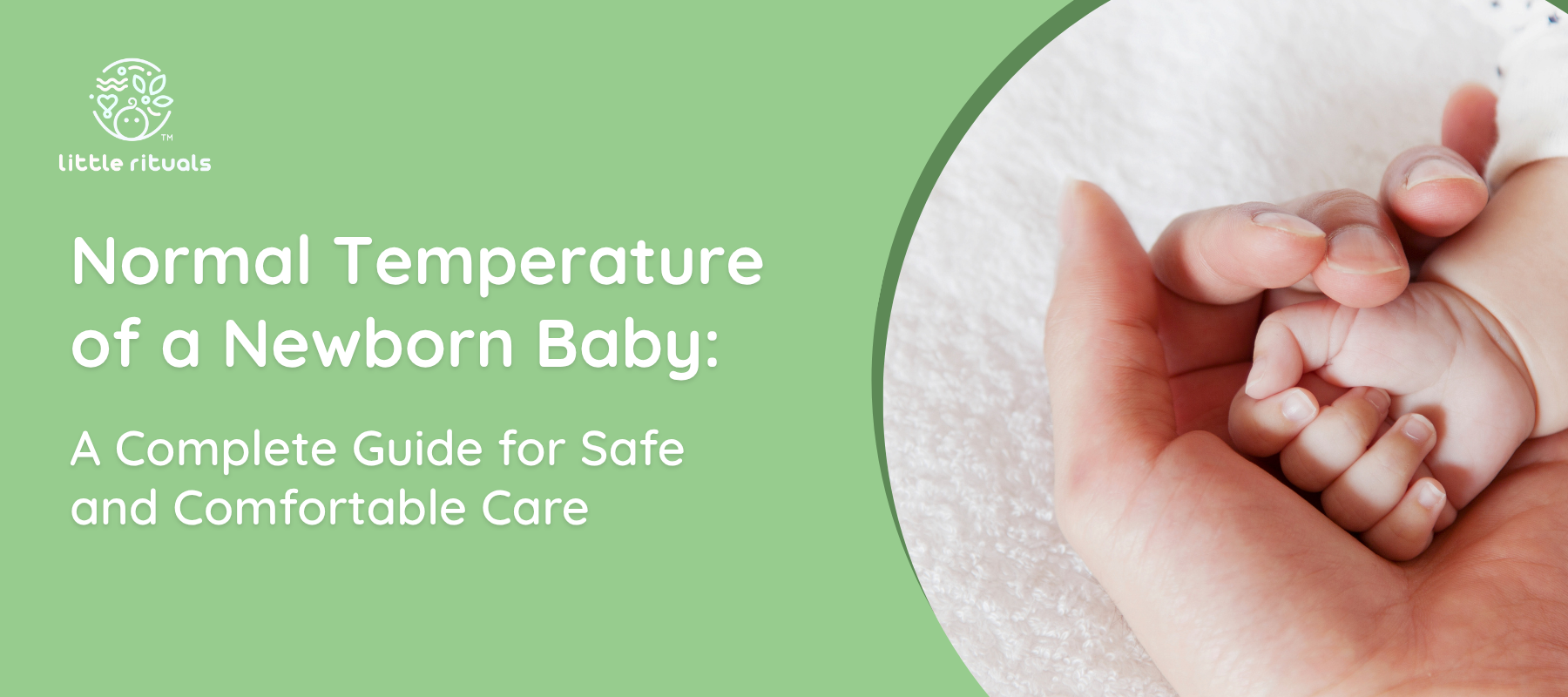
Normal Temperature of a Newborn Baby: A Complete Guide for Safe and Comfortable Care
Disclaimer: This content is for informational purposes only and is not a substitute for professional medical advice. Always consult your healthcare provider.
The normal temperature of a newborn baby ranges from 36.5°C to 37.5°C (97.7°F to 99.5°F). Babies are unable to regulate heat effectively, so careful monitoring is essential. Check your baby’s temperature using a digital thermometer and maintain it through proper clothing, safe room temperature, and gentle care practices to ensure safety and comfort.
Welcoming your baby brings immense joy and many questions about care. One of the most critical aspects of newborn health is maintaining the normal temperature of a newborn baby to ensure comfort, wellbeing, and safety. Knowing this range, how to measure it accurately, and what routines support thermal balance helps you care confidently. At Little Rituals, we understand the importance of gentle care and safe, plant‑powered baby products that nurture your baby’s skin and help parents create calm, mindful routines backed by real safety standards like MADE SAFE® certification and clinical testing for baby use.
What is the Normal Temperature of a Newborn Baby?
Ideal Temperature Range Explained
The normal temperature of a newborn baby is generally between 36.5°C and 37.5°C. This range ensures that the baby’s body is functioning optimally. Unlike adults, newborns have an immature thermoregulatory system, which makes it difficult for them to maintain their body heat. Small fluctuations outside this range can be a warning sign that immediate attention is needed.
- A temperature below 36.5°C indicates low body heat, or hypothermia
- A temperature between 36.5°C and 37.5°C is normal and indicates comfort and wellbeing
- A temperature above 38°C signals fever, which may be caused by infection or inflammation
Why Temperature Matters in Newborns
Temperature regulation in newborns is vital because their small body size and thin skin make them prone to losing or gaining heat rapidly. Babies who are too cold may experience lethargy, poor feeding, or slower growth, while overheating can increase the risk of dehydration or sudden infant death syndrome. Knowing the normal temperature of a newborn baby helps parents intervene early and maintain a safe, nurturing environment.
How to Check Your Baby’s Temperature Correctly
Best Methods for Accurate Measurement
Ensuring accurate temperature measurement is crucial for newborn safety. The most effective methods include:
- Using a digital thermometer for fast and accurate readings
- Rectal thermometers for precise core body temperature
- Axillary (underarm) readings for a safer but slightly less accurate alternative
- Forehead or temporal artery thermometers for convenient but moderately precise readings
It is essential to clean thermometers properly and use the method recommended by your pediatrician to get reliable results.
When Should You Check?
Parents should check their baby’s temperature at specific times to avoid unnecessary stress:
- After baby's first bath, as water exposure can temporarily alter body temperature
- If the baby feels unusually warm or cold to the touch
- During illness, signs such as poor feeding, irritability, or unusual sleep patterns
By regularly monitoring and knowing the normal temperature of a newborn baby, parents can ensure timely intervention if something goes wrong.
Signs Your Baby’s Temperature is Too High or Too Low
Signs of Fever in Newborns
Fever in newborns is usually defined as a temperature above 38°C. Common signs include:
- Irritability and excessive crying
- Reduced feeding or refusal to feed
- Unusual sleepiness or restlessness
Immediate medical attention is necessary for newborns with fever because their immune systems are still developing.
Signs of Low Temperature (Hypothermia)
Hypothermia occurs when a baby’s temperature falls below 36.5°C. Signs include:
- Cold, pale, or bluish skin
- Lethargy and decreased activity
- Weak feeding or lack of interest in nursing
Prompt action, such as adding layers, skin-to-skin contact, or adjusting the room temperature, can help stabilize the baby.
When to See a Doctor
Seek medical attention if your baby shows:
- Temperature above 38°C or below 36.5°C
- Difficulty breathing, persistent vomiting, or dehydration
- Continuous lethargy or unusual behavior
Knowing the normal temperature of a newborn baby ensures parents can quickly distinguish between routine fluctuations and urgent concerns.
How to Maintain the Normal Temperature of a Newborn Baby at Home
Dress Your Baby the Right Way
Appropriate clothing is one of the simplest ways to regulate a newborn’s body temperature:
- Dress the baby in one extra layer more than what an adult would wear
- Use soft, breathable fabrics that allow heat circulation
- Avoid overdressing or covering the baby with heavy blankets
Ideal Room Temperature for Babies
Maintaining a comfortable room temperature is crucial:
- Keep rooms between 20°C and 22°C
- Avoid placing the baby near direct sunlight or heating vents
- Monitor the room regularly to prevent sudden fluctuations
Skin-to-Skin Contact (Kangaroo Care)
Holding your baby close to your bare chest helps:
- Regulate the normal temperature of a newborn baby naturally
- Promote emotional bonding and reduce stress
- Support overall physiological stability, including heart rate and breathing
Safe Swaddling Techniques
Swaddling provides warmth and comfort without causing overheating:
- Use light, breathable swaddle fabrics
- Ensure the baby can move legs and hips freely
- Avoid tight wrapping around the chest or neck
The Role of Gentle Skincare in Temperature Regulation
Why Baby Skin Needs Extra Protection
Newborn skin is delicate and prone to moisture loss, which can impact body temperature. Using new born baby products with gentle, safe ingredients helps maintain the skin barrier.
- Thin skin allows rapid heat loss
- Hydration helps maintain the normal temperature of a newborn baby
- Using gentle skincare supports the skin barrier and reduces irritation
Maintaining overall health, including how to increase newborn baby weight, also supports a baby's ability to stay warm.
Choosing Safe, Non-Toxic Baby Care Products
Using baby care products with gentle, safe ingredients can help maintain soft, healthy skin without irritation or dryness. Little Rituals products are formulated with carefully selected plant‑based botanicals, free from thousands of harmful chemicals, and have rigorous safety certification. This means you can support your baby’s skin health and temperature comfort without compromise.
Natural Oils & Cleansers That Support Baby Comfort
Natural oils can enhance comfort and warmth:
- Coconut oil or almond oil locks in moisture
- Mild, plant-based cleansers prevent dryness and temperature fluctuations
- Regular moisturizing supports skin and overall comfort
Creating a Safe Daily Routine for Your Newborn
Bathing Tips Without Temperature Shock
Proper bathing protects against sudden temperature changes:
- Use lukewarm water between 36°C and 37°C
- Limit bath duration to 5–10 minutes
- Pat the baby dry gently and dress immediately
Massage for Warmth and Bonding
Gentle massages improve circulation and warmth:
- Light, rhythmic movements help distribute body heat
- Encourages relaxation and better sleep patterns
- Strengthens the parent-child bond
Sleep Environment Setup
A safe sleep environment maintains comfort without overheating:
- Use breathable fabrics for bedding and sleepwear
- Avoid heavy blankets or quilts
- Maintain the room at a steady, comfortable temperature
Common Mistakes Parents Make
- Overdressing or wrapping the baby too tightly
- Using harsh or unsafe skincare products
- Ignoring early signs of abnormal temperature
- Keeping the room too warm or too cold
Avoiding these mistakes helps maintain the normal temperature of a newborn baby consistently.
Give Your Baby Warmth, Comfort, and a Safe Start with Trusted Care
At Little Rituals, we combine plant‑derived botanicals with science‑backed formulations and stringent safety standards like MADE SAFE certification. If you are looking to support a new parent, a baby gift box, baby gift hamper, or a new born baby gift hamper filled with toxin-free essentials is a thoughtful way to ensure the baby's comfort. Our gentle, toxin‑free products are designed to support your baby’s delicate skin and overall comfort. Explore our baby care range, from nourishing oils to gentle cleansers and moisturizers, and discover thoughtful essentials that help maintain your newborn’s wellbeing with every loving touch.
Final Thoughts
Monitoring and maintaining the normal temperature of a newborn baby is one of the most important aspects of early care. Proper clothing, room temperature, skincare, and gentle routines all play a role in keeping your baby comfortable and healthy. Small, consistent practices combined with safe products ensure your newborn thrives in a nurturing, safe environment.
Frequently Asked Questions
Q1. How do I know if my baby is too cold at night?
Check if your baby’s hands, feet, or body feel unusually cold. Signs like shivering, lethargy, or poor feeding indicate the need to adjust clothing or room temperature to maintain the normal temperature of a newborn baby.
Q2. Can a newborn have a normal temperature after vaccination?
Yes, slight temperature fluctuations after vaccination are common. Monitor for fever above 38°C, but small changes can be part of the body’s immune response while still remaining within the normal temperature of a newborn baby range.
Q3. Is 37°C normal for a baby?
Yes, 37°C is well within the normal temperature of a newborn baby range of 36.5°C–37.5°C and generally indicates comfort and wellbeing.
Q4. Will my baby be safe if the room temperature drops slightly?
A minor drop in room temperature is usually safe if your baby is appropriately dressed. Skin-to-skin contact or adding a layer can help stabilize the normal temperature of a newborn baby.
Q5. What is the normal temperature of a newborn baby in Fahrenheit?
The normal temperature of a newborn baby in Fahrenheit ranges from 97.7°F to 99.5°F, which corresponds to 36.5°C to 37.5°C.
Q6. Why is newborn thermoregulation difficult?
Newborns have underdeveloped thermoregulatory systems, thin skin, and minimal fat stores, making them prone to rapid heat loss or gain. Maintaining the normal temperature of a newborn baby requires careful monitoring and protective measures.
Q7. How can skin-to-skin contact help regulate temperature?
Skin-to-skin contact helps stabilize the baby’s body heat naturally, supporting the normal temperature of a newborn baby, improving circulation, and reducing stress for both baby and parent.
Q8. Can overdressing a baby cause fever?
Yes, excessive clothing or heavy blankets can elevate the baby’s body heat, leading to discomfort or overheating. Ensuring clothing is appropriate, maintains the normal temperature of a newborn baby safely.